 Back
Photosynthesis and Cellular Respiration: Energy Transformation in Living Systems
Study Guide - Smart Notes
 Tailored notes based on your materials, expanded with key definitions, examples, and context.
Photosynthesis and Cellular Respiration
Glossary of Key Terms
Heterotroph: An organism that obtains energy by consuming other organisms. Examples include fungi, animals, and some protists.
Autotroph: An organism capable of producing its own food from inorganic substances, typically through photosynthesis. Examples include plants, algae, and certain protists such as Euglena.
Photosynthesis: The process by which plants and some other organisms convert solar energy into chemical energy stored in glucose.
Ecosystem: A community of living organisms and their physical environment, interacting as a system.
Metabolism: The sum of all chemical reactions in a cell, including catabolic (breaking down molecules to release energy) and anabolic (building molecules using energy) pathways.
ATP (Adenosine Triphosphate): The primary energy carrier molecule in cells.
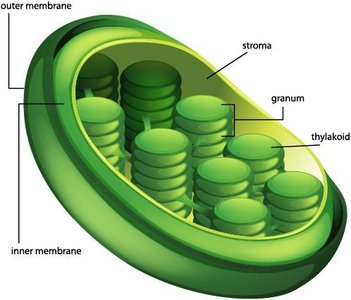
Chloroplast: The organelle in plant cells where photosynthesis occurs.
Cellular Respiration: The process by which cells extract energy from glucose and other organic molecules.
Electron: A subatomic particle with a negative charge, involved in energy transfer during photosynthesis and respiration.
Energy Transformation and Metabolism
Principles of Energy Flow
According to the laws of thermodynamics, energy cannot be created or destroyed, but can be transformed from one form to another. In ecosystems, energy flows from the Sun to autotrophs (producers) and then to heterotrophs (consumers). The Sun is the primary energy source for nearly all life on Earth.
Autotrophs capture solar energy and convert it into chemical energy via photosynthesis.
Heterotrophs obtain energy by consuming autotrophs or other heterotrophs.
Metabolic Pathways
Catabolic reactions: Break down large molecules into smaller ones, releasing energy (e.g., cellular respiration).
Anabolic reactions: Build larger molecules from smaller ones, requiring energy input (e.g., photosynthesis).
Adenosine Triphosphate (ATP)
ATP is the most abundant energy-carrying molecule in cells. It stores energy in its high-energy phosphate bonds and releases it to power cellular processes.
Photosynthesis
Overview and Location
Photosynthesis occurs in the chloroplasts of plant cells, primarily in the leaves. The process uses light energy to convert carbon dioxide and water into glucose and oxygen.
Stomata: Tiny pores on leaves that allow gas exchange (CO2 in, O2 out).
Pigments: Light-absorbing molecules (e.g., chlorophyll) located in the thylakoid membranes of chloroplasts.
Phases of Photosynthesis
Phase I: Light-Dependent Reactions
These reactions require light and occur in the thylakoid membranes. Light energy is converted into chemical energy in the form of ATP and NADPH.
Photosystem II absorbs light, exciting electrons that travel through the electron transport chain (ETC).
Water molecules are split, releasing electrons, hydrogen ions (H+), and oxygen as a byproduct.
Electrons reach Photosystem I, are re-energized by light, and are transferred to NADP+ to form NADPH.
H+ ions accumulate in the thylakoid space, creating a proton gradient.
ATP synthase uses the energy from H+ flow to convert ADP to ATP (chemiosmosis).
Phase II: Light-Independent Reactions (Calvin Cycle)
These reactions do not require light and occur in the stroma of the chloroplast. ATP and NADPH from the light-dependent reactions are used to fix carbon dioxide into glucose and other organic molecules.
Carbon fixation: CO2 is attached to RuBP (ribulose bisphosphate) by the enzyme rubisco, forming unstable 6-carbon intermediates that split into 3-phosphoglycerate (3-PGA).
Reduction: ATP and NADPH are used to convert 3-PGA into glyceraldehyde-3-phosphate (G3P).
Regeneration: Some G3P molecules leave the cycle to form glucose, while others regenerate RuBP to continue the cycle.
Cellular Respiration
Overview
Cellular respiration is the process by which cells extract energy from glucose and other organic molecules. It occurs in both autotrophs and heterotrophs and consists of three main stages: glycolysis, the Krebs cycle, and the electron transport chain (ETC).
Main product: ATP
Waste product: Carbon dioxide (CO2)
Glycolysis
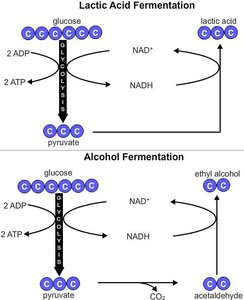
Glycolysis is an anaerobic process (does not require oxygen) that occurs in the cytoplasm. One glucose molecule (6 carbons) is split into two pyruvate molecules (3 carbons each).
Energy investment: 2 ATP are used to phosphorylate glucose.
Energy payoff: 4 ATP and 2 NADH are produced, resulting in a net gain of 2 ATP per glucose molecule.
Krebs Cycle (Citric Acid Cycle)
The Krebs cycle occurs in the mitochondrial matrix (or cytoplasm in prokaryotes). Pyruvate is further broken down, releasing CO2 and transferring high-energy electrons to NADH and FADH2.
Produces ATP, NADH, FADH2, and CO2.
Requires oxygen indirectly (depends on ETC functioning).
Electron Transport Chain (ETC) and Chemiosmosis
The ETC is located in the inner mitochondrial membrane. NADH and FADH2 donate electrons, which move through protein complexes, powering the pumping of H+ ions to create a proton gradient. Oxygen is the final electron acceptor, forming water.
ATP synthase uses the proton gradient to generate ATP from ADP.
This stage produces the majority of ATP during cellular respiration.
Anaerobic Respiration and Fermentation
When oxygen is not available, cells can undergo anaerobic respiration (fermentation) to regenerate NAD+ and produce ATP.
Lactic Acid Fermentation: Pyruvate is converted to lactic acid, regenerating NAD+. Occurs in muscle cells and some bacteria (e.g., yogurt production).
Alcohol Fermentation: Pyruvate is converted to ethanol and CO2, regenerating NAD+. Occurs in yeast (e.g., bread and alcohol production).
Photosynthesis and Cellular Respiration: Complementary Processes
Relationship and Comparison
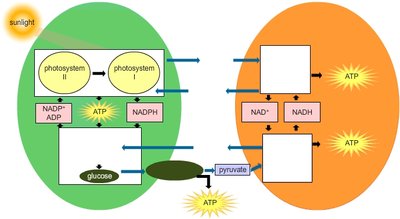
Photosynthesis and cellular respiration are interconnected. Photosynthesis stores energy in glucose, while cellular respiration releases that energy for cellular work. Both processes occur in plants, but only respiration occurs in animals and fungi.
Photosynthesis: Uses CO2 and H2O to produce glucose and O2.
Cellular Respiration: Uses glucose and O2 to produce CO2, H2O, and ATP.
Science in the News: Photosynthesizing Animals
Unusual Mutualisms
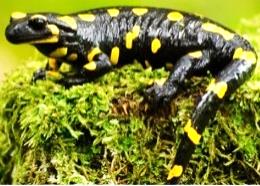
Spotted Salamander: Forms a mutualistic relationship with algae during its embryonic stage, allowing it to benefit from photosynthetic products.
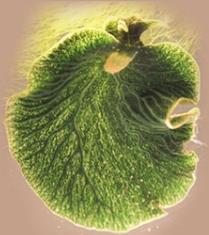
Sea Slug: Consumes algae and incorporates algal chloroplasts into its own cells, enabling it to perform photosynthesis.
Summary Table: Comparison of Photosynthesis and Cellular Respiration
Process | Location | Inputs | Outputs | Main Purpose |
|---|---|---|---|---|
Photosynthesis | Chloroplast (plants, algae) | CO2, H2O, sunlight | Glucose, O2 | Store solar energy as chemical energy |
Cellular Respiration | Mitochondria (eukaryotes), cytoplasm (prokaryotes) | Glucose, O2 | CO2, H2O, ATP | Release energy from glucose for cellular work |
Key Equations
Photosynthesis:
Cellular Respiration:
