 Back
BackPhotosynthesis, Mitosis, Meiosis, and Mendelian Genetics: Core Concepts and Processes
Study Guide - Smart Notes
 Tailored notes based on your materials, expanded with key definitions, examples, and context.
Photosynthesis
Overview of Photosynthesis
Photosynthesis is the process by which plants, algae, and some bacteria convert light energy into chemical energy, producing glucose and oxygen from carbon dioxide and water. This process is essential for life on Earth as it provides the organic molecules and oxygen required by most organisms.
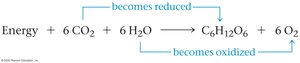
Overall Equation: The general equation for photosynthesis is:
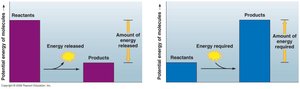
Endergonic Reaction: Photosynthesis requires an input of energy (sunlight), making it an endergonic process. The products have more potential energy than the reactants.
Redox Reactions in Photosynthesis
Photosynthesis involves a series of oxidation-reduction (redox) reactions. Carbon dioxide is reduced to form glucose, while water is oxidized to produce oxygen.
Reduction: CO2 gains electrons (is reduced) to become glucose.
Oxidation: H2O loses electrons (is oxidized) to form O2.
The Light Reactions
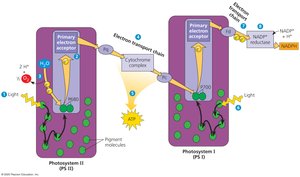
The light reactions occur in the thylakoid membranes of chloroplasts and convert solar energy into chemical energy in the form of ATP and NADPH. Water is split, releasing oxygen as a byproduct.
Photosystem II (PS II): Absorbs light, splits water, and transfers electrons to the electron transport chain.
Electron Transport Chain: Transfers electrons, generating a proton gradient used to produce ATP.
Photosystem I (PS I): Absorbs light and transfers electrons to NADP+, forming NADPH.
The Calvin Cycle
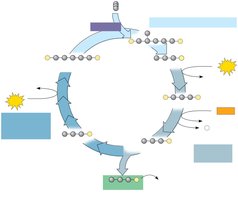
The Calvin cycle, also known as the light-independent reactions, occurs in the stroma of the chloroplast. It uses ATP and NADPH from the light reactions to fix carbon dioxide and produce G3P, which is used to synthesize glucose and other organic molecules.
Phase 1: Carbon Fixation – CO2 is attached to RuBP by the enzyme rubisco, forming 3-phosphoglycerate.
Phase 2: Reduction – ATP and NADPH are used to convert 3-phosphoglycerate into G3P.
Phase 3: Regeneration of RuBP – Some G3P is used to regenerate RuBP, enabling the cycle to continue.
Photorespiration and Adaptations
Photorespiration occurs when rubisco adds O2 instead of CO2 to RuBP, leading to a decrease in photosynthetic efficiency. Plants have evolved mechanisms to minimize photorespiration:
C3 Plants: Use the Calvin cycle directly; susceptible to photorespiration.
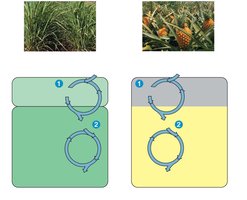
C4 Plants: Fix CO2 into a four-carbon compound in mesophyll cells, which is then transported to bundle-sheath cells for the Calvin cycle. This spatial separation reduces photorespiration.
CAM Plants: Open stomata at night to fix CO2 into organic acids, which release CO2 during the day for the Calvin cycle. This temporal separation conserves water and reduces photorespiration.
Mitosis
Overview of Mitosis
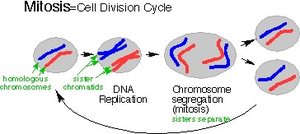
Mitosis is a type of cell division that results in two genetically identical daughter cells. It is essential for growth, tissue repair, and asexual reproduction in multicellular organisms.
Growth: Increases the number of somatic cells.
Wound Repair: Replaces damaged or dead cells.
Asexual Reproduction: Produces offspring genetically identical to the parent.
The Cell Cycle
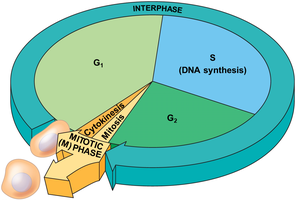
The cell cycle consists of interphase (G1, S, G2) and the mitotic (M) phase. Interphase is the period of cell growth and DNA replication, while the M phase includes mitosis and cytokinesis.
G1 Phase: Cell growth and normal functions.
S Phase: DNA synthesis (replication).
G2 Phase: Preparation for mitosis.
M Phase: Mitosis and cytokinesis.
Phases of Mitosis
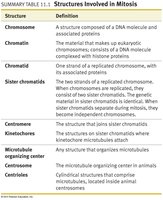
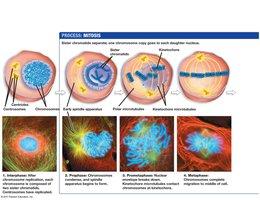
Mitosis is divided into several phases: prophase, metaphase, anaphase, and telophase, followed by cytokinesis.
Prophase: Chromosomes condense, spindle apparatus forms.
Metaphase: Chromosomes align at the metaphase plate.
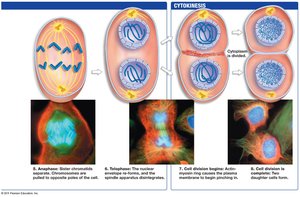
Anaphase: Sister chromatids separate and move to opposite poles.
Telophase: Nuclear envelopes reform around the chromosomes.
Cytokinesis: Division of the cytoplasm, forming two daughter cells.
Cytokinesis in Plants and Animals
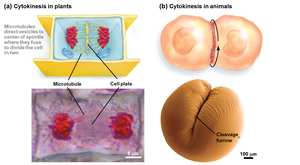
Cytokinesis differs between plant and animal cells. In animal cells, a cleavage furrow forms to divide the cell, while in plant cells, a cell plate forms to separate the two daughter cells.
Animal Cells: Cleavage furrow pinches the cell in two.
Plant Cells: Cell plate forms from vesicles, developing into a new cell wall.
Meiosis
Overview of Meiosis
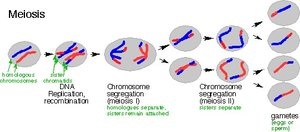
Meiosis is a specialized form of cell division that reduces the chromosome number by half, producing four genetically distinct gametes. It is essential for sexual reproduction and genetic diversity.
Meiosis I: Homologous chromosomes separate, reducing chromosome number.
Meiosis II: Sister chromatids separate, similar to mitosis.
Key Events in Meiosis
Meiosis introduces genetic variation through crossing over and independent assortment.
Crossing Over: Exchange of genetic material between homologous chromosomes during prophase I.
Independent Assortment: Random orientation of homologous pairs during metaphase I leads to genetic diversity in gametes.
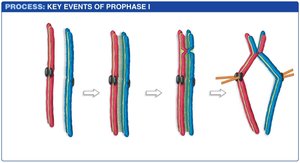
Summary Table: Law of Segregation vs. Law of Independent Assortment
Feature | Law of Segregation | Law of Independent Assortment |
|---|---|---|
When? | Anaphase I of Meiosis | Metaphase I of Meiosis |
What happens? | Homologous chromosomes (and alleles) separate. | Homologous pairs align randomly. |
Focus | One trait/gene (alleles separate). | Two or more traits/genes. |
Result | Each gamete has one allele per gene. | Diverse combinations of genes. |
Mendelian Genetics
Mendel’s Laws
Gregor Mendel’s experiments with pea plants established the fundamental laws of inheritance: the Law of Segregation and the Law of Independent Assortment.
Law of Segregation: Each individual has two alleles for each gene, which segregate during gamete formation so that each gamete carries only one allele for each gene.
Law of Independent Assortment: Alleles of different genes assort independently of one another during gamete formation.
Extensions of Mendelian Genetics
Inheritance patterns can deviate from simple Mendelian ratios due to various phenomena:
Linkage: Genes located close together on the same chromosome tend to be inherited together.
Sex-linked Traits: Genes located on sex chromosomes exhibit unique inheritance patterns.
Incomplete Dominance: Heterozygotes have an intermediate phenotype (e.g., pink flowers from red and white parents).
Codominance: Both alleles are fully expressed in heterozygotes (e.g., AB blood type).
Multiple Alleles: More than two alleles exist for a gene (e.g., ABO blood group).
Pleiotropy: One gene affects multiple phenotypic traits (e.g., sickle-cell disease).
Epistasis: One gene affects the expression of another gene.
Polygenic Inheritance: Multiple genes contribute to a single trait, resulting in continuous variation (e.g., skin color, height).
