 Back
BackPopulation Genetics & Hardy-Weinberg Equilibrium: Principles, Variation, and Calculations
Study Guide - Smart Notes
 Tailored notes based on your materials, expanded with key definitions, examples, and context.
Population Genetics & Hardy-Weinberg Equilibrium
Introduction to Population Genetics
Population genetics is the study of genetic variation within populations and involves the examination of changes in allele, genotype, and phenotype frequencies over time and space. This field provides the foundation for understanding evolutionary processes and how genetic diversity is maintained or altered.
Principles of Inheritance and Meiosis
Principle of Segregation
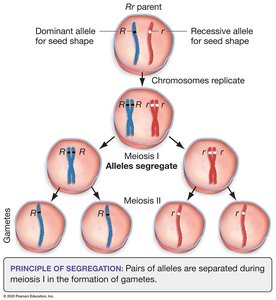
The principle of segregation states that two members of each gene pair separate into different gametes during meiosis. This ensures that offspring inherit one allele from each parent.
Definition: Each gamete receives only one allele from each gene pair.
Mechanism: Occurs during meiosis I when homologous chromosomes are separated.
Example: An individual with genotype Rr produces gametes with either R or r alleles.
Principle of Independent Assortment
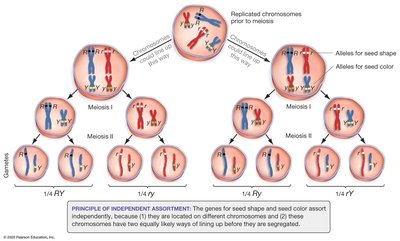
The principle of independent assortment states that alleles of different genes assort independently of one another during gamete formation, provided the genes are on different chromosomes.
Definition: The inheritance of one gene does not affect the inheritance of another gene if they are unlinked.
Mechanism: Random alignment of chromosome pairs during metaphase I of meiosis.
Limitation: Genes located close together on the same chromosome (linked genes) do not assort independently unless crossing over occurs.
Population: Definition and Scope
What is a Population?
A population is a group of individuals of the same species that live in the same geographic area and can actually or potentially interbreed.
Key Features: Same species, shared location, potential for interbreeding.
Importance: Populations are the fundamental units for studying genetic variation and evolutionary change.
Genetic Variation in Populations
Concept of Variation
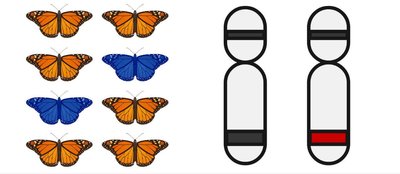
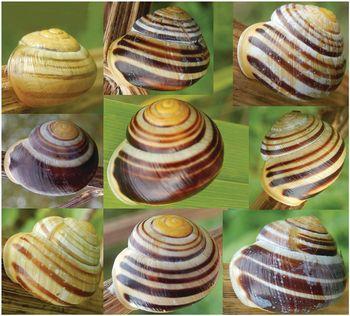
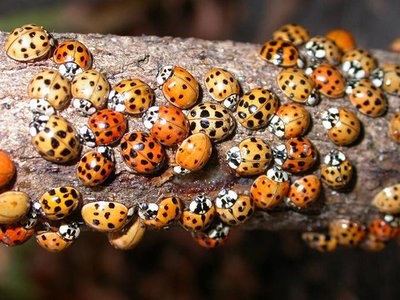
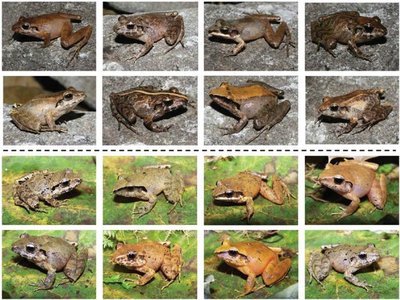
Variation refers to the differences among individuals within a population. This variation can be observed at the phenotypic, genotypic, and allelic levels.
Phenotypic Variation: Observable traits, such as flower color or shell patterns.
Genotypic Variation: Differences in genetic makeup (e.g., PP, Pp, pp).
Allelic Variation: Different forms of a gene (e.g., P and p alleles).
Sources of Genetic Variation
Genetic variation arises from several processes:
Mutation: The only process that creates new alleles, introducing novel genetic material into a population.
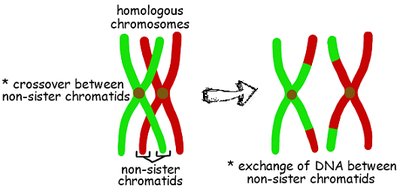
Crossing Over: During meiosis, homologous chromosomes exchange segments, producing new combinations of alleles.
Genetic Recombination: The reshuffling of genes into gametes during meiosis, creating unique genetic combinations in offspring.
Random Fertilization: The combination of gametes from two individuals further increases genetic diversity.
Gene Pool and Frequency Calculations
Gene Pool
The gene pool is the total collection of all alleles present in a population. Each individual contributes two alleles for each gene (in diploid organisms).
Link to Genotype and Phenotype: The gene pool determines the range of possible genotypes and phenotypes in the population.
Calculating Frequencies
Frequencies are used to describe the genetic structure of a population.
Genotype Frequency:
Phenotype Frequency:
Allele Frequency:
Hardy-Weinberg Equilibrium
Definition and Assumptions
The Hardy-Weinberg equilibrium describes a population in which allele and genotype frequencies remain constant from generation to generation, provided that certain conditions are met.
Assumptions:
Random mating with respect to the trait under study
Infinitely large population size
No natural selection
No mutation
No migration (gene flow)
Prediction: If these assumptions are met, no evolutionary change occurs, and allele/genotype frequencies remain stable.
Hardy-Weinberg Equations
For a gene with two alleles (A and a):
Allele Frequencies: where is the frequency of allele A, and is the frequency of allele a.
Genotype Frequencies: where is the frequency of AA, is the frequency of Aa, and is the frequency of aa.
Applications and Example Calculations
Example: If , then .
AA ():
Aa ():
aa ():
Interpretation: These frequencies represent the expected proportions of each genotype in a population at equilibrium.
Summary Table: Hardy-Weinberg Equilibrium
Parameter | Symbol | Equation |
|---|---|---|
Allele frequency (A) | p | |
Allele frequency (a) | q | |
Genotype frequency (AA) | ||
Genotype frequency (Aa) | ||
Genotype frequency (aa) |
Conclusion
Population genetics provides the framework for understanding how genetic variation is generated, maintained, and transmitted in populations. The Hardy-Weinberg equilibrium serves as a null model for detecting evolutionary change and is foundational for studies in evolution, conservation, and medical genetics.
