 Back
Principles of Biology: The Biosphere – Study Notes (Weeks 1–11)
Study Guide - Smart Notes
 Tailored notes based on your materials, expanded with key definitions, examples, and context.
Biosphere and Taxonomy
Properties and Processes of Living Organisms
Biology is the study of living organisms, but defining life is complex due to the diversity of forms and processes. Living organisms share several key properties:
Order: Organized structure, such as cells forming tissues and organs.
Evolutionary Adaptation: Populations evolve over generations through natural selection.
Response to the Environment: Ability to sense and react to stimuli.
Regulation: Maintenance of internal balance (homeostasis).
Energy Processing: Acquisition and use of energy for growth and maintenance.
Growth and Development: Inherited information controls patterns of growth.
Reproduction: Ability to produce new organisms.
Defining life is problematic because some entities (e.g., viruses) share some but not all characteristics of life.
Levels of Organization in the Biosphere
The biosphere is the sum of all ecosystems on Earth. Biological organization increases in complexity at each level:
Biosphere – All life on Earth and the places where life exists.
Ecosystem – All living and nonliving components in a particular area.
Community – All organisms in an ecosystem.
Population – Individuals of the same species in a given area.
Organism – Individual living entity.
Organ System – Group of organs working together.
Organ – Structure composed of tissues with specific functions.
Tissue – Group of similar cells performing a function.
Cell – Smallest unit of life.
Organelle – Functional components within cells.
Molecule – Chemical structure of two or more atoms.
The cell is the minimum unit of life, as it can carry out all life processes independently.
Prokaryotic vs. Eukaryotic Cells
Cells are classified as prokaryotic or eukaryotic based on structural differences:
Prokaryotic Cells: Small, lack a nucleus and membrane-bound organelles; genetic material is in the nucleoid region; found in Bacteria and Archaea.
Eukaryotic Cells: Larger, contain a nucleus and membrane-bound organelles; found in Protists, Fungi, Plants, and Animals.
Major components of eukaryotic cells include:
Cell membrane – Controls entry/exit of substances
Cell wall – Provides structure (plants, fungi, some protists)
Chloroplast – Site of photosynthesis (plants, some protists)
Cytoplasm – Fluid matrix containing organelles
Endoplasmic Reticulum (ER) – Synthesis of proteins (rough ER) and lipids (smooth ER)
Golgi Apparatus – Modifies, sorts, and packages proteins/lipids
Lysosome – Digestion of macromolecules
Mitochondria – Site of cellular respiration, ATP production
Nucleus – Contains genetic material (DNA)
Ribosomes – Protein synthesis
Vacuole – Storage and structural support (large in plants)
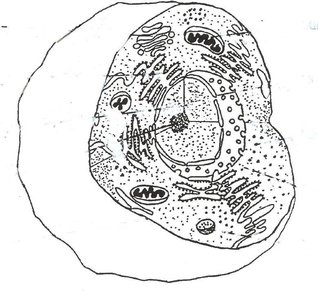
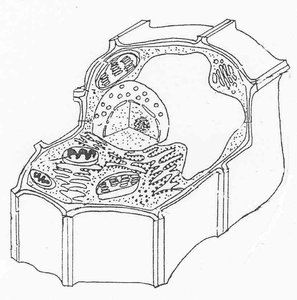
Key differences:
Cell wall, chloroplasts, and large central vacuole are present in plant cells but not animal cells.
Both cell types have mitochondria, ER, Golgi, nucleus, and ribosomes.
Prokaryotes lack membrane-bound organelles and a true nucleus.
Endomembrane system: Includes the nuclear envelope, ER, Golgi apparatus, lysosomes, and vesicles.
Non-membranous structures: Ribosomes, cytoskeleton.
Bacterial vs. plant cell walls: Bacterial cell walls contain peptidoglycan; plant cell walls contain cellulose.
Chloroplasts and mitochondria: Both have double membranes, their own DNA, and are involved in energy conversion.
Taxonomy and Classification
Taxonomy is the science of naming and classifying organisms. The eight major taxonomical categories (from most to least inclusive):
Domain
Kingdom
Phylum
Class
Order
Family
Genus
Species
Binomial nomenclature: Each species is given a two-part Latin name (Genus species), e.g., Homo sapiens.
Clade: A group consisting of an ancestor and all its descendants; differs from taxonomic ranks by focusing on evolutionary relationships.
The Three-Domain System
Life is classified into three domains:
Bacteria: Prokaryotic, no nuclear envelope or organelles, cell walls with peptidoglycan, sensitive to antibiotics.
Archaea: Prokaryotic, no peptidoglycan in cell walls, often live in extreme environments, not sensitive to most antibiotics.
Eukarya: Eukaryotic, nuclear envelope and organelles present, includes Protists, Fungi, Plants, and Animals.
Multicellular eukaryotes (Kingdoms):
Plantae: Autotrophic, cellulose cell walls
Fungi: Heterotrophic, chitin cell walls
Animalia: Heterotrophic, no cell walls
Phylogenetic Trees
Phylogenetic trees represent evolutionary relationships. Key concepts:
Branch points: Represent common ancestors and divergence events.
Sister taxa: Groups that share an immediate common ancestor.
Polytomy: A branch point with more than two descendant groups, indicating unresolved relationships.
Branch rotation does not change evolutionary relationships.
Branch points closer to the root represent older divergence events.
Evolution
Definition and Mechanisms
Evolution is the change in the genetic composition of a population over time. Mechanisms include:
Natural selection: Differential survival and reproduction of individuals due to differences in phenotype.
Genetic drift: Random changes in allele frequencies, especially in small populations.
Gene flow: Movement of alleles between populations.
Genetic variation is essential for evolution; it arises from mutations and sexual reproduction.
Evidence for Evolution
Direct observation: Examples include antibiotic resistance in bacteria.
Fossil record: Documents evolutionary changes over time.
Homology: Similarity due to shared ancestry (e.g., vertebrate forelimbs).
Analogy: Similarity due to convergent evolution (e.g., wings of birds and insects).
Embryology: Reveals developmental similarities among related species.
Biogeography: Geographic distribution of species supports evolutionary theory.
Viruses
Structure, Reproduction, and Evolution
Viruses are acellular entities with some characteristics of life but lack cellular structure and independent metabolism.
Structure: Consist of genetic material (DNA or RNA) enclosed in a protein coat (capsid); some have lipid envelopes.
Diversity: Vary in genome type (DNA/RNA, single/double-stranded) and structure.
Reproductive cycle: Attach to host cell, inject genetic material, hijack host machinery to replicate, assemble new viruses, and release them.
Evolutionary origin: Hypothesized to have evolved from mobile genetic elements or degenerate cells.
Viruses blur the line between living and non-living due to their dependence on host cells for reproduction.
Domain Bacteria and Domain Archaea
Prokaryotic Diversity and Adaptations
Prokaryotes: Small, diverse in shape (cocci, bacilli, spirilla), and highly adaptable.
Cell wall: Bacteria have peptidoglycan; Archaea have unique lipids and proteins.
Internal organization: Lack membrane-bound organelles; DNA in nucleoid.
Population size: Rapid reproduction enables large populations.
Nutritional/metabolic diversity:
Photoautotrophs, chemoautotrophs, photoheterotrophs, chemoheterotrophs
Oxygen requirements: obligate aerobes, obligate anaerobes, facultative anaerobes
Nitrogen fixation: Some prokaryotes convert atmospheric N2 to ammonia
Metabolic cooperation: e.g., biofilms, cyanobacterial heterocysts
Archaea: Unique membrane lipids, some live in extreme environments (extremophiles), share features with both Bacteria and Eukarya.
Bacteria in the biosphere: Decomposers, nitrogen fixers, pathogens, and beneficial symbionts.
Protists
Origin and Diversity of Eukaryotes
Endosymbiosis: Eukaryotes evolved via engulfment of prokaryotes (origin of mitochondria and plastids).
Protists: Diverse, mostly unicellular eukaryotes; not a single clade.
Cellular structure, nutrition, and reproduction: Highly variable; can be autotrophic, heterotrophic, or mixotrophic.
Ecological roles: Producers, decomposers, and symbionts in aquatic ecosystems.
Kingdom Fungi
Structure, Evolution, and Ecological Roles
Structure: Multicellular (hyphae, mycelium) or unicellular (yeasts); cell walls of chitin.
Nutrition: Absorptive heterotrophs; decomposers, parasites, or mutualists.
Evolution: Closely related to animals; share a common ancestor with choanoflagellates.
Ecological roles: Decomposition, nutrient cycling, symbiosis (mycorrhizae, lichens), pathogens, and food production.
Kingdom Plantae
Land Plant Evolution and Diversity
Derived traits: Alternation of generations, multicellular dependent embryos, walled spores, apical meristems.
Bryophytes: Nonvascular plants (mosses, liverworts, hornworts); small, require moist environments.
Seedless vascular plants: Ferns and relatives; vascular tissue, flagellated sperm.
Seed plants: Gymnosperms (naked seeds) and angiosperms (flowering plants); seeds provide evolutionary advantages.
Angiosperms: Most diverse group; divided into monocots and eudicots based on seed and leaf structure.
The Plant Body
Tissue Organization and Growth
Tissue systems: Dermal (protection), ground (photosynthesis, storage, support), vascular (transport).
Cell types: Parenchyma, collenchyma, sclerenchyma, xylem, phloem.
Growth: Indeterminate; primary (length) and secondary (thickness) growth via apical and lateral meristems.
Kingdom Animalia
Animal Diversity and Body Plans
Distinguishing features: Heterotrophic, multicellular, lack cell walls, unique development (blastula stage).
Body plans: Symmetry (radial, bilateral), germ layers (diploblastic, triploblastic), coelom types (acoelomate, pseudocoelomate, coelomate).
Major phyla: Porifera, Cnidaria, Platyhelminthes, Rotifera, Mollusca, Annelida, Nematoda, Arthropoda, Echinodermata, Chordata.
Vertebrates: Subphylum Vertebrata; features include vertebral column, cranium, and complex organ systems.
Population Dynamics
Population Structure and Growth
Population: Group of individuals of the same species in a defined area.
Density and dispersion: Number of individuals per unit area; patterns include clumped, uniform, random.
Demography: Study of population structure and change; life tables and survivorship curves illustrate mortality patterns.
Growth models: Exponential () and logistic () growth; K = carrying capacity.
Life history strategies: r-selection (high growth, low survival) vs. K-selection (low growth, high survival).
Regulation: Density-dependent (competition, predation) and density-independent (weather, disasters) factors.
Community Ecology
Species Interactions and Energy Flow
Interspecific interactions: Competition, predation, herbivory, parasitism, mutualism, commensalism.
Ecological niche: Role and position of a species in its environment.
Food chains/webs: Pathways of energy flow; trophic levels (producers, consumers, decomposers).
Trophic efficiency: Typically ~10% energy transfer between levels; represented by ecological pyramids.
Succession, Climate, and Biomes
Ecological Succession
Primary succession: Colonization of bare substrate (e.g., after glaciation).
Secondary succession: Recovery after disturbance (e.g., fire).
Succession leads to increased diversity, abundance, and shift from r- to K-selected species.
Climate and Biomes
Climate: Long-term patterns of temperature and precipitation; influenced by latitude, Earth's tilt, and geography.
Biomes: Major life zones (e.g., tropical forest, desert, tundra, aquatic biomes) defined by abiotic factors and dominant vegetation.
Ecosystems, Nutrient Cycling, and Climate Change
Primary Production and Nutrient Cycles
Primary production: Rate at which producers convert energy to biomass; limited by light, nutrients, and water.
Nutrient cycles: Water, carbon, nitrogen, and phosphorus cycles; involve biotic and abiotic reservoirs and processes (e.g., decomposition).
Human impacts: Agriculture, deforestation, fossil fuel use alter nutrient cycles and contribute to climate change.
Gas Exchange and Transport in Plants
Transport Mechanisms and Adaptations
Transport processes: Simple diffusion, facilitated diffusion, osmosis, active transport.
Leaf structure: Adapted for gas exchange (stomata, mesophyll) and water conservation (cuticle, guard cells).
Vascular system: Xylem (water/mineral transport, upward), phloem (sugar transport, source to sink).
Water movement: Cohesion-tension mechanism, transpiration, root pressure.
Phloem transport: Pressure flow hypothesis; requires living cells.
Nervous System
Structure and Function
Neurons: Specialized for communication; consist of cell body, dendrites, axon.
Glial cells: Support and protect neurons.
Resting membrane potential: Maintained by ion gradients and channels.
Action potential: Rapid change in membrane potential; propagated along axon.
Sensory receptors: Mechanoreceptors, chemoreceptors, photoreceptors, thermoreceptors, nociceptors.
Animal Movement and Support
Muscle and Skeleton Types
Muscle types: Skeletal (voluntary, striated), cardiac (involuntary, striated), smooth (involuntary, non-striated).
Sliding-filament model: Muscle contraction via actin-myosin interaction, regulated by Ca2+, troponin, and tropomyosin.
Skeletons: Hydrostatic, exoskeleton, endoskeleton; provide support, protection, and movement.
Muscular antagonism: Muscles work in pairs for movement (e.g., biceps/triceps).
Digestion
Nutrition and Digestive Systems
Essential nutrients: Amino acids, fatty acids, vitamins, minerals.
Digestion: Mechanical and chemical breakdown of food; intracellular (e.g., amoeba) vs. extracellular (e.g., humans).
Alimentary canal: Specialized compartments for digestion and absorption; increased surface area (villi, microvilli).
Human digestive system: Oral cavity, pharynx, esophagus, stomach, small and large intestines, accessory organs (liver, pancreas, gallbladder).
Dietary adaptations: Carnivores, herbivores, omnivores differ in teeth, stomach, and intestinal structure.
Circulation in Animals
Transport Systems
Circulatory systems: Required for efficient transport in larger animals; open vs. closed systems; single vs. double circulation.
Blood and lymph: Blood transports gases, nutrients, wastes; lymphatic system returns fluid to circulation and aids immunity.
Respiration in Animals
Gas Exchange Mechanisms
Respiratory surfaces: Must be moist, thin, and large; adaptations include gills, tracheae, lungs.
Ventilation: Amphibians (positive pressure), mammals (negative pressure), birds (unidirectional flow).
Gas transport: Oxygen and carbon dioxide exchanged by diffusion; respiratory pigments (hemoglobin, hemocyanin) increase efficiency.
Excretion and Osmoregulation
Water and Waste Balance
Osmoregulation: Maintenance of water and solute balance; osmoregulators vs. osmoconformers.
Nitrogenous wastes: Ammonia (toxic, aquatic), urea (less toxic, mammals), uric acid (least toxic, birds/reptiles).
Excretory systems: Vary from simple diffusion (unicellular) to complex organs (kidneys in vertebrates).
Human excretory system: Kidneys filter blood, produce urine; nephron is the functional unit; processes include filtration, reabsorption, secretion.
Hormonal regulation: ADH and aldosterone regulate water and sodium balance.
