 Back
BackProtein Synthesis: From DNA to Functional Proteins
Study Guide - Smart Notes
 Tailored notes based on your materials, expanded with key definitions, examples, and context.
Protein Synthesis
Introduction to Protein Synthesis
Protein synthesis is a fundamental biological process by which cells generate new proteins, essential for structure, function, and regulation within the body. This process involves the transcription of DNA into RNA and the translation of RNA into proteins, following the central dogma of molecular biology.
Proteins: Structure and Function
What are Proteins?
Definition: Proteins are complex macromolecules that perform most cellular work, contributing to structure, function, and regulation of tissues and organs.
Monomers: Amino acids (20 standard types).
Polymer: Polypeptides, which fold into functional proteins.
Chemical Bond: Amino acids are linked by peptide bonds.
Structural Levels of Proteins
Primary Structure: Linear sequence of amino acids.
Secondary Structure: Local folding (e.g., alpha helices, beta sheets).
Tertiary Structure: Three-dimensional folding driven by side chain interactions.
Quaternary Structure: Association of multiple polypeptide chains.
Functions of Proteins
Storage
Support
Transport
Enzymatic Reactions
Cell Signaling
Movement
Body Defense
The Central Dogma of Molecular Biology
Pathway: DNA → RNA → Protein
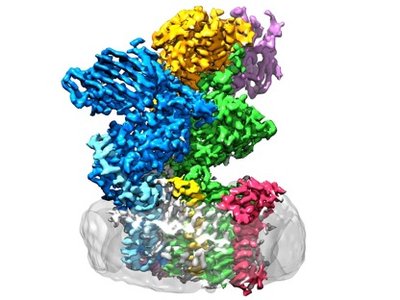
The central dogma describes the flow of genetic information: DNA is transcribed into RNA, which is then translated into protein. This process is essential for gene expression and inheritance.

DNA: The Genetic Blueprint
Structure and Components of DNA
Definition: Deoxyribonucleic acid (DNA) stores genetic information.
Monomers: Nucleotides (composed of a phosphate group, deoxyribose sugar, and a nitrogenous base).
Sugar: Deoxyribose.
Nitrogenous Bases: Adenine (A), Thymine (T), Cytosine (C), Guanine (G).

RNA: The Messenger and More
Structure and Types of RNA
Definition: Ribonucleic acid (RNA) carries instructions from DNA for protein synthesis.
Monomers: Nucleotides (phosphate group, ribose sugar, nitrogenous base).
Sugar: Ribose.
Nitrogenous Bases: Adenine (A), Uracil (U), Cytosine (C), Guanine (G).
Main Types of RNA
Messenger RNA (mRNA): Carries genetic code from DNA to ribosome.
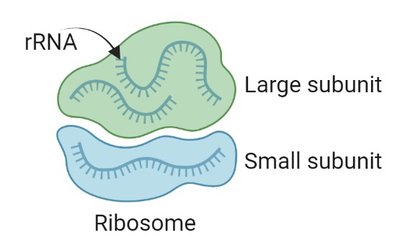
Ribosomal RNA (rRNA): Major structural and catalytic component of ribosomes.
Transfer RNA (tRNA): Transfers amino acids to the ribosome during translation.
The Genetic Code
Codons and Translation
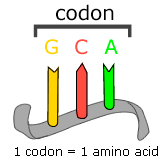
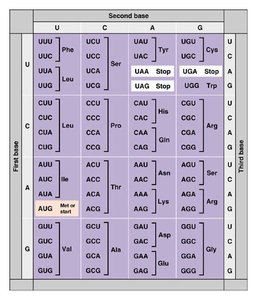
The genetic code is a set of rules by which the sequence of nucleotides in mRNA is translated into the sequence of amino acids in a protein. Each group of three nucleotides (codon) corresponds to one amino acid.
Codon: A sequence of three mRNA nucleotides that codes for a specific amino acid.
Anticodon: A complementary three-nucleotide sequence on tRNA that pairs with the mRNA codon.
Transcription: DNA to mRNA
Overview and Steps
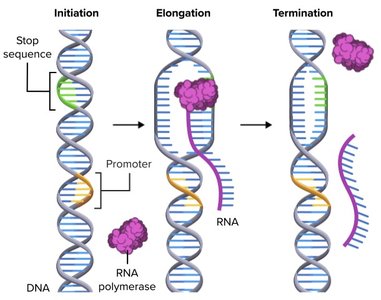
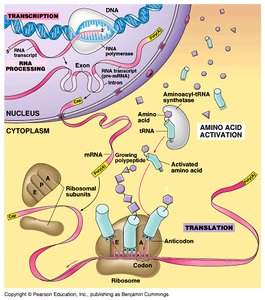
Transcription is the process by which a segment of DNA is copied into mRNA by the enzyme RNA polymerase. This occurs in the nucleus of eukaryotic cells and involves three main steps:
Initiation: RNA polymerase binds to the promoter region of DNA, signaling the start of transcription.
Elongation: RNA polymerase adds complementary RNA nucleotides to the growing mRNA strand.
Termination: Upon reaching a stop sequence, transcription ends and the mRNA is released.
RNA Processing (Eukaryotes)
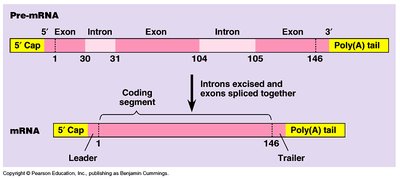
Before mRNA leaves the nucleus, it undergoes processing:
Addition of a 5’ cap
Addition of a poly(A) tail at the 3’ end
Removal of non-coding sequences (introns); coding sequences (exons) are spliced together
Translation: mRNA to Protein
Overview and Steps
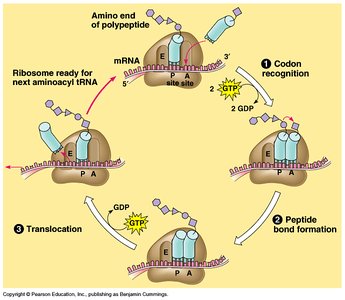
Translation is the process by which the sequence of an mRNA molecule is used to direct the synthesis of a polypeptide at the ribosome. This occurs in the cytoplasm and involves three main steps:
Codon Recognition: tRNA with the complementary anticodon binds to the mRNA codon at the ribosome.
Peptide Bond Formation: The ribosome catalyzes the formation of a peptide bond between amino acids.
Translocation: The ribosome moves along the mRNA, shifting the tRNA and growing polypeptide chain.
Ribosome Structure and Function
Composed of large and small subunits, each containing rRNA and proteins.
Facilitates the correct alignment of mRNA and tRNA and catalyzes peptide bond formation.
Summary Table: Protein Synthesis Steps
Step | Location | Key Molecules | Main Events |
|---|---|---|---|
Transcription | Nucleus | DNA, RNA polymerase, mRNA | DNA is transcribed to pre-mRNA; RNA processing yields mature mRNA |
Translation | Cytoplasm (Ribosome) | mRNA, tRNA, rRNA, amino acids | mRNA is translated into a polypeptide chain |
Visual Summary of Protein Synthesis
Key Terms and Concepts
Gene: A segment of DNA that codes for a protein.
Exon: Coding region of a gene.
Intron: Non-coding region removed during RNA processing.
Polypeptide: A chain of amino acids that folds into a protein.
Equations and Notation
Central Dogma:
Peptide Bond Formation:
