 Back
BackProtists and Fungi: Diversity, Structure, and Importance
Study Guide - Smart Notes
 Tailored notes based on your materials, expanded with key definitions, examples, and context.
Protists
Introduction to Protists
Protists are a highly diverse group of eukaryotic organisms that do not fit into the other kingdoms of plants, animals, or fungi. They are primarily single-celled, though some are multicellular, and exhibit a wide range of nutritional and reproductive strategies.
Kingdom Protista is considered artificial, grouping together organisms for convenience rather than evolutionary relationships.
All protists are eukaryotic, possessing a true nucleus and membrane-bound organelles.
They are classified based on characteristics such as locomotion, nutrition, pigments, and body form.
Theory of Endosymbiosis
The endosymbiosis theory explains the origin of mitochondria and chloroplasts in eukaryotic cells. It proposes that these organelles originated as symbiotic bacteria that were engulfed by ancestral eukaryotic cells.
Mitochondria have their own circular DNA and divide by fission.
They are directed by nuclear genes but retain some autonomy.
Classification and Groups of Protists
Protists are grouped by their mode of nutrition and movement:
Animal-like protists (Protozoans): Heterotrophic, classified by movement (cilia, flagella, pseudopodia, or non-motile).
Plant-like protists (Algae): Autotrophic, photosynthesize, classified by pigment and structure.
Fungus-like protists: Decomposers, form spores, include slime molds and water molds.
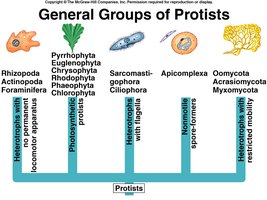
General Biology of Protists
Cell Surface: Varied, may have armor, pellicles, or cell walls.
Locomotion: Achieved by flagella, cilia, or pseudopodia.
Cyst Formation: Some form dormant cysts with resistant coverings.
Nutrition: Phototrophs (photosynthetic), heterotrophs (phagotrophs ingest particles, osmotrophs absorb dissolved nutrients).
Reproduction: Mostly asexual, but sexual reproduction occurs under stress.
Animal-like Protists (Protozoans)
Ciliates: Move with cilia, e.g., Paramecium. Possess micronuclei and macronuclei, reproduce by transverse fission.
Flagellates: Move with flagella, some are photosynthetic (e.g., Euglena), others are pathogenic (e.g., Trypanosoma, Giardia).
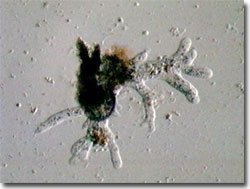
Sarcodines: Move with pseudopodia, e.g., Amoeba.
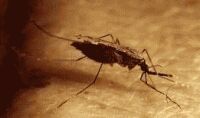
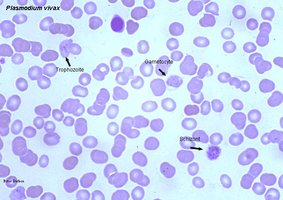
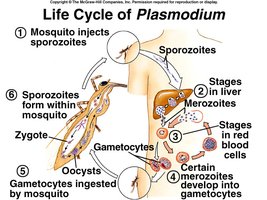
Sporozoans: Non-motile, parasitic, complex life cycles (e.g., Plasmodium causes malaria).
Plant-like Protists (Algae)
Algae are photosynthetic protists, classified by pigment and structure. They are simpler than true plants and can be unicellular or multicellular.
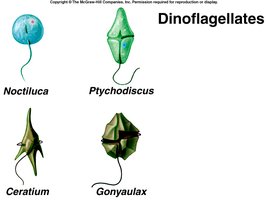
Dinoflagellates: Unicellular, have two flagella, some are symbionts (zooxanthellae).
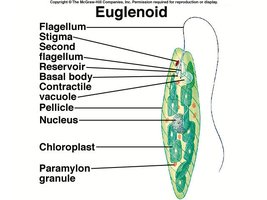
Euglenoids: Freshwater, some autotrophic, have a pellicle and stigma for light detection.
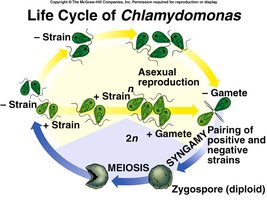
Green Algae (Chlorophyta): Mostly aquatic, important evolutionary link to land plants.
Diatoms (Chrysophyta): Unicellular, double shells of silica, important in aquatic food webs.
Red Algae (Rhodophyta): Marine, contain phycoerythrin pigment.
Brown Algae (Phaeophyta): Multicellular, form kelp forests.
Fungus-like Protists
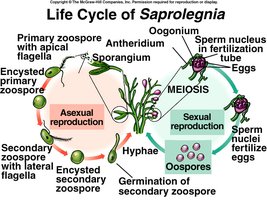
Oomycota: Water molds, parasites or saprobes, have motile spores with two flagella.
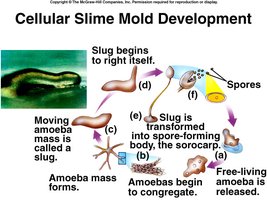
Cellular Slime Molds (Acrasiomycota): Individual amoebas aggregate to form a multicellular slug and then a spore-producing body.
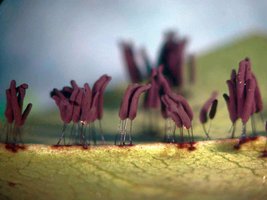
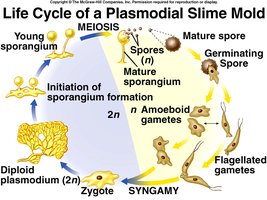
Plasmodial Slime Molds (Myxomycota): Multinucleate, non-walled mass (plasmodium), forms sporangia and spores during resource shortage.
Ecological and Economic Importance of Protists
Slime molds decompose dead organic matter, recycling nutrients.
Algae are major producers of oxygen and form the base of aquatic food chains.
Some protists are important pathogens (e.g., malaria, sleeping sickness).
Fungi
Characteristics of Fungi
Fungi are eukaryotic, mostly multicellular organisms that absorb nutrients from their environment. They play essential roles as decomposers, mutualists, and pathogens.
Cell walls made of chitin.
Body composed of hyphae (filamentous cells) forming a mycelium.
Reproductive structures called fruiting bodies (e.g., mushrooms).
Some fungi are unicellular (yeasts).
Non-motile, heterotrophic by absorption.
Structure of Fungi
Hyphae may be divided by cross-walls (septa) or be coenocytic (lacking septa, multinucleate).
Mycelium penetrates substrate for nutrient absorption.
How Fungi Obtain Nutrients
Secrete digestive enzymes externally and absorb resulting small organic molecules.
Extensive hyphal networks provide large surface area for absorption.
Many fungi can degrade cellulose and lignin in wood.
Major Groups of Fungi
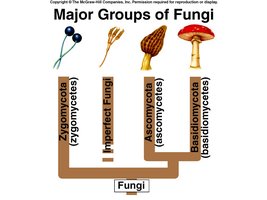
Fungi are classified by their sexual reproductive structures:
Phylum | Key Features | Examples |
|---|---|---|
Zygomycota | Zygospores as fruiting bodies | Bread molds |
Ascomycota | Asci (sacs) containing spores | Yeasts, morels, truffles |
Basidiomycota | Basidia (club-shaped cells) producing spores | Mushrooms, shelf fungi |
Deuteromycota | No observed sexual stage | Penicillium, Aspergillus |
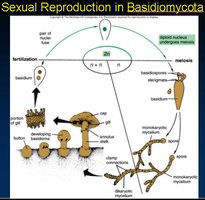
Basidiomycota (Club Fungi)
Produce basidia and basidiospores on fruiting bodies (mushrooms, shelf fungi).
Important for nutrient recycling and as food sources.
Some are poisonous or used in pharmaceuticals.
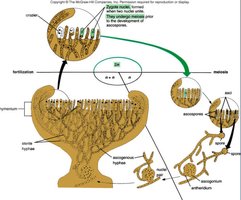
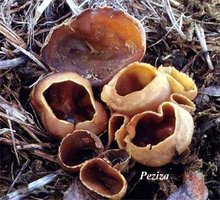
Ascomycota (Sac Fungi)
Produce spores in sac-like asci.
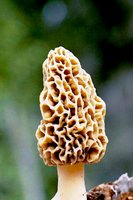
Includes truffles, morels, and yeasts.
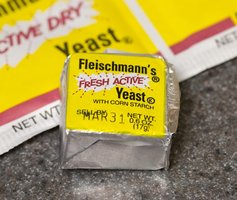
Yeasts reproduce asexually by budding; some cause disease or are used in fermentation.
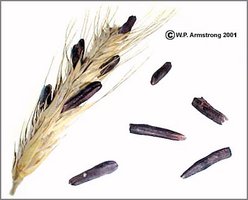
Ergot fungus infects grains and can cause ergotism; also source of medicinal compounds.
Zygomycota (Common Molds)
Produce zygospores during sexual reproduction.
Some species are used in food production and industry.
Deuteromycota (Imperfect Fungi)
No known sexual stage; grouped artificially.
Includes Penicillium (antibiotics, cheese production) and Aspergillus (citric acid, soy sauce, some are pathogens).
Symbiotic Relationships Involving Fungi
Lichens: Mutualism between fungus and photosynthetic partner (algae or cyanobacteria). Fungus provides structure and moisture; algae provide food via photosynthesis.
Mycorrhizae: Mutualism between fungi and plant roots. Fungi enhance water and nutrient absorption; plants provide carbohydrates.
Parasitism: Some fungi infect plants, insects, or animals, causing disease.
Fungal Infections in Humans
Valley Fever: Lung infection caused by inhaling fungal spores.
Ringworm: Skin infection caused by dermatophyte fungi.
