 Back
BackRegulation of Gene Expression and Genetic Biotechnology
Study Guide - Smart Notes
 Tailored notes based on your materials, expanded with key definitions, examples, and context.
Regulation of Gene Expression in Eukaryotes
Post-Transcriptional Regulation
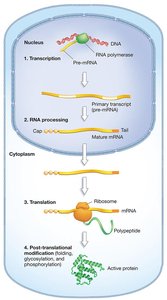
Post-transcriptional regulation refers to the control of gene expression after the process of transcription but before translation. This includes mechanisms such as alternative splicing and RNA interference, which allow cells to produce different proteins from the same gene and to fine-tune gene expression in response to internal and external signals.
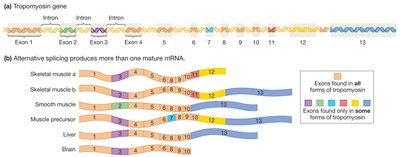
Alternative Splicing: The process by which different combinations of exons are joined together to produce multiple mature mRNA variants from a single primary transcript. This increases protein diversity without increasing the number of genes.
Control by Splicing Proteins: Specific proteins interact with spliceosomes to regulate which exons are included or excluded.
Gene Definition: A gene is now defined as a nucleotide sequence that allows the production of one or more polypeptides via alternative splicing.
Prevalence: Over 90% of human primary mRNA transcripts undergo alternative splicing.
RNA Interference (RNAi)
RNA interference is a regulatory mechanism that uses small RNA molecules to control the stability and translation of mRNA, thereby regulating gene expression post-transcriptionally.
Mechanism: Small, single-stranded RNAs (such as miRNAs and siRNAs) are incorporated into protein complexes (e.g., RISC) and bind to complementary mRNA sequences, leading to mRNA degradation or inhibition of translation.
Types: miRNAs (microRNAs) regulate the expression of most genes, while siRNAs (short interfering RNAs) and piRNAs (PIWI-interacting RNAs) protect against viruses and transposable elements.
Applications: Researchers use RNAi to decrease the expression of specific genes to study their function.
Post-Translational Control
Post-translational regulation allows cells to rapidly respond to environmental changes by modifying proteins after they are synthesized. This can involve chemical modifications, cleavage, or targeted destruction of proteins.
Mechanisms: Addition of carbohydrate groups, cleavage of amino acids, phosphorylation by protein kinases, and targeted protein degradation.
Advantages: Provides rapid response to changing conditions, though it may be energetically wasteful.
Genetic Biotechnology and Genetically Modified Organisms (GMOs)
Genetically Modified Organisms (GMOs)
GMOs are organisms whose genetic material has been altered using genetic engineering techniques. These modifications can enhance desirable traits or introduce new functions.
Example: Arctic Apples – These apples have a silenced gene for polyphenol oxidase, reducing browning after cutting.

Example: GloFish – Fluorescent fish created by introducing genes encoding fluorescent proteins from marine organisms.
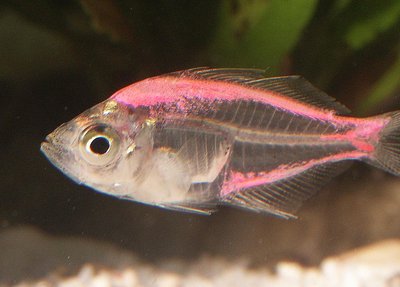
Transgenic Organisms: Organisms that have received genes from another species. Not all GMOs are transgenic; some may have genes edited or silenced without introducing foreign DNA.
Applications of GMOs
Agriculture: Widespread use of genetically modified crops such as corn, cotton, and soybeans to increase yield, pest resistance, and herbicide tolerance.
Transgenic Microbial Factories: Bacteria engineered to produce human proteins like insulin and growth hormone.
Transgenic Animals for Pharmaceutical Production
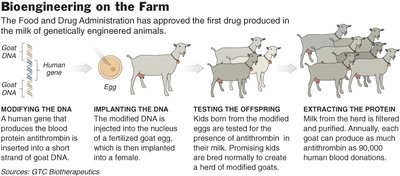
Transgenic animals can be engineered to produce therapeutic proteins in their milk, providing a scalable source of important medicines.
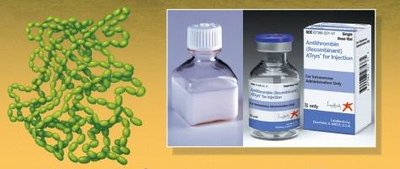
Case Study: Antithrombin Production in Goats
The human antithrombin gene is inserted into the genome of goats, under the control of a mammary gland-specific regulatory sequence (e.g., beta casein promoter).
Goats express the human protein in their milk, which can be purified for medical use.
This method provides a sustainable alternative to sourcing antithrombin from human blood donations.

Gene Structure and Expression
Genes consist of regulatory sequences and coding sequences. The regulatory sequence controls when, where, and how much gene product is made, while the coding sequence determines the amino acid sequence of the protein.
Hybrid Genes: Created by combining regulatory sequences from one organism with coding sequences from another to achieve tissue-specific expression of a foreign protein.
Summary Table: Types of RNA Interference Molecules
Type | Origin | Main Function |
|---|---|---|
miRNA | Endogenous (from the organism's own genome) | Regulates gene expression by mRNA degradation or translation inhibition |
siRNA | Exogenous or endogenous | Defense against viruses and transposable elements; gene silencing |
piRNA | Endogenous (mainly in germ cells) | Silences transposable elements in animal germ cells |
Key Terms and Definitions
Alternative Splicing: The process by which different combinations of exons are joined to produce multiple mRNA variants from a single gene.
RNA Interference (RNAi): A biological process in which small RNAs inhibit gene expression by neutralizing targeted mRNA molecules.
Transgenic Organism: An organism that contains genetic material from another species.
Genetically Modified Organism (GMO): An organism whose genome has been altered by genetic engineering techniques.
Post-Translational Modification: Chemical changes to a protein after it has been synthesized, affecting its function and activity.
Example: Antithrombin Deficiency and Treatment
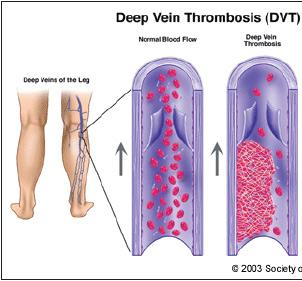
Antithrombin is a protein that inactivates enzymes promoting blood clotting. Deficiency can lead to thrombosis, a dangerous condition where blood clots restrict blood flow. Transgenic goats producing human antithrombin in their milk provide a valuable source of this therapeutic protein.
Conclusion
Regulation of gene expression in eukaryotes is a complex, multi-level process involving transcriptional, post-transcriptional, translational, and post-translational mechanisms. Advances in genetic biotechnology have enabled the creation of GMOs and transgenic organisms for agriculture, research, and medicine, demonstrating the practical applications of our understanding of gene regulation.
