Back
BackRibosomes, Chromatin, and Protein Synthesis: Structure and Function in the Cell
Study Guide - Smart Notes
 Tailored notes based on your materials, expanded with key definitions, examples, and context.
Chromatin Structure and DNA Packaging
DNA and Histones
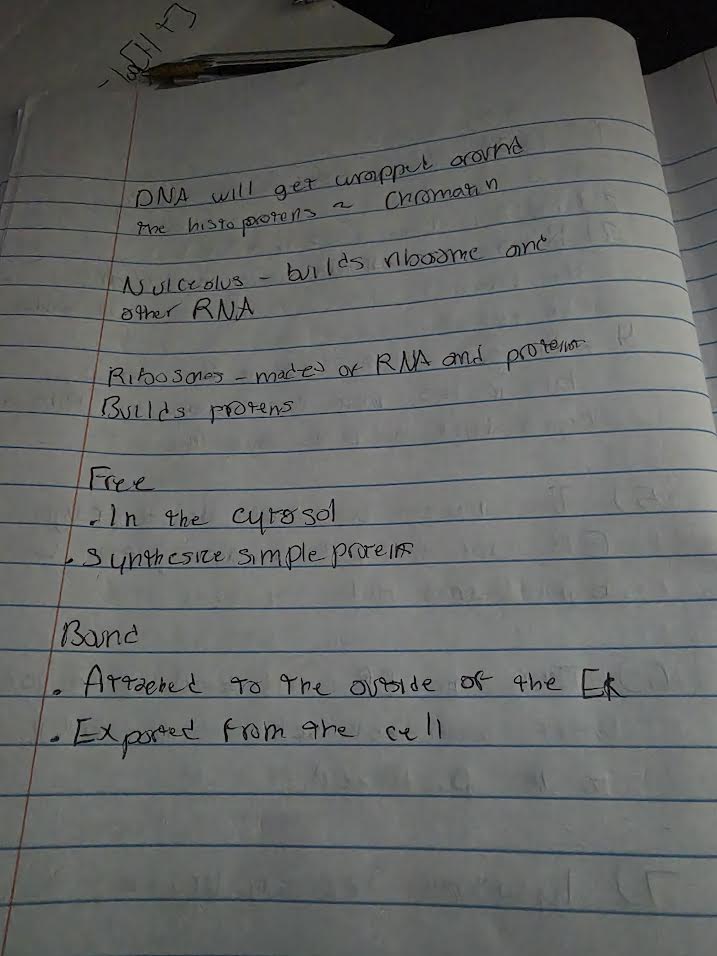
Within the cell nucleus, DNA is tightly coiled around proteins called histones to form a complex known as chromatin. This packaging allows the long DNA molecules to fit within the nucleus and plays a role in gene regulation.
Chromatin: The combination of DNA and histone proteins.
Function: Efficiently organizes DNA and regulates access for transcription and replication.
Example: During cell division, chromatin further condenses to form visible chromosomes.
Nucleolus: The Site of Ribosome Production
Structure and Function
The nucleolus is a prominent structure within the nucleus responsible for synthesizing ribosomal RNA (rRNA) and assembling the components of ribosomes.
Builds ribosome subunits from rRNA and proteins.
Other RNA: The nucleolus also produces other types of RNA involved in protein synthesis.
Example: Cells with high rates of protein synthesis, such as pancreatic cells, have large nucleoli.
Ribosomes: Structure and Function
Composition and Role
Ribosomes are molecular machines made of rRNA and proteins. They are the sites of protein synthesis in all living cells.
Made of: Ribosomal RNA (rRNA) and proteins.
Function: Translate messenger RNA (mRNA) into polypeptide chains (proteins).
Example: Ribosomes are abundant in cells that produce large amounts of protein, such as liver cells.
Types of Ribosomes
Ribosomes exist in two main forms within eukaryotic cells: free ribosomes and bound ribosomes. Their location determines the fate of the proteins they produce.
Free Ribosomes
Location: Suspended in the cytosol (the fluid part of the cytoplasm).
Function: Synthesize proteins that function within the cytosol, such as enzymes involved in glycolysis.
Example: Hemoglobin in red blood cells is synthesized by free ribosomes.
Bound Ribosomes
Location: Attached to the outside of the endoplasmic reticulum (ER) or the nuclear envelope.
Function: Synthesize proteins destined for insertion into membranes, packaging within certain organelles, or export from the cell (secretion).
Example: Digestive enzymes secreted by pancreatic cells are produced by bound ribosomes.
Type of Ribosome | Location | Protein Destination |
|---|---|---|
Free | Cytosol | Cytosolic proteins |
Bound | Attached to ER | Membrane, organelle, or secreted proteins |
Additional info: The distinction between free and bound ribosomes is functional, not structural; ribosomes can switch between being free and bound depending on the protein being synthesized.