 Back
BackScientific Method and Metabolism: Foundations of Biological Inquiry
Study Guide - Smart Notes
 Tailored notes based on your materials, expanded with key definitions, examples, and context.
Scientific Method
Overview of the Scientific Method
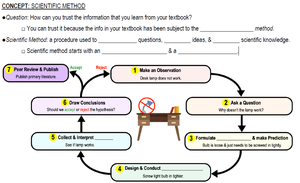
The scientific method is a systematic approach used in biology and other sciences to investigate phenomena, acquire new knowledge, or correct and integrate previous knowledge. It relies on observable, empirical, and measurable evidence, and follows a logical sequence of steps to ensure reliability and reproducibility.
Observation: Noticing and describing a phenomenon or group of phenomena.
Question: Formulating a question based on the observation.
Hypothesis: Proposing a tentative explanation that can be tested.
Prediction: Stating what will happen if the hypothesis is correct, often in an "if...then..." format.
Experiment/Test: Designing and conducting experiments to test the hypothesis.
Results: Collecting and interpreting data from the experiment.
Conclusion: Drawing conclusions about whether the hypothesis is supported or rejected.
Hypothesis and Prediction
A hypothesis is a tentative explanation for an observation that can be tested through experiments and potentially falsified. A prediction is a statement about what will happen if the hypothesis is correct, typically written in an "if...then..." format.
Example: Hypothesis: Plants require light for growth. Prediction: If plants require light for growth, then plants grown in the dark will grow less than those grown in the light.
Scientific Theory
A scientific theory is a well-substantiated explanation of some aspect of the natural world, based on a body of evidence that has repeatedly confirmed through observation and experimentation. Theories are broader than hypotheses and are accepted by the scientific community as valid explanations.
Variables in Experiments
Variables are factors that can change under different conditions in an experiment. Identifying and controlling variables is essential for designing reliable experiments.
Independent Variable: The factor that is deliberately changed.
Dependent Variable: The factor that is observed or measured.
Standardized (Controlled) Variables: Factors that could also influence the dependent variable and must be kept constant.
Experimental and Control Groups
Experimental Group: Receives the treatment or condition being tested.
Control Group: Treated the same as the experimental group except for the independent variable, used for comparison.
Positive Control: Expected to produce a known result (e.g., substrate with enzyme).
Negative Control: Expected to produce no result (e.g., substrate without enzyme).
Predictions, Hypotheses, and Theories
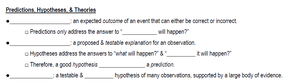
Predictions, hypotheses, and theories are distinct concepts in scientific inquiry:
Prediction: An expected outcome of an event that can be correct or incorrect.
Hypothesis: A proposed, testable explanation for an observation.
Theory: A testable hypothesis supported by a large body of evidence and accepted by the scientific community.
Metabolism: Aerobic and Anaerobic Respiration
Aerobic vs. Anaerobic Respiration (Fermentation)
Metabolism in living organisms involves chemical reactions that convert food into energy. Two major types of respiration are aerobic and anaerobic (fermentation).
Aerobic Respiration: Occurs in the presence of oxygen. The general reaction is:
Anaerobic Respiration (Fermentation): Occurs without oxygen. The general reaction is:
Metabolism of Carbohydrates and Enzymes
Yeast metabolizes different sugars depending on the presence of specific enzymes:
Monosaccharides: Glucose and fructose are simple sugars, easily taken up and metabolized by yeast.
Disaccharides: Sucrose (glucose + fructose) and lactose (glucose + galactose) require enzymes to be broken down.
Enzymes: Yeast produces invertase to break down sucrose, but lacks lactase to metabolize lactose.
Measuring Gas Pressure in Respiration
Gas pressure changes can be used to distinguish between aerobic and anaerobic respiration in yeast:
Aerobic Respiration: Oxygen consumption matches carbon dioxide production, resulting in no net pressure change in a sealed chamber.
Fermentation: Only carbon dioxide is produced, leading to an increase in gas pressure in a sealed chamber.
Summary Table: Comparison of Aerobic and Anaerobic Respiration
Type of Respiration | Reactants | Products | Enzyme Requirement | Gas Pressure Change |
|---|---|---|---|---|
Aerobic | Sugar + O2 | H2O + CO2 + energy | General metabolic enzymes | No net change |
Anaerobic (Fermentation) | Sugar | Ethanol + CO2 + energy | Specific enzymes (e.g., invertase for sucrose) | Increase in pressure |
Example: Yeast can metabolize glucose and fructose directly, but requires invertase to break down sucrose and cannot metabolize lactose due to lack of lactase.
Additional info: Academic context was added to clarify the steps of the scientific method, the role of variables, and the metabolic pathways in yeast.
