 Back
BackStem Cells, Cell Cycle Regulation, and Cell Death
Study Guide - Smart Notes
 Tailored notes based on your materials, expanded with key definitions, examples, and context.
Stem Cells and Differentiated Cells
Definition and Roles
Stem cells are undifferentiated cells capable of repeated division and specialization into various cell types. In contrast, differentiated cells have specific functions and typically lose the ability to divide further. Adult stem cells are present in tissues and serve to replace cells that are lost due to normal turnover or injury.
Stem cells: Can self-renew and differentiate into specialized cells.
Differentiated cells: Perform specialized roles (e.g., muscle contraction, nerve signaling) and usually do not divide again.
Examples of adult stem cells:
Bone marrow stem cells → blood cells
Skin stem cells → epidermal cells
Intestinal stem cells → gut lining
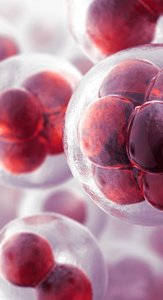
Additional info: Stem cells are essential for tissue maintenance and repair throughout life.
Role of Adult Stem Cells
Tissue Repair and Regeneration
Adult stem cells are crucial for the repair and regeneration of tissues. When injury occurs, signals in the tissue microenvironment stimulate these stem cells to divide and differentiate into the required cell types.
Repair mechanism: Injury triggers signaling pathways that activate stem cell division and specialization.
Example: Muscle satellite cells repair damaged muscle fibers after injury.
Additional info: Research into adult stem cells is ongoing for regenerative medicine and therapies for degenerative diseases.
Disruption of the Cell Cycle
Cancer Development
The cell cycle is tightly regulated to ensure proper cell division. Disruption of this control can lead to cancer, which is characterized by uncontrolled cell proliferation.
Causes: Mutations in oncogenes (promote division) or tumor suppressor genes (inhibit division).
Cancer cells: Ignore stop signals and evade apoptosis (programmed cell death).
Examples:
Skin cancer (often due to UV damage)
Lung cancer (linked to carcinogens)
Leukemia (uncontrolled division of blood cells)
Flow of cancer development:
DNA mutation
Cell ignores stop signals
Continuous division
Tumor formation
Metastasis (spread to other tissues)
The Hayflick Limit
Cellular Senescence and Telomeres
The Hayflick Limit describes the number of times a normal human cell population will divide before cell division stops, typically around 40–60 times. This limit is due to the progressive shortening of telomeres, which are protective caps at the ends of chromosomes.
When telomeres become too short: The cell enters senescence (a non-dividing state) or undergoes apoptosis.
Functions of the Hayflick Limit:
Acts as a biological clock for cells
Prevents cancer by limiting cell division
Maintains genetic stability
Telomerase: An enzyme that rebuilds telomeres, active in stem cells and cancer cells, allowing them to divide indefinitely.
Additional info: Telomere shortening is associated with aging, while telomerase activity is a hallmark of cancer cells.
Apoptosis – Programmed Cell Death
Mechanism and Functions
Apoptosis is a controlled process by which cells self-destruct when they are old, damaged, or no longer needed. This process is essential for development, tissue homeostasis, and prevention of disease.
Steps of apoptosis:
Cell receives a signal to die
Caspase enzymes are activated
Cell shrinks and fragments into apoptotic bodies
Phagocytes remove cell debris
Functions:
Shapes tissues during development (e.g., digit formation)
Removes damaged or potentially dangerous cells
Maintains cell population balance
Imbalance: Too little apoptosis can lead to cancer; too much can contribute to degenerative diseases like Alzheimer’s or Parkinson’s.
Necrosis – Uncontrolled Cell Death
Causes and Consequences
Necrosis is an unplanned form of cell death resulting from acute injury, toxins, or lack of oxygen. Unlike apoptosis, necrosis leads to cell membrane rupture, leakage of cell contents, and inflammation.
Causes: Physical injury, infection, toxins, or ischemia (lack of blood supply).
Examples:
Heart attack (myocardial infarction) due to oxygen deprivation
Gangrene from infection or poor circulation
Comparison:
Apoptosis: Controlled, no inflammation
Necrosis: Uncontrolled, causes inflammation
Review Questions
What is the difference between stem and differentiated cells?
How does cell cycle disruption cause cancer?
How do apoptosis and necrosis differ?
Why is the Hayflick Limit important for aging and cancer prevention?
