 Back
Structure and Function of Cells: Foundations of Human Biology
Study Guide - Smart Notes
 Tailored notes based on your materials, expanded with key definitions, examples, and context.
Structure and Function of Cells
Introduction to Cells
Cells are the fundamental units of life, responsible for carrying out all biological processes necessary for survival. Understanding cell structure and function is essential for comprehending how the human body operates at the molecular and systemic levels.
Cell Theory: States that (1) the cell is the smallest unit of life, (2) all living things are composed of cells, and (3) new cells arise only from pre-existing cells.
Types of Cells: There are two main types: prokaryotic (no nucleus, no organelles; e.g., bacteria) and eukaryotic (nucleus and organelles; e.g., animal and plant cells).
Human Cells: All human cells are eukaryotic and exhibit a wide diversity in structure and function, reflecting their specialized roles in tissues and organs.
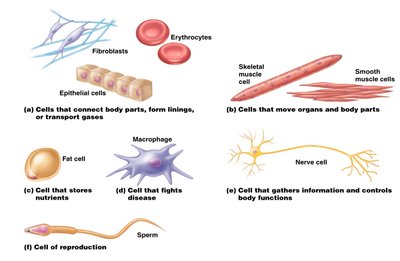
General Structure of an Animal Cell
Major Components
Despite their diversity, most animal cells share three main structural regions:
Plasma Membrane: Encloses the cell, separating internal contents from the external environment.
Nucleus: Contains genetic material (DNA) and controls cellular activities.
Cytoplasm: The fluid matrix containing organelles, where most cellular processes occur.
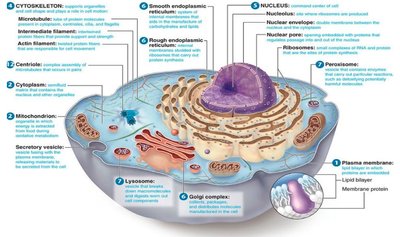
Plasma Membrane
Structure and Composition
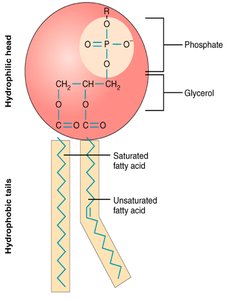
The plasma membrane is a selectively permeable barrier composed primarily of a phospholipid bilayer interspersed with proteins, cholesterol, and carbohydrates.
Phospholipids: Form the basic structure, with hydrophilic (water-loving) heads and hydrophobic (water-fearing) tails.
Proteins: Integral and peripheral proteins serve as channels, receptors, enzymes, and structural anchors.
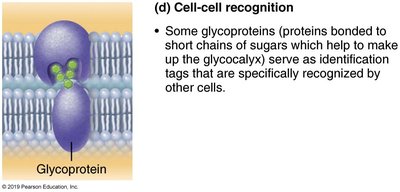
Carbohydrates: Attach to proteins and lipids, contributing to cell recognition and signaling.
Cholesterol: Stabilizes membrane fluidity.
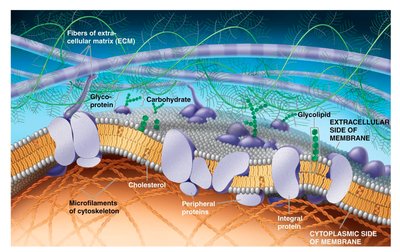
Functions of Membrane Proteins
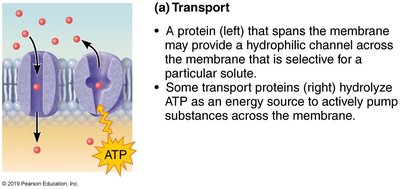
Transport: Channels and carriers move substances across the membrane.
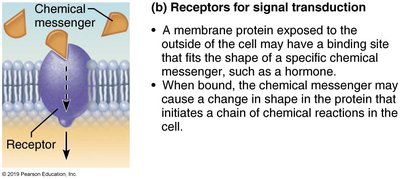
Receptors: Bind specific molecules (e.g., hormones) and initiate cellular responses.
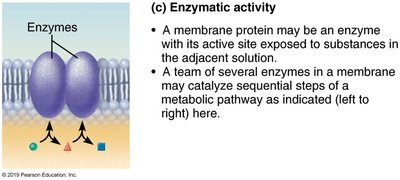
Enzymatic Activity: Catalyze metabolic reactions.
Cell-Cell Recognition: Glycoproteins serve as identification tags.
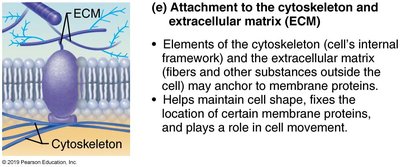
Attachment: Anchor the cytoskeleton and extracellular matrix.
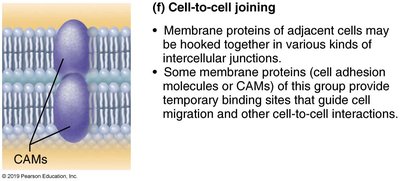
Cell-to-Cell Joining: Form intercellular junctions for communication and adhesion.
Nucleus
Structure and Function
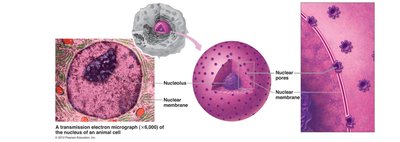
The nucleus is the control center of the cell, housing DNA and coordinating activities such as growth, metabolism, and reproduction.
Nuclear Envelope: Double membrane with pores for molecular exchange.
Chromatin: DNA-protein complex; condenses into chromosomes during cell division.
Nucleolus: Site of ribosome assembly.
Cytoplasm and Organelles
Major Organelles and Their Functions
The cytoplasm contains specialized structures called organelles, each performing distinct functions essential for cell survival.
Organelle | Structure | Function |
|---|---|---|
Nucleus | Double membrane, pores | Genetic information, ribosome assembly |
Ribosomes | No membrane, RNA & proteins | Protein synthesis |
Rough ER | Membranous sacs with ribosomes | Protein synthesis & processing |
Smooth ER | Membranous sacs, no ribosomes | Lipid synthesis |
Golgi apparatus | Stack of flattened sacs | Protein modification & sorting |
Lysosomes | Single membrane, enzymes | Digestion & recycling |
Peroxisomes | Single membrane, enzymes | Oxidation of fatty acids & toxins |
Mitochondria | Double membrane | ATP production |
Cytoskeleton | Protein filaments | Structural support, movement |
Plasma membrane | Phospholipid bilayer | Selective permeability |
Membrane Transport Mechanisms
Selective Permeability
The plasma membrane regulates the movement of substances into and out of the cell, maintaining homeostasis through selective permeability.
Passive Transport
Passive transport does not require cellular energy and relies on concentration or pressure gradients.
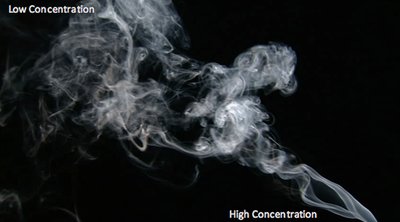
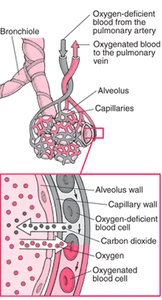
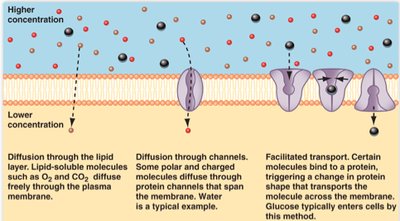
Diffusion: Movement of molecules from high to low concentration.
Facilitated Diffusion: Transport of molecules via membrane proteins.
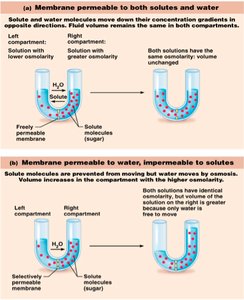
Osmosis: Diffusion of water across a selectively permeable membrane.
Filtration: Movement of water and solutes due to pressure differences.
Active Transport
Active transport requires energy (usually ATP) to move substances against their concentration gradients.
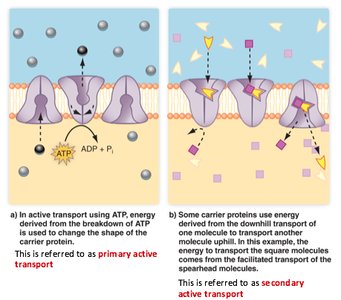
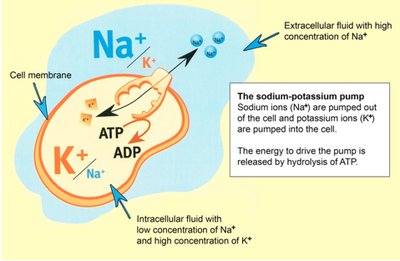
Primary Active Transport: Direct use of ATP to transport molecules (e.g., sodium-potassium pump).
Secondary Active Transport: Uses energy from the movement of another substance down its gradient.
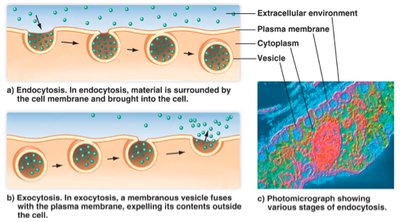
Vesicular Transport: Movement of large particles via endocytosis (into cell) and exocytosis (out of cell).
Sodium-Potassium Pump
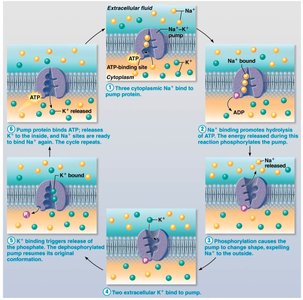
The sodium-potassium pump is a vital active transport mechanism that maintains cellular ion gradients, essential for nerve impulse transmission and muscle contraction.
Expels 3 Na+ ions from the cell and imports 2 K+ ions into the cell per ATP molecule hydrolyzed.
Maintains membrane potential and osmotic balance.
Tonicity and Osmolarity
Definitions and Effects on Cells
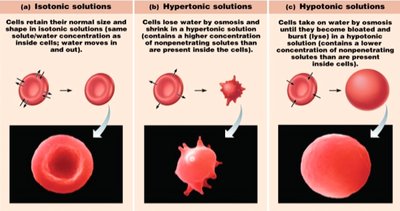
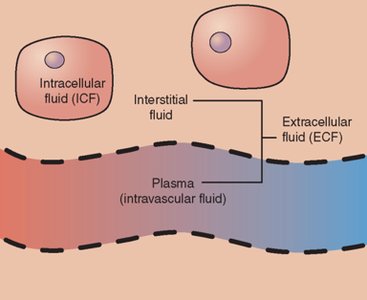
Tonicity refers to the ability of a solution to cause water movement into or out of a cell by osmosis, while osmolarity is the total solute concentration per liter of solution.
Isotonic Solution: Equal solute concentration inside and outside the cell; no net water movement.
Hypertonic Solution: Higher solute concentration outside the cell; water leaves the cell, causing shrinkage.
Hypotonic Solution: Lower solute concentration outside the cell; water enters the cell, causing swelling or lysis.
Cellular Metabolism and Energy
Metabolism Overview
Metabolism encompasses all chemical reactions in the cell, divided into anabolism (building molecules) and catabolism (breaking down molecules).
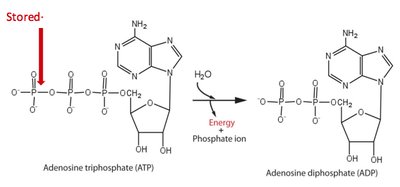
ATP (Adenosine Triphosphate): The primary energy currency of the cell, storing energy in the bond between the 2nd and 3rd phosphate groups.
Cellular Respiration
Stages of Cellular Respiration
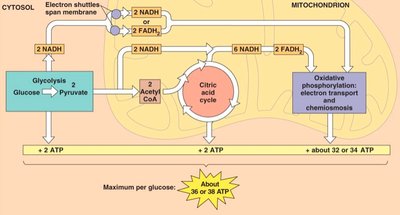
Cellular respiration is the process by which cells convert glucose and other nutrients into ATP. It consists of four main stages:
Glycolysis: Occurs in the cytoplasm; splits glucose into two pyruvate molecules, yielding 2 ATP and 2 NADH.
Preparatory Step: Pyruvate is converted to acetyl CoA, producing NADH and CO2.
Citric Acid Cycle (Krebs Cycle): Occurs in mitochondria; acetyl CoA is broken down, generating NADH, FADH2, ATP, and CO2.
Electron Transport Chain: Located in the inner mitochondrial membrane; uses electrons from NADH and FADH2 to generate a large amount of ATP (32–34 ATP per glucose).
Anaerobic Respiration: In the absence of oxygen, glycolysis leads to lactic acid production and yields only 2 ATP per glucose.
Summary Table: Eukaryotic vs. Prokaryotic Cells
Feature | Eukaryotic Cell | Prokaryotic Cell |
|---|---|---|
Plasma Membrane | Present | Present |
Cell Wall | Absent (in animals) | Present |
Nucleus | Present | Absent |
Cytoplasm | Present | Present |
Organelles | Present | Absent |
Additional info: These notes provide a comprehensive overview of cell structure and function, membrane transport, and cellular energy processes, foundational for further study in human biology and physiology.
