 Back
BackStructure and Function of Large Biological Molecules (Chapter 5 Study Guide)
Study Guide - Smart Notes
 Tailored notes based on your materials, expanded with key definitions, examples, and context.
Structure and Function of Large Biological Molecules
Macromolecules: Polymers and Monomers
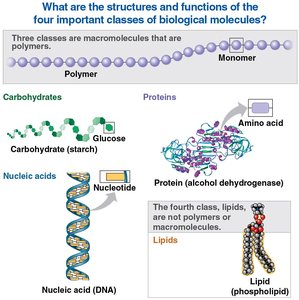
Macromolecules are large, complex molecules essential for life, including carbohydrates, proteins, and nucleic acids. These are polymers, built from repeating units called monomers. Lipids, though vital, are not true polymers.
Polymer: A long molecule consisting of many similar or identical building blocks (monomers).
Monomer: The repeating unit that serves as a building block for polymers.
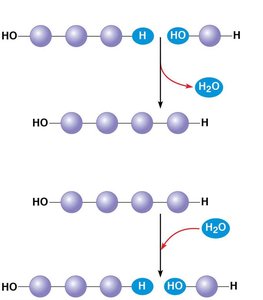
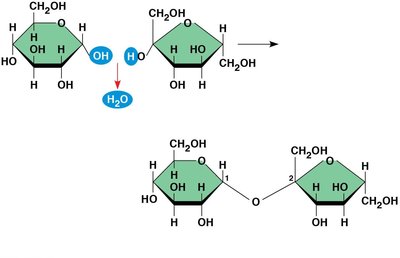
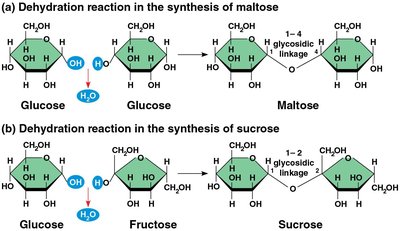
Dehydration Reaction: Joins two monomers by removing a water molecule.
Hydrolysis: Breaks polymers into monomers by adding water.
Enzymes: Biological catalysts that facilitate these reactions.
Additional info: The diversity of macromolecules arises from the variety of monomers and their arrangements.
Carbohydrates: Structure and Function
Carbohydrates are compounds containing carbon, hydrogen, and oxygen, and serve as fuel and building material. They include sugars (monosaccharides) and polymers of sugars (polysaccharides).
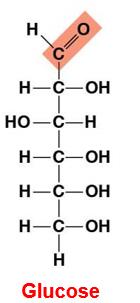
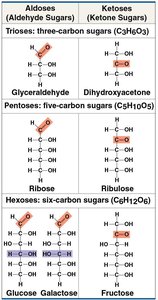
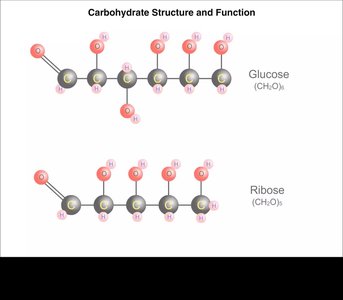
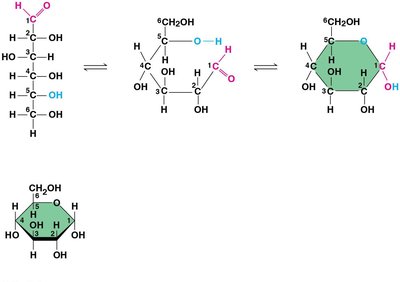
Monosaccharides: Simple sugars, such as glucose, ribose, and fructose. They are classified by the location of the carbonyl group (aldose or ketose) and the number of carbon atoms.
Disaccharides: Formed by joining two monosaccharides via a dehydration reaction, creating a glycosidic linkage.
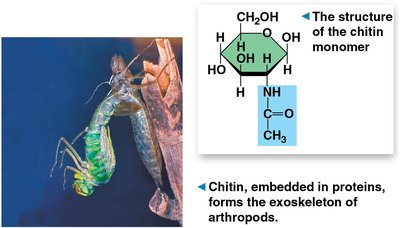
Polysaccharides: Polymers of monosaccharides with storage (starch, glycogen) or structural (cellulose, chitin) roles.

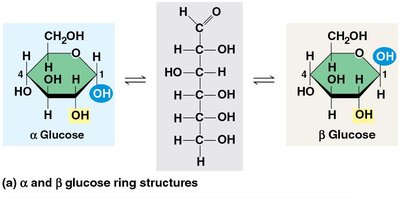
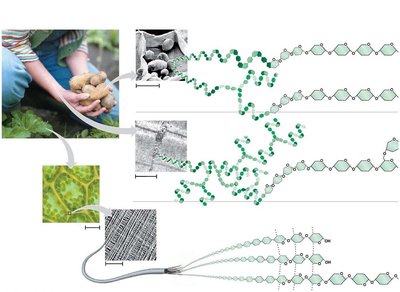
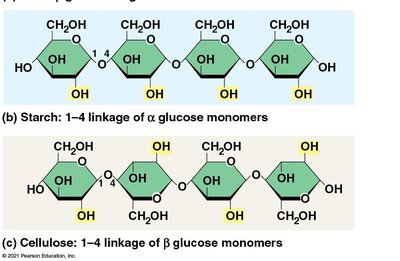
Starch: Storage polysaccharide in plants, composed of alpha glucose monomers.
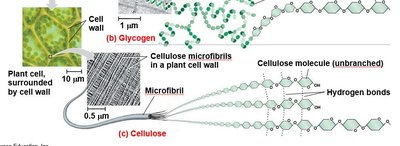
: Storage polysaccharide in animals, highly branched.
Cellulose: Structural polysaccharide in plant cell walls, composed of beta glucose monomers.
Chitin: Structural polysaccharide in arthropod exoskeletons and fungal cell walls.
Additional info: Humans can digest starch but not cellulose due to enzyme specificity for alpha linkages.
Lipids: Structure and Function
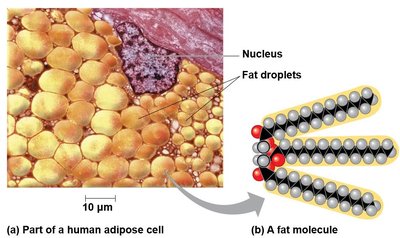
Lipids are hydrophobic molecules, including fats, phospholipids, and steroids. They are not polymers but are essential for energy storage, membrane structure, and signaling.
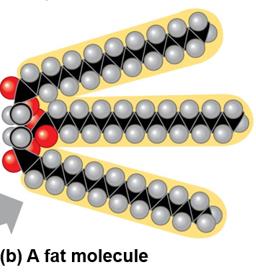
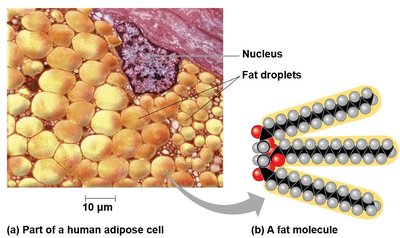
Fats: Constructed from glycerol and fatty acids. Three fatty acids join glycerol via ester linkages to form triglycerides.
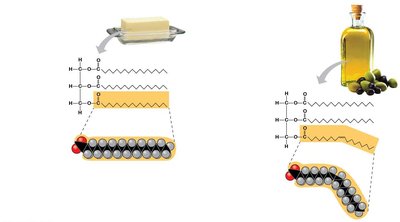
Saturated fats: No double bonds; solid at room temperature (animal fats).
Unsaturated fats: One or more double bonds; liquid at room temperature (plant and fish oils).
Phospholipids: Two fatty acids and a phosphate group attached to glycerol; form cell membranes.
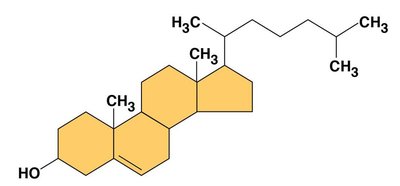
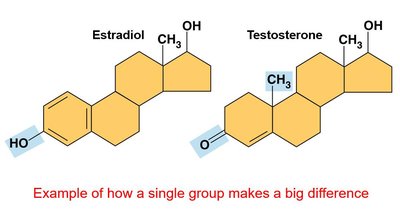
Steroids: Lipids with four fused rings; cholesterol is a key example.
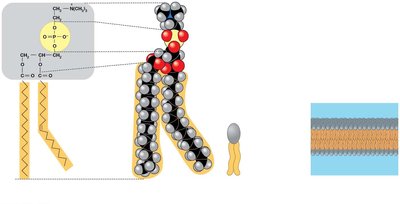
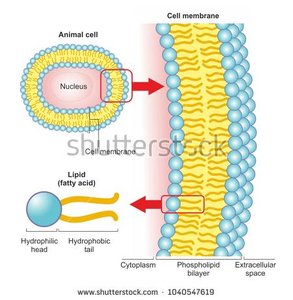
Additional info: Phospholipids self-assemble into bilayers, forming the basis of biological membranes.
Proteins: Structure and Function
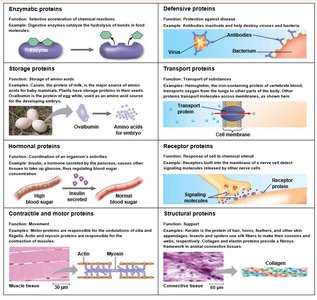
Proteins are polymers of amino acids and account for more than 50% of the dry mass of most cells. They perform diverse functions, including catalysis, defense, transport, communication, movement, and structural support.
Amino acids: Organic molecules with carboxyl and amino groups; differ by their side chains (R groups).
Peptide bond: Covalent bond joining amino acids in a polypeptide.
Polypeptide: Polymer of amino acids; proteins may consist of one or more polypeptides.
Protein structure: Four levels—primary (sequence), secondary (coils/folds), tertiary (3D shape), quaternary (multiple polypeptides).
Denaturation: Loss of protein structure due to environmental changes; results in loss of function.
Additional info: Protein folding is assisted by chaperonins; misfolded proteins are linked to diseases such as Alzheimer's and Parkinson's.
Nucleic Acids: Structure and Function
Nucleic acids store, transmit, and help express hereditary information. DNA and RNA are polymers of nucleotides, each consisting of a nitrogenous base, a pentose sugar, and a phosphate group.
DNA: Double-stranded helix; stores genetic information.
RNA: Single-stranded; involved in protein synthesis.
Nucleotide: Monomer of nucleic acids; composed of a nucleoside (base + sugar) and a phosphate group.
Phosphodiester linkage: Joins nucleotides in a polynucleotide chain.
Complementary base pairing: A-T and G-C in DNA; A-U and G-C in RNA.
Gene expression: DNA → RNA → protein.
Additional info: Genomics and proteomics analyze large sets of genes and proteins, transforming biological research and evolutionary studies.
Summary Table: Macromolecules
Class | Monomer | Polymer | Main Function |
|---|---|---|---|
Carbohydrates | Monosaccharide | Polysaccharide | Energy storage, structure |
Proteins | Amino acid | Polypeptide | Catalysis, structure, transport, defense |
Nucleic Acids | Nucleotide | Polynucleotide | Information storage and transmission |
Lipids | Fatty acid, glycerol | Not true polymers | Energy storage, membranes, signaling |
