 Back
BackTaxonomy and Phylogenetics: Classification and Evolutionary Relationships
Study Guide - Smart Notes
 Tailored notes based on your materials, expanded with key definitions, examples, and context.
Taxonomy: The Science of Classification
Definition and Importance
Taxonomy is the branch of biology concerned with identifying, naming, and organizing the diversity of life into related categories. It provides a universal language for biologists and helps in understanding evolutionary relationships among organisms.
Taxonomy allows scientists to communicate clearly about species and their relationships.
It organizes biodiversity into hierarchical categories, from the most general to the most specific.
Historical Foundations: Carolus Linnaeus
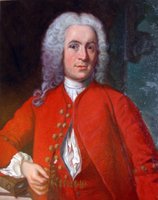
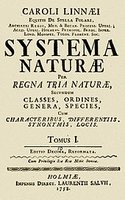
Carolus Linnaeus, an 18th-century Swedish scientist, is considered the father of modern taxonomy. He developed a systematic approach to classifying organisms, which is still in use today, although it has been modified to incorporate evolutionary theory.
Linnaeus created a hierarchical system for classifying organisms.
He did not accept evolution, but his system is now used to chart evolutionary relationships.
Evolution of Classification Systems
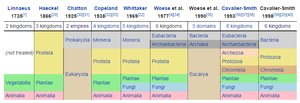
Classification systems have evolved over time, reflecting advances in scientific understanding, especially with the advent of molecular biology and genetics.
Early systems recognized only two kingdoms (plants and animals).
Modern systems recognize three domains and multiple kingdoms, reflecting genetic and cellular differences.
Binomial Nomenclature
Structure and Rules
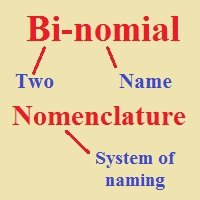
Binomial nomenclature is a two-part system for naming species, developed by Linnaeus. It uses Latin, a 'dead' language, to ensure names remain consistent over time.
The name consists of the Genus (capitalized) and species (lowercase).
Names are italicized or underlined (e.g., Homo sapiens).
The genus name can be abbreviated (e.g., H. sapiens).
The Linnaean Hierarchy
Levels of Classification
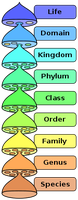
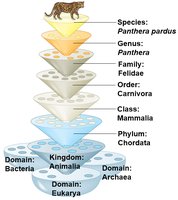
The Linnaean system organizes living things into a hierarchy of categories, from the broadest (domain) to the most specific (species).
Domain (most inclusive)
Kingdom
Phylum
Class
Order
Family
Genus
Species (most specific)
The Three Domain System
Overview of Domains
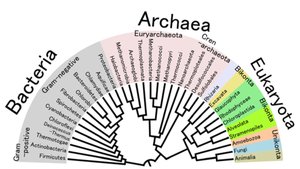
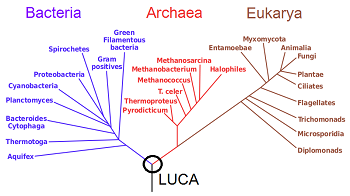
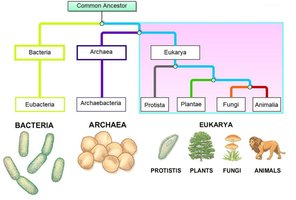
Modern taxonomy recognizes three domains, each with distinct characteristics: Bacteria, Archaea, and Eukarya.
Bacteria: Single-celled, prokaryotic, cell walls contain peptidoglycan.
Archaea: Single-celled, prokaryotic, cell walls lack peptidoglycan, often live in extreme environments.
Eukarya: Cells with a nucleus and membrane-bound organelles; includes plants, animals, fungi, and protists.
Bacteria
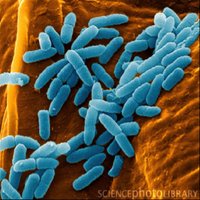
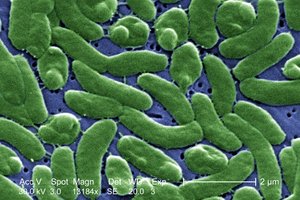
Bacteria are prokaryotic microorganisms with diverse roles in ecosystems and human health.
Cell walls contain peptidoglycan.
Can be beneficial (e.g., gut flora) or harmful (pathogens).
Archaea
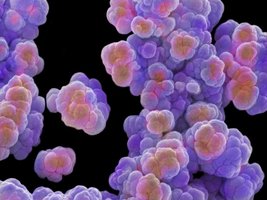
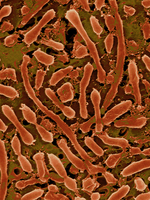
Archaea are prokaryotes distinct from bacteria, often found in extreme environments such as hot springs and salt lakes.
Cell walls lack peptidoglycan.
No known archaea are pathogenic to humans.
Eukarya
Eukarya includes all organisms with eukaryotic cells, which have a true nucleus and organelles. This domain is the most diverse, containing kingdoms such as plants, animals, fungi, and protists.
Can be unicellular or multicellular.
Sexual reproduction is common.
Mapping Out Evolution: Cladistics and Phylogenetics
Cladogram
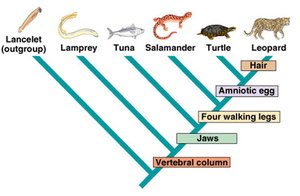
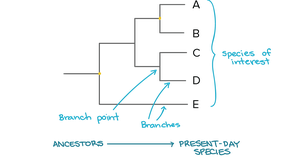
A cladogram is a diagram that shows relationships among species based on shared characteristics. It helps visualize evolutionary relationships without indicating time.
Branches represent groups with shared traits.
Cladograms are used to hypothesize evolutionary relationships.
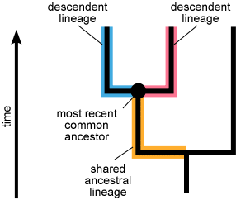
Common Ancestor
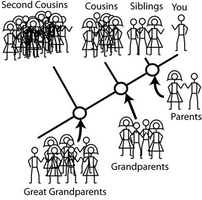
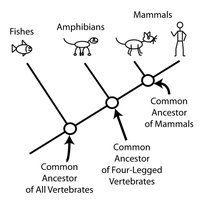
A common ancestor is the last shared ancestor between two or more species. All life on Earth shares a common ancestor at some point in evolutionary history.
Helps trace evolutionary lineages.
Clade
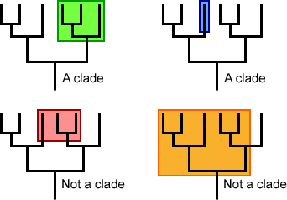
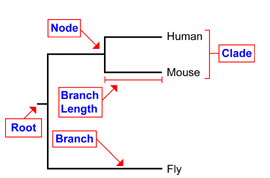
A clade is a group consisting of a common ancestor and all its descendants. Clades are identified on phylogenetic trees and are fundamental units in cladistics.
Clades can be nested within larger clades.
Ancestral and Derived Traits
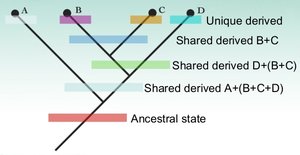
Traits can be classified as ancestral (shared with a common ancestor) or derived (evolved in a particular lineage).
Ancestral traits: Present in the common ancestor and shared by a larger group.
Derived traits: New traits that appear in a subgroup, not present in the ancestor; useful for distinguishing clades.
Phylogenetic Tree
A phylogenetic tree is a diagram that shows the evolutionary history of organisms, often with respect to geological time. Unlike cladograms, branch lengths can indicate time or genetic change.
Shows patterns of descent and speciation events.
Helps reconstruct evolutionary history.
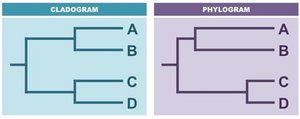
Cladogram vs. Phylogenetic Tree
The main difference between a cladogram and a phylogenetic tree is that the branch lengths in a phylogenetic tree can represent time or genetic change, while in a cladogram, branch lengths are arbitrary and only show relationships.
Nodes and Roots
In phylogenetic trees, a node represents a speciation event, while the root is the most recent common ancestor of all taxa in the tree. Nodes can be rotated without changing the relationships depicted.
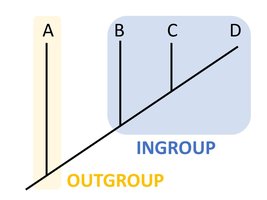
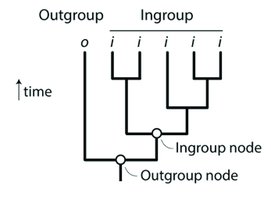
Outgroup
An outgroup is a species or group that is closely related to but not part of the group under study (ingroup). Outgroups help root the tree and clarify evolutionary relationships.
Used to determine which traits are ancestral or derived.
Summary Table: Major Taxonomic Ranks
Rank | Description |
|---|---|
Domain | Largest, most inclusive group; Bacteria, Archaea, Eukarya |
Kingdom | Second largest; e.g., Animalia, Plantae, Fungi |
Phylum | Groups of related classes |
Class | Groups of related orders |
Order | Groups of related families |
Family | Groups of related genera |
Genus | Groups of related species |
Species | Most specific; a group of organisms that can interbreed |
Additional info: Modern taxonomy increasingly uses molecular data (DNA, RNA, proteins) to resolve evolutionary relationships, supplementing traditional morphological characteristics.
