 Back
The Cell Cycle: Mechanisms and Regulation
Study Guide - Smart Notes
 Tailored notes based on your materials, expanded with key definitions, examples, and context.
Chapter 12: The Cell Cycle
Overview of the Cell Cycle
The cell cycle is a fundamental process by which cells grow, replicate their DNA, and divide. It is essential for reproduction, growth, repair, and maintenance in living organisms. The cell cycle consists of a series of ordered events that ensure the accurate duplication and distribution of genetic material to daughter cells.
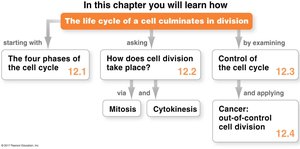
Cell division is used for reproduction in single-celled organisms, growth and development in multicellular organisms, repair and replacement of cells, and production of gametes (sperm and egg).
There are two main types of reproduction: asexual reproduction (offspring genetically identical to parent) and sexual reproduction (offspring genetically distinct from parents).
Phases of the Cell Cycle
The cell cycle is divided into two main stages: Interphase and the Mitotic (M) phase. Interphase is further subdivided into G1, S, and G2 phases, while the M phase includes mitosis and cytokinesis.
G1 phase (First Gap): Cell grows and synthesizes proteins and organelles.
S phase (Synthesis): DNA is replicated, resulting in two sister chromatids for each chromosome.
G2 phase (Second Gap): Cell continues to grow and prepares for division.
M phase: Includes mitosis (nuclear division) and cytokinesis (cytoplasmic division).
Chromosomes and Genetic Material
Structure and Function of Chromosomes
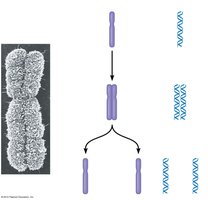
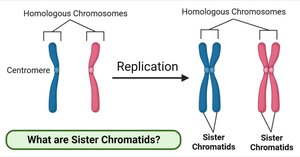
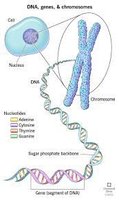
Chromosomes are structures composed of DNA and proteins (histones) that carry genetic information. Before cell division, chromosomes are duplicated, forming two identical sister chromatids joined at a region called the centromere.
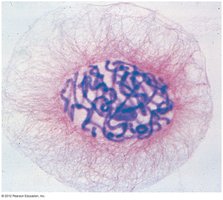
Chromatin: The complex of DNA and proteins that makes up chromosomes.
Sister chromatids: Identical copies of a chromosome, connected at the centromere.
Centromere: The region where sister chromatids are most closely attached.
A gene is a segment of DNA that codes for a specific RNA and, consequently, a specific protein.
Events of the Cell Cycle
Interphase
During interphase, the cell prepares for division by growing, replicating its DNA, and synthesizing necessary components. Chromosomes are not yet visible as distinct structures.
Cytoplasmic contents double, centrosomes form, and nucleoli are visible.
DNA replication occurs during the S phase.
Mitosis: Division of the Nucleus
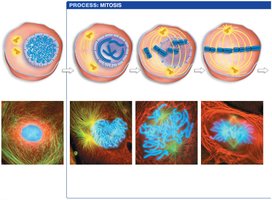
Mitosis is the process by which replicated chromosomes are separated into two nuclei. It consists of five subphases: prophase, prometaphase, metaphase, anaphase, and telophase.
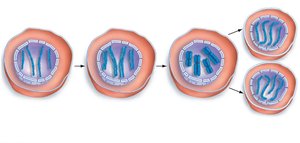
Prophase: Chromosomes condense, spindle apparatus forms, nucleoli disappear.
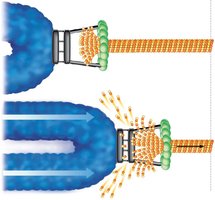
Prometaphase: Nuclear envelope breaks down, spindle microtubules attach to kinetochores on chromosomes.
Metaphase: Chromosomes align at the metaphase plate (cell equator).
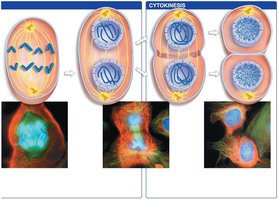
Anaphase: Sister chromatids separate and move toward opposite poles.
Telophase: Nuclear envelopes reform, chromosomes decondense, nucleoli reappear.
Cytokinesis: Division of the Cytoplasm
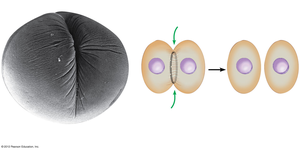
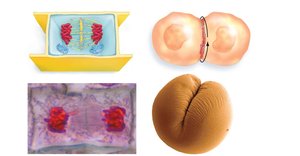
Cytokinesis is the process by which the cytoplasm divides, resulting in two daughter cells. The mechanism differs between animal and plant cells.
Animal cells: A cleavage furrow forms, pinching the cell in two via a contractile ring of actin and myosin.
Plant cells: A cell plate forms from vesicles, eventually developing into a new cell wall separating the two daughter cells.
Bacterial Cell Division: Binary Fission
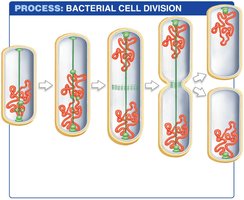
Bacteria divide by a process called binary fission, which is simpler than mitosis. The bacterial chromosome is replicated, and the cell splits into two genetically identical daughter cells.
Regulation of the Cell Cycle
Cell-Cycle Checkpoints
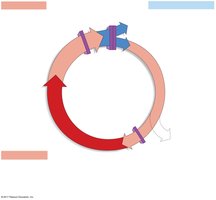
The cell cycle is tightly regulated by checkpoints that ensure each phase is completed accurately before the next begins. There are four main checkpoints: G1, S, G2, and M phase checkpoints.
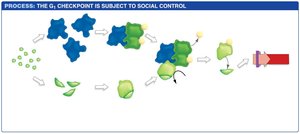
G1 checkpoint: Checks for adequate cell size, nutrients, growth signals, and undamaged DNA.
G2 checkpoint: Ensures DNA replication is complete and undamaged, and that MPF (M-phase promoting factor) is present.
M-phase checkpoints: Ensure chromosomes are properly attached to the spindle and segregated before division completes.
Checkpoint | Pass Criteria |
|---|---|
G1 | Cell size adequate, nutrients sufficient, social signals present, DNA undamaged |
G2 | Chromosomes replicated, DNA undamaged, activated MPF present |
M | Chromosomes attached to spindle, properly segregated, MPF absent |
Control Mechanisms and Cancer
Cell-cycle control involves regulatory proteins such as cyclins, cyclin-dependent kinases (Cdks), and tumor suppressors. Defects in these controls can lead to uncontrolled cell division and cancer.
Cancer is caused by cells that grow uncontrollably, invade tissues, and may spread (metastasize).
Cancer cells often have mutations that activate growth-promoting proteins or inactivate tumor suppressor genes.
Summary Table: Key Events of the Cell Cycle
Phase | Main Events |
|---|---|
G1 | Cell growth, organelle duplication |
S | DNA replication |
G2 | Preparation for mitosis |
Mitosis | Division of nucleus (prophase, prometaphase, metaphase, anaphase, telophase) |
Cytokinesis | Division of cytoplasm |
Key Terms
Chromosome: A DNA molecule with associated proteins, carrying genetic information.
Sister chromatids: Two identical copies of a chromosome, joined at the centromere.
Centromere: The region where sister chromatids are attached.
Mitotic spindle: Structure made of microtubules that separates chromosomes during mitosis.
Cytokinesis: Division of the cytoplasm into two daughter cells.
Binary fission: Asexual reproduction in prokaryotes.
Checkpoint: Control point in the cell cycle where stop and go-ahead signals regulate the cycle.
Cyclin-dependent kinase (Cdk): Enzyme that, when combined with cyclin, regulates the cell cycle.
Tumor suppressor: Gene that protects a cell from one step on the path to cancer.
