 Back
BackThe Central Dogma of Molecular Biology: Transcription and Translation
Study Guide - Smart Notes
 Tailored notes based on your materials, expanded with key definitions, examples, and context.
The Central Dogma of Molecular Biology
Overview of Genetic Information Flow
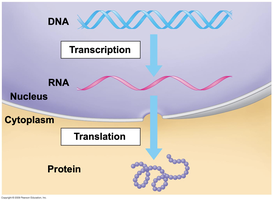
The central dogma of molecular biology describes the flow of genetic information within a biological system. It explains how the instructions in DNA are converted into functional products, primarily proteins, through two key processes: transcription and translation.
DNA stores genetic information in the nucleus of eukaryotic cells.
Transcription is the process by which a segment of DNA is copied into RNA.
Translation is the process by which the information in RNA is used to synthesize proteins.
Cellular Diversity and Gene Expression
How Different Cell Types Arise
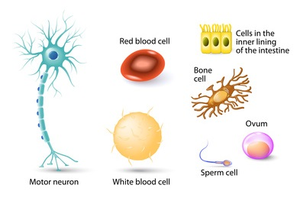
Although all cells in a multicellular organism (except gametes) contain the same DNA, they can look and function differently due to differences in gene expression. This means that different sets of genes are turned on or off in different cell types, leading to the production of different proteins.
Gene expression refers to the process by which information from a gene is used to synthesize a functional gene product, usually a protein.
Examples of specialized cells include neurons, fat cells, skin cells, and epithelial cells of the intestine.
Transcription: DNA to RNA
Mechanism and Stages of Transcription
Transcription is the first step of gene expression, where a specific segment of DNA is used as a template to synthesize RNA. This process occurs in the nucleus of eukaryotic cells and involves several stages:
Initiation: RNA polymerase binds to the promoter region of the gene, and the DNA strands unwind.
Elongation: RNA polymerase moves along the template strand, adding complementary RNA nucleotides in the 5' to 3' direction.
Termination: Transcription ends when RNA polymerase reaches a terminator sequence, releasing the newly formed RNA molecule.
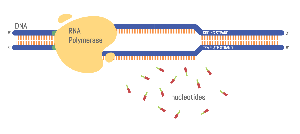
Key Enzyme: RNA polymerase is responsible for synthesizing RNA from the DNA template.
Directionality: RNA is synthesized in the 5' to 3' direction, complementary to the DNA template strand.
RNA Processing in Eukaryotes
Modifications of Pre-mRNA
In eukaryotic cells, the primary RNA transcript (pre-mRNA) undergoes several processing steps before becoming mature mRNA that can be exported to the cytoplasm for translation:
5' Capping: Addition of a methylated guanine cap to the 5' end for stability and recognition by ribosomes.
3' Polyadenylation: Addition of a poly-A tail to the 3' end to protect mRNA from degradation.
Splicing: Removal of non-coding sequences (introns) and joining of coding sequences (exons).
Alternative splicing allows a single gene to produce multiple protein isoforms by including or excluding different exons.
Translation: RNA to Protein
Mechanism and Stages of Translation
Translation is the process by which the sequence of an mRNA molecule is used to direct the synthesis of a polypeptide (protein). This occurs in the cytoplasm at the ribosome and involves three main stages:
Initiation: The ribosome assembles around the start codon (AUG) on the mRNA, and the first tRNA brings methionine.
Elongation: tRNAs bring amino acids to the ribosome, which are joined together by peptide bonds to form a growing polypeptide chain.
Termination: When a stop codon is reached, a release factor binds, and the completed polypeptide is released.
Key Participants:
mRNA – carries the genetic code from DNA.
tRNA – brings specific amino acids to the ribosome.
rRNA – forms the core of the ribosome's structure and catalyzes peptide bond formation.
The Genetic Code
Codons and Amino Acids
The genetic code is composed of codons, which are sequences of three nucleotides in mRNA that specify particular amino acids. The code is nearly universal among organisms and is read in a non-overlapping, triplet manner.
Start codon: AUG (codes for methionine)
Stop codons: UAA, UAG, UGA (signal termination of translation)
Mutations and Their Effects
Types of Point Mutations
Mutations are changes in the DNA sequence that can affect the resulting protein. Point mutations involve a change in a single nucleotide and can have various effects:
Silent mutation: No change in the amino acid sequence.
Missense mutation: Substitution of one amino acid for another.
Nonsense mutation: Substitution results in a stop codon, truncating the protein.
Frameshift mutation: Insertion or deletion shifts the reading frame, altering downstream amino acids.
Real-World Application: mRNA Vaccines
How mRNA Vaccines Work
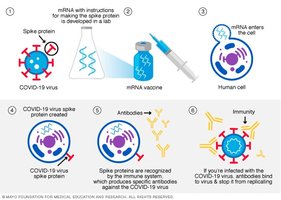
mRNA vaccines, such as those developed for COVID-19, use synthetic mRNA encoding the viral spike protein. Once inside the body, cells use this mRNA to produce the spike protein, which stimulates the immune system to generate antibodies, providing immunity against the virus.
Summary Table: Key Steps and Components of the Central Dogma
Step | Location | Main Enzyme/Machinery | Product |
|---|---|---|---|
Transcription | Nucleus (eukaryotes) | RNA polymerase | pre-mRNA (eukaryotes), mRNA (prokaryotes) |
RNA Processing | Nucleus (eukaryotes) | Spliceosome, capping and polyadenylation enzymes | mature mRNA |
Translation | Cytoplasm | Ribosome (rRNA + proteins), tRNA | Polypeptide (protein) |
Key Terms and Definitions
Gene: A segment of DNA that codes for a functional product, usually a protein.
mRNA (messenger RNA): The RNA copy of a gene that is translated into protein.
tRNA (transfer RNA): RNA that brings amino acids to the ribosome during translation.
rRNA (ribosomal RNA): RNA that forms the core of the ribosome's structure and catalyzes protein synthesis.
Codon: A sequence of three nucleotides in mRNA that specifies an amino acid.
Exon: Coding region of a gene that remains in mRNA after splicing.
Intron: Non-coding region of a gene that is removed during RNA processing.
Equations and Notation
General flow of genetic information:
Directionality of nucleic acid synthesis:
Additional info:
Gene expression is regulated at multiple levels, including transcription, RNA processing, and translation.
Prokaryotes do not process mRNA; transcription and translation are coupled.
Alternative splicing increases protein diversity in eukaryotes.
