 Back
BackThe Chemical Building Blocks of Life: Structure and Function of Biological Macromolecules
Study Guide - Smart Notes
 Tailored notes based on your materials, expanded with key definitions, examples, and context.
The Chemical Building Blocks of Life
Introduction to Biological Molecules
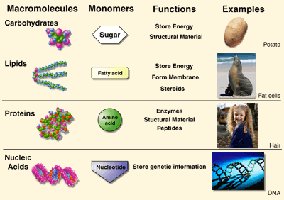
All living organisms are composed of four major classes of large biological molecules: carbohydrates, lipids, proteins, and nucleic acids. These macromolecules are essential for structure, function, and regulation of the body's cells, tissues, and organs. Their unique properties arise from the specific arrangement of their atoms and the presence of functional groups.
Macromolecules are large, complex molecules, often polymers built from smaller subunits called monomers.
Functional groups are specific groups of atoms attached to carbon skeletons that determine the chemical reactivity and properties of organic molecules.
Macromolecules: Synthesis and Breakdown
Polymer Formation and Degradation
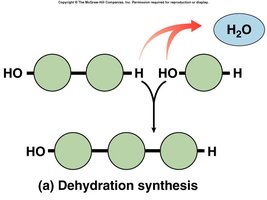
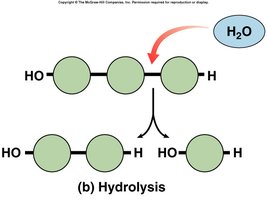
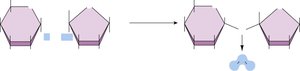
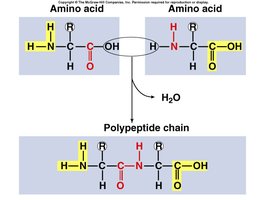
Macromolecules are typically formed by linking monomers through dehydration synthesis (condensation reactions), which removes a water molecule to form a new bond. Conversely, hydrolysis reactions break bonds by adding water, allowing macromolecules to be digested or broken down into their monomeric units.
Dehydration synthesis: Joins monomers by removing an H from one and an OH from another, forming water as a byproduct.
Hydrolysis: Breaks covalent bonds by adding water, splitting polymers into monomers.
Carbohydrates
Structure and Classification
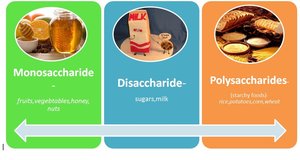
Carbohydrates are organic molecules composed of carbon, hydrogen, and oxygen, typically in a 1:2:1 ratio. They serve as energy sources and structural materials. Carbohydrates are classified based on the number of sugar units:
Monosaccharides: Simple sugars (e.g., glucose, fructose).
Disaccharides: Two monosaccharides joined by a covalent bond (e.g., sucrose).
Polysaccharides: Long chains of monosaccharide units (e.g., starch, glycogen, cellulose).
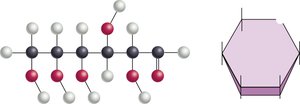
Formation of Disaccharides
Disaccharides are formed by dehydration synthesis between two monosaccharides, producing water as a byproduct. For example, glucose and fructose combine to form sucrose.
Polysaccharides: Storage and Structure
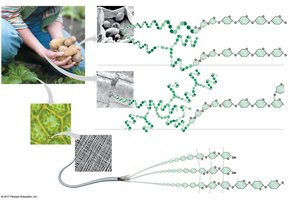
Polysaccharides serve as storage forms of energy or as structural components:
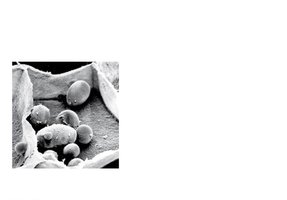
Starch: Storage polysaccharide in plants, composed of amylose (unbranched) and amylopectin (branched).
Glycogen: Storage polysaccharide in animals, highly branched, stored in liver and muscle cells.
Cellulose: Structural polysaccharide in plant cell walls, composed of unbranched chains forming microfibrils.
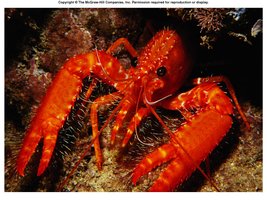
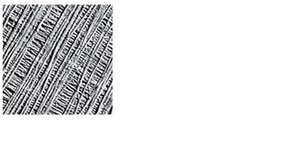
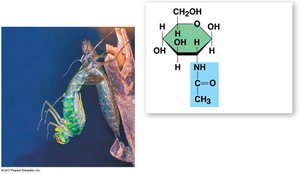
Chitin: Structural polysaccharide in arthropod exoskeletons and fungal cell walls, similar to cellulose but with nitrogen-containing groups.

Lipids
Structure and Types
Lipids are a diverse group of hydrophobic molecules, including fats, oils, phospholipids, and steroids. They are not true polymers but are grouped together due to their insolubility in water.
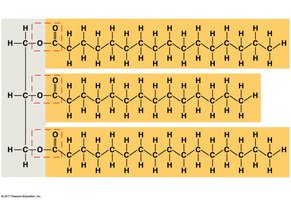
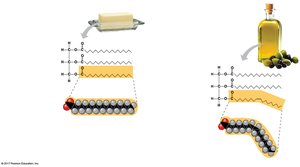
Fats (triglycerides): Composed of glycerol and three fatty acids. Serve as long-term energy storage, insulation, and cushioning.
Saturated fatty acids: No double bonds, solid at room temperature (animal fats).
Unsaturated fatty acids: One or more double bonds, liquid at room temperature (plant oils).
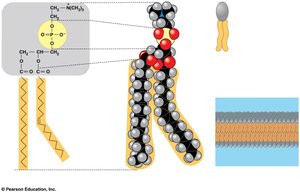
Phospholipids: Two fatty acids and a phosphate group attached to glycerol; form biological membranes.
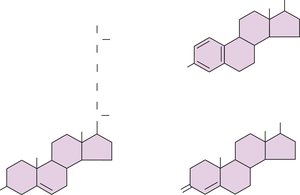
Steroids: Four fused carbon rings; include cholesterol and hormones like testosterone and estrogen.
Phospholipids and Biological Membranes
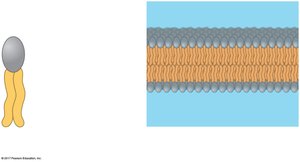
Phospholipids are essential for cell membrane structure. Their amphipathic nature (hydrophilic head, hydrophobic tails) causes them to self-assemble into bilayers, forming the basic structure of all cell membranes.
Steroids
Steroids are lipids with a characteristic four-ring structure. Cholesterol is a key component of animal cell membranes and a precursor for steroid hormones. High cholesterol levels are associated with cardiovascular disease.
Proteins
Functions and Structure
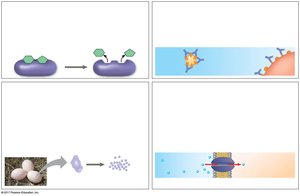
Proteins are the most diverse macromolecules, performing a wide range of functions including catalysis, defense, storage, transport, regulation, motion, and support. They are polymers of amino acids linked by peptide bonds.
Enzymes: Catalyze biochemical reactions.
Defensive proteins: Antibodies protect against disease.
Storage proteins: Store amino acids.
Transport proteins: Move substances across membranes.
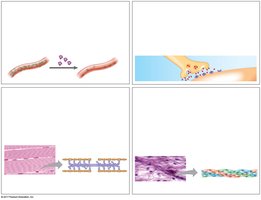
Hormonal proteins: Coordinate organismal activities (e.g., insulin).
Receptor proteins: Respond to chemical stimuli.
Contractile and motor proteins: Movement (e.g., actin, myosin).
Structural proteins: Support (e.g., collagen, keratin).
Amino Acids and Peptide Bonds
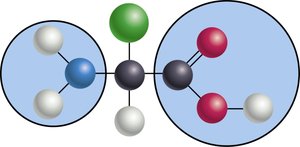
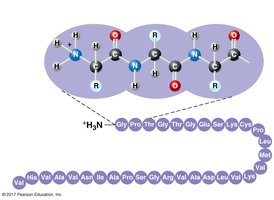
Amino acids are the building blocks of proteins, each containing an amino group, a carboxyl group, a hydrogen atom, and a variable R group attached to a central carbon. Peptide bonds link amino acids into polypeptide chains.
Levels of Protein Structure
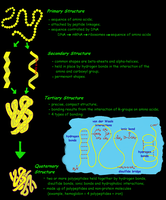
Primary structure: Unique sequence of amino acids.
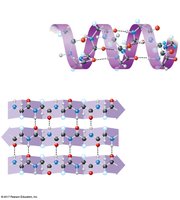
Secondary structure: Coils (α helix) and folds (β pleated sheet) stabilized by hydrogen bonds.
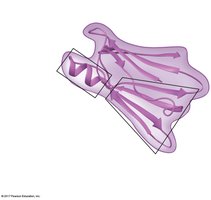
Tertiary structure: Overall 3D shape due to interactions among R groups.
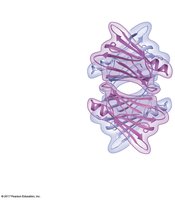
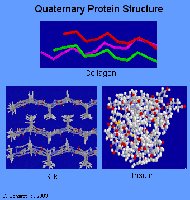
Quaternary structure: Association of multiple polypeptide chains.
Protein Denaturation
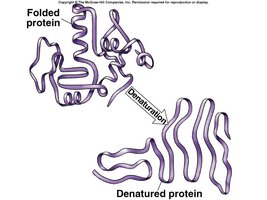
Denaturation is the process by which a protein loses its native shape due to disruption of weak chemical bonds and interactions, rendering it biologically inactive. This can be caused by changes in temperature, pH, or exposure to chemicals.
Nucleic Acids
DNA and RNA Structure and Function
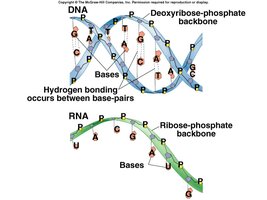
Nucleic acids store and transmit hereditary information. The two main types are deoxyribonucleic acid (DNA) and ribonucleic acid (RNA). DNA encodes instructions for protein synthesis, while RNA is involved in translating these instructions into proteins.
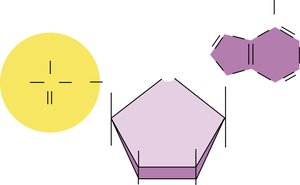
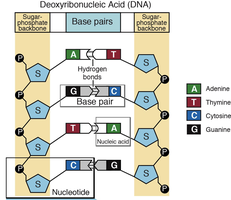
Nucleotides: Building blocks of nucleic acids, each consisting of a five-carbon sugar, a phosphate group, and a nitrogenous base.
Purines: Adenine (A) and guanine (G), double-ring structures.
Pyrimidines: Cytosine (C), thymine (T, in DNA), and uracil (U, in RNA), single-ring structures.
DNA: Double-stranded helix, deoxyribose sugar, bases A, T, C, G.
RNA: Single-stranded, ribose sugar, bases A, U, C, G.
Flow of Genetic Information
The central dogma of molecular biology describes the flow of genetic information: DNA → RNA → Protein. DNA is transcribed into messenger RNA (mRNA), which is then translated into a specific protein sequence.
Summary Table: Biological Macromolecules
Macromolecule | Monomer | Function | Example |
|---|---|---|---|
Carbohydrates | Sugar | Store energy, structural material | Potato (starch) |
Lipids | Fatty acid | Store energy, form membranes, steroids | Fat cells |
Proteins | Amino acid | Enzymes, structural material, peptides | Hair (keratin) |
Nucleic Acids | Nucleotide | Store genetic information | DNA |
