 Back
BackThe Digestive System: Structure, Function, and Nutrition
Study Guide - Smart Notes
 Tailored notes based on your materials, expanded with key definitions, examples, and context.
The Digestive System
Overview of Digestive System Structure
The digestive system is responsible for the breakdown of food, absorption of nutrients, and elimination of waste. It consists of the alimentary canal (gastrointestinal tract) and accessory digestive organs.
Alimentary canal (GI tract): A continuous tube from mouth to anus, including the mouth, pharynx, esophagus, stomach, small intestine, and large intestine.
Accessory digestive organs: Teeth, tongue, gallbladder, salivary glands, liver, and pancreas, which aid in digestion but are not part of the GI tract itself.
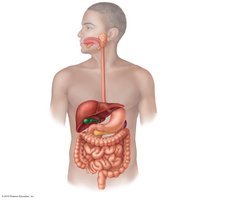
Major Activities of the Gastrointestinal Tract
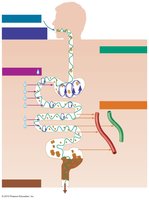
The digestive process involves several coordinated activities that ensure the efficient breakdown and absorption of nutrients.
Ingestion: Taking food into the mouth.
Mechanical breakdown: Physical breakdown of food (chewing, churning, segmentation).
Propulsion: Movement of food through the GI tract (swallowing and peristalsis).
Digestion: Chemical breakdown of food into absorbable molecules.
Absorption: Transport of digested nutrients into blood or lymph.
Defecation: Elimination of indigestible substances as feces.
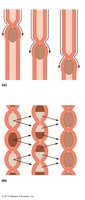
Motility: Peristalsis and Segmentation
Motility in the GI tract is essential for moving and mixing food. Two primary types of movements are peristalsis and segmentation.
Peristalsis: Involves coordinated, wave-like contractions of smooth muscle that propel food forward through the digestive tract.
Segmentation: Alternating contractions of nonadjacent segments of the intestine, mixing food and increasing contact with digestive juices and absorptive surfaces.
Histological Organization: The Four Layers of the GI Tract
The walls of the GI tract share a common structure composed of four layers:
Mucosa: Innermost layer; mucous membrane in contact with the lumen, involved in secretion and absorption.
Submucosa: Connective tissue containing blood vessels, lymphatics, and nerves.
Muscularis: Two or three layers of smooth muscle responsible for movement and motility.
Serosa: Outermost protective layer.
Sphincters: Thick muscular rings that regulate passage between sections of the GI tract.
Digestive Processes in the Mouth, Pharynx, and Esophagus
The Mouth: Mechanical and Chemical Processing
The mouth initiates both mechanical and chemical digestion.
Teeth: Bite and chew food; types include incisors, canines, premolars, and molars. Adults have 32 permanent teeth.
Tongue: Positions and tastes food, aids in speech, and is composed of skeletal muscle with taste receptors.
Saliva: Secreted by parotid, submandibular, and sublingual glands; contains mucin, salivary amylase (begins starch digestion), bicarbonate (pH buffer), and lysozyme (antibacterial).
Swallowing and Food Transport
Swallowing moves food from the mouth to the stomach via the pharynx and esophagus.
Voluntary phase: Tongue pushes bolus into the pharynx.
Involuntary phase: Swallowing reflex; epiglottis closes airway to prevent food entering the trachea.
Peristalsis: Moves food through the esophagus to the stomach.
Lower esophageal sphincter: Regulates entry into the stomach.
The Stomach: Storage, Digestion, and Regulation
Functions of the Stomach
The stomach stores food, initiates protein digestion, and regulates delivery to the small intestine.
Food storage: Temporary holding of ingested food.
Protein digestion: Acid and enzymes (pepsin) begin protein breakdown.
Regulation: Pyloric sphincter controls release of chyme into the small intestine.
Gastric Juice and Protection
Gastric juice contains hydrochloric acid (pH ~2), intrinsic factor (for vitamin B12 absorption), mucus (protects lining), and pepsinogen (converted to pepsin for protein digestion).
Protective mucus barrier: Prevents self-digestion; damage can lead to peptic ulcers, often caused by Helicobacter pylori infection or NSAID use.
Stomach Motility
Stomach contractions mix food and propel chyme toward the small intestine. The stomach does not absorb most nutrients, but some substances like alcohol and aspirin are absorbed here.
The Small Intestine: Digestion and Absorption
Structure and Function
The small intestine is the primary site for digestion and absorption of nutrients and water.
Regions: Duodenum (most digestion), jejunum and ileum (absorption).
Surface area adaptations: Large folds, villi (microscopic projections with blood and lymph capillaries), and microvilli (on epithelial cells) maximize absorption.
Accessory Organs: Pancreas, Liver, and Gallbladder
Pancreas
The pancreas secretes digestive enzymes and sodium bicarbonate into the small intestine.
Digestive enzymes: Proteases (trypsin, chymotrypsin, carboxypeptidase), pancreatic amylase (starch digestion), lipase (lipid digestion).
Bicarbonate: Neutralizes stomach acid.
Liver and Gallbladder
The liver produces bile (emulsifies fats) and performs metabolic functions. The gallbladder stores and concentrates bile.
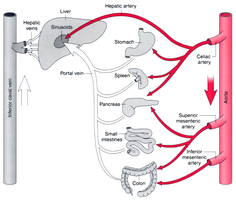
Hepatic portal system: Transports nutrient-rich blood from the digestive tract to the liver for processing.
Other liver functions: Storage of fat-soluble vitamins, glucose (as glycogen), synthesis of plasma proteins and lipids, detoxification, conversion of ammonia to urea, destruction of old red blood cells.
The Large Intestine: Absorption and Elimination
Structure and Function
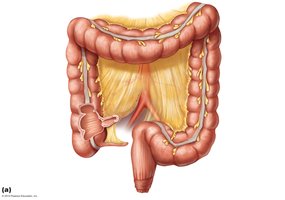
The large intestine absorbs water and nutrients, temporarily stores waste, and eliminates feces.
Regions: Cecum, appendix, colon (ascending, transverse, descending, sigmoid), rectum, anus.
Intestinal Microbiota
The large intestine hosts a diverse population of microorganisms (microbiota) that provide several benefits:
Synthesize vitamin K
Break down dietary fiber to short-chain fatty acids (SCFA)
May reduce risk of metabolic and cardiovascular diseases
Prevent colonization by pathogenic bacteria (competitive exclusion)
Digestion and Absorption of Nutrients
Proteins
Proteins are digested by enzymes from the stomach (pepsin), pancreas (trypsin, chymotrypsin, carboxypeptidase), and small intestine. Amino acids are absorbed by active transport into epithelial cells and then into capillaries by facilitated diffusion.
Carbohydrates
Polysaccharides are digested to monosaccharides by salivary amylase, pancreatic amylase, and intestinal enzymes. Monosaccharides are absorbed by active transport and facilitated diffusion into the blood.
Lipids
Lipids are broken down to monoglycerides and fatty acids by pancreatic and intestinal lipases. These are absorbed, reassembled into triglycerides, and packaged as chylomicrons, which enter lymphatic vessels and eventually the bloodstream.
Water, Vitamins, and Minerals
Water: Absorbed by osmosis in both small and large intestines.
Vitamins: Fat-soluble vitamins are absorbed with lipids; water-soluble vitamins by active transport or facilitated diffusion.
Minerals: Absorbed by active transport or facilitated diffusion.
Nutrition and Energy Balance
Principles of Nutrition
Nutrition is the interaction between an organism and its food. A balanced diet includes a variety of foods, maintains a healthy weight, and limits sugar, salt, and alcohol intake.
Carbohydrates: Main energy source; 45–65% of caloric intake.
Lipids: Essential for cell structure and energy; saturated fats raise LDL cholesterol, unsaturated fats lower LDL cholesterol, trans fats are harmful.
Proteins: Provide essential amino acids; complete proteins contain all essential amino acids (animal sources, soy), incomplete proteins (most plant sources) must be combined.
Vitamins: Essential organic compounds; fat-soluble (A, D, E, K) and water-soluble groups.
Minerals: Inorganic elements required for various body processes; major (>100 mg/day) and trace (<15 mg/day) minerals.
Energy Balance and Body Weight
Energy balance is achieved when caloric intake equals energy expenditure. Basal metabolic rate (BMR) is the energy required for basic physiological functions. Physical activity increases total energy expenditure. Excess caloric intake leads to fat storage and weight gain.
Every 3,500 calories expended equals approximately one pound of fat loss.
Eating Disorders
Eating disorders are abnormal eating habits that harm health. Common types include:
Anorexia nervosa: Extreme dieting and weight loss.
Bulimia nervosa: Binge eating followed by purging.
Binge eating disorder: Recurrent episodes of excessive eating.
Disorders of the Digestive Tract
Food Poisoning and Food-Borne Infections
Food poisoning results from bacterial toxins; food-borne infections are caused by microorganisms in contaminated food or water. Symptoms include diarrhea, vomiting, and sometimes paralysis (botulism). Hydration is important during illness.
Food Allergies
Food allergies are immune responses to specific foods, causing symptoms from mild (hives, diarrhea) to severe (anaphylaxis). Management includes avoidance and emergency treatment with antihistamines or epinephrine.
Lactose Intolerance
Lactose intolerance is the inability to digest lactose due to reduced lactase enzyme production. Symptoms include diarrhea, gas, and cramps after consuming dairy. Managed by avoiding dairy or using lactase supplements.
Peptic Ulcers
Peptic ulcers are erosions of the stomach or duodenal lining, often caused by Helicobacter pylori infection or NSAID use. Treated with antibiotics and antacids.
