 Back
BackLECTURE 21 STUDY GUIDE
Study Guide - Smart Notes
 Tailored notes based on your materials, expanded with key definitions, examples, and context.
LECTURE 21
The Immune System: Overview
Introduction to Immunity
The immune system protects organisms from pathogens through a complex network of cells, tissues, and molecules. Immunity is divided into innate (nonspecific) and adaptive (specific) responses, each with distinct mechanisms and components.
Innate Immunity
General Features of Innate Immunity
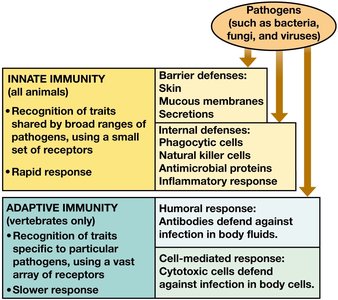
Innate immunity is the first line of defense, present from birth and providing rapid, nonspecific responses to pathogens. It is found in all animals and plants.
Barrier defenses: Skin, mucous membranes, and secretions prevent pathogen entry.
Internal defenses: Phagocytic cells, natural killer cells, antimicrobial proteins, and the inflammatory response act against invaders that breach barriers.
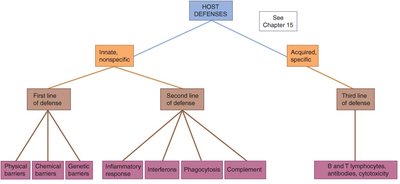
Host Defenses: Innate vs. Acquired Immunity
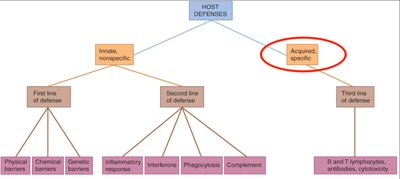
Host defenses are organized into innate (nonspecific) and acquired (specific) branches. Innate immunity includes physical, chemical, and genetic barriers, as well as cellular and molecular responses.
Physical and Chemical Barriers
Skin and mucous membranes: Act as physical barriers to pathogens.
Secretions: Saliva, mucus, and tears contain antimicrobial enzymes (e.g., lysozyme).
Low pH: The acidic environment of the skin and digestive tract inhibits microbial growth.
Cellular Innate Defenses
Several types of white blood cells (leukocytes) are involved in innate immunity:
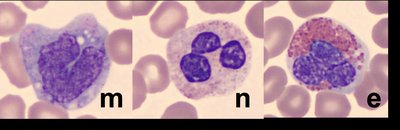
Neutrophils: Engulf and destroy pathogens.
Macrophages: Large phagocytic cells found throughout the body.
Dendritic cells: Stimulate the development of adaptive immunity.
Eosinophils: Discharge destructive enzymes against parasites.
Natural killer (NK) cells: Detect and destroy abnormal (e.g., virally infected or cancerous) cells.
Recognition of Pathogens: Toll-like Receptors (TLRs)
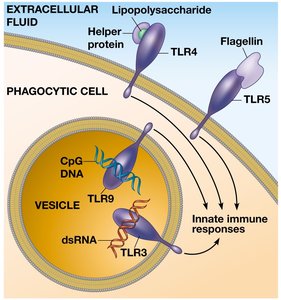
Phagocytic cells recognize pathogens using Toll-like receptors (TLRs), which bind to common microbial molecules and trigger innate immune responses.
Phagocytosis
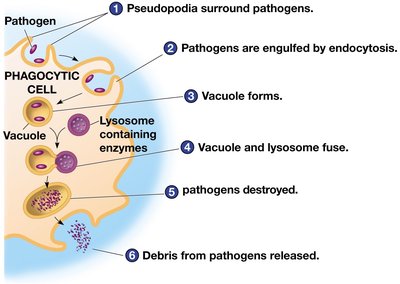
Phagocytosis is the process by which cells engulf and digest pathogens. The steps include:
Pseudopodia surround pathogens.
Pathogens are engulfed by endocytosis.
A vacuole forms around the pathogen.
The vacuole fuses with a lysosome containing enzymes.
Pathogens are destroyed.
Debris is released from the cell.
Antimicrobial Peptides and Proteins
These molecules directly attack microbes or modulate immune responses:
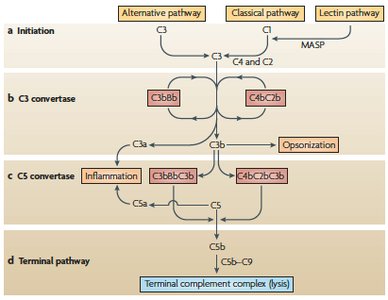
Complement system: A group of about 30 proteins that lyse invading cells and trigger inflammation.
Cytokines: Signaling proteins that recruit and activate immune cells.
Interferons: Proteins that provide defense against viruses and activate macrophages.
Histamine: Released from mast cells, promotes blood vessel dilation and permeability.
Inflammatory Response
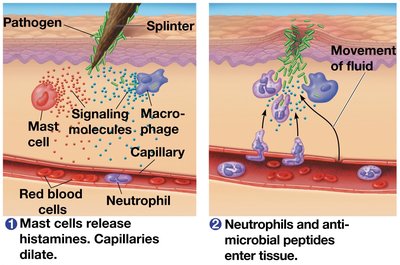
The inflammatory response is triggered by infection or injury, resulting in pain, swelling, and redness. Key events include:
Mast cells release histamine, causing blood vessels to dilate and become more permeable.
Macrophages and neutrophils release cytokines, enhancing the immune response.
Increased blood flow delivers antimicrobial peptides and white blood cells to the site, resulting in pus formation.
Adaptive (Acquired) Immunity
General Features of Adaptive Immunity
Adaptive immunity is specific to particular pathogens and develops after exposure. It is mediated by lymphocytes (B cells and T cells) and provides long-lasting protection through immunological memory.
Lymphocyte Development and Distribution
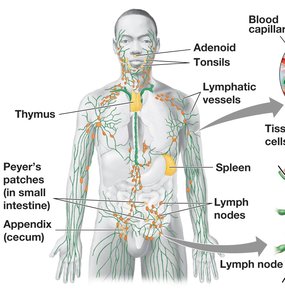
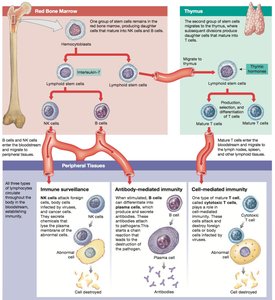
Lymphocytes originate from stem cells in the bone marrow. B cells mature in the bone marrow, while T cells mature in the thymus. Both circulate in the blood and lymphatic system, and reside in lymphoid organs.
Antigen Recognition by B Cells and Antibodies
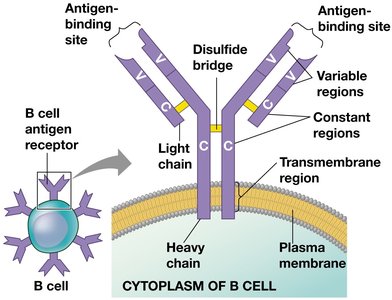
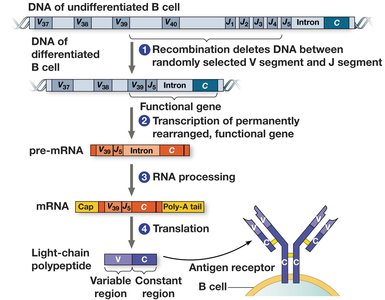
B cell antigen receptors are Y-shaped molecules composed of two heavy and two light chains. The variable regions of these chains provide antigen specificity. Upon activation, B cells secrete antibodies (immunoglobulins) with the same specificity as their receptors.
Antigen Recognition by T Cells
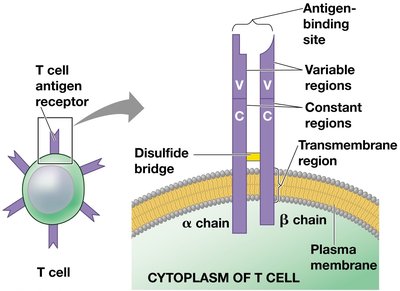
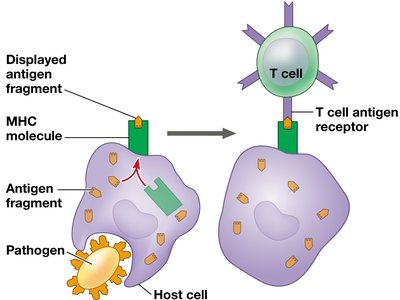
T cell receptors consist of two polypeptide chains (α and β) with variable and constant regions. T cells recognize antigen fragments presented by major histocompatibility complex (MHC) molecules on host cells.
Generation of B and T Cell Diversity
The immune system generates a vast diversity of antigen receptors through DNA rearrangement in immunoglobulin genes, allowing recognition of millions of different antigens.
Self-Tolerance
Lymphocytes are tested for self-reactivity during maturation. Cells that react against the body's own molecules are eliminated or rendered nonfunctional, preventing autoimmune responses.
Clonal Selection and Immunological Memory
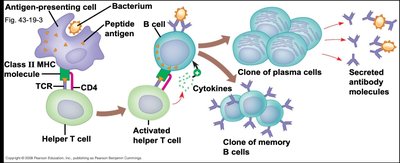
When a lymphocyte binds its specific antigen, it proliferates to form a clone of effector cells (which act immediately) and memory cells (which provide long-term immunity). Memory cells enable a faster and stronger response upon subsequent exposures to the same antigen.
Adaptive Immune Responses: Humoral and Cell-Mediated
Humoral Immune Response
In the humoral response, B cells secrete antibodies that neutralize or eliminate pathogens in body fluids (blood and lymph).
Cell-Mediated Immune Response
In the cell-mediated response, cytotoxic T cells destroy infected or abnormal host cells.
Helper T Cells
Helper T cells play a central role by activating both humoral and cell-mediated responses. They interact with antigen-presenting cells (APCs) via class II MHC molecules and secrete cytokines that stimulate B cells and cytotoxic T cells.
Cytotoxic T Cells
Cytotoxic T cells recognize infected cells displaying foreign antigens with class I MHC molecules. They kill target cells by releasing proteins that disrupt membranes and induce apoptosis.
Antibody Function
Antibodies do not kill pathogens directly but mark them for destruction by other immune cells. Key mechanisms include:
Neutralization: Antibodies block pathogen binding to host cells.
Opsonization: Antibodies enhance phagocytosis by marking pathogens.
Complement activation: Antigen-antibody complexes trigger the complement cascade, leading to pathogen lysis.
Classes of Immunoglobulins
B cells can produce five classes of immunoglobulins (IgG, IgM, IgA, IgE, IgD), each with distinct roles in immune defense.
Vaccines and Immunological Disorders
Vaccines
Vaccines stimulate the immune system to produce memory cells and antibodies against specific pathogens, providing long-term protection. They may contain killed or attenuated pathogens, subunit antigens, or recombinant proteins, often with adjuvants to enhance the immune response.
Hypersensitivities and Autoimmunity
Hypersensitivity reactions are exaggerated immune responses to antigens, including allergies (IgE-mediated), cytotoxic reactions, immune complex diseases, and delayed-type hypersensitivity (cell-mediated). Autoimmune diseases occur when the immune system attacks self-antigens.
Immunodeficiency Diseases
Immunodeficiencies result from defects in immune system components, leading to increased susceptibility to infections. They may be inherited (primary) or acquired (secondary, e.g., HIV/AIDS).
Cancer and Immunity
The immune system helps prevent cancer by eliminating virus-infected and abnormal cells. Some cancers are associated with viral infections, and vaccines (e.g., HPV vaccine) can reduce cancer risk.
