 Back
BackThe Structure and Function of Large Biological Molecules: Carbohydrates
Study Guide - Smart Notes
 Tailored notes based on your materials, expanded with key definitions, examples, and context.
Chapter 5: The Structure and Function of Large Biological Molecules
Overview: The Molecules of Life
All living organisms are composed of four major classes of large biological molecules: carbohydrates, lipids, proteins, and nucleic acids. These molecules, known as macromolecules, are typically formed by the joining of smaller units called monomers through covalent bonds. The structure of these molecules is closely linked to their function in biological systems.
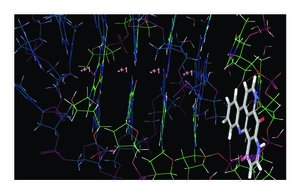
Macromolecules: Polymers and Monomers
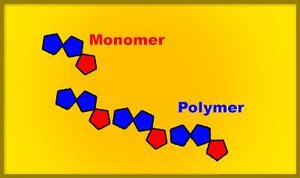
Macromolecules are often polymers, which are long chains of repeating monomer units. The process of building polymers from monomers is fundamental to the structure and function of biological molecules.
Polymer: A long molecule consisting of many similar or identical building blocks (monomers) joined by covalent bonds.
Monomer: The basic unit or building block of a polymer.
Types of Reactions: Building and Breaking Macromolecules
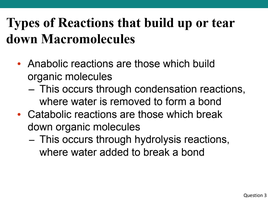
Macromolecules are assembled and disassembled by specific chemical reactions:
Anabolic reactions: Build organic molecules via condensation (dehydration) reactions, where water is removed to form a bond.
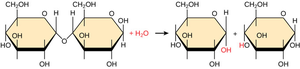
Catabolic reactions: Break down organic molecules via hydrolysis reactions, where water is added to break a bond.
Carbohydrates
Monosaccharides: The Simple Sugars
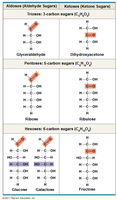
Carbohydrates are composed of sugar monomers called monosaccharides. These are classified based on the location of their carbonyl group and the number of carbon atoms:
Aldose: Carbonyl group at the end of the molecule.
Ketose: Carbonyl group in the middle of the molecule.
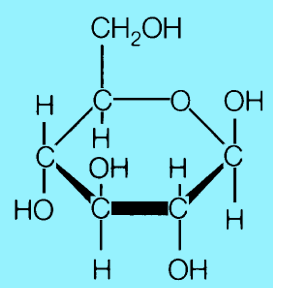
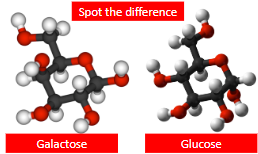
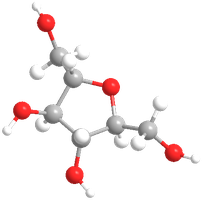
Common monosaccharides: Glucose, galactose, fructose, ribose, and deoxyribose.
Monosaccharide Structure and Function
Monosaccharides generally have the formula . Glucose is the most important monosaccharide for cellular respiration. Galactose is found in milk, and fructose is found in fruit and honey. Ribose and deoxyribose are essential for the backbone of RNA and DNA.
Formation of Disaccharides and Polysaccharides
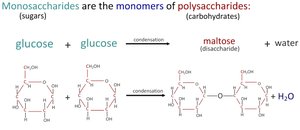
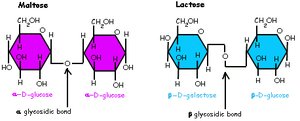
Monosaccharides are linked together by condensation (dehydration) reactions to form disaccharides and polysaccharides. The bond formed between two monosaccharides is called a glycosidic bond. Each bond formation removes a water molecule.
Disaccharide: Formed by joining two monosaccharides (e.g., maltose, sucrose, lactose).
Polysaccharide: Long chains of monosaccharide units (e.g., starch, glycogen, cellulose).
Polysaccharides: Structure and Function
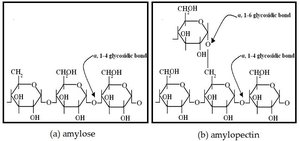
Polysaccharides serve as storage and structural materials in cells. Their properties depend on the types of sugar monomers and the positions of glycosidic linkages.
Starch: Storage polysaccharide in plants, composed of glucose monomers. Can be branched (amylopectin) or unbranched (amylose).
Glycogen: Storage polysaccharide in animals, highly branched, stored in liver and muscles.
Cellulose: Structural polysaccharide in plant cell walls, unbranched chains, high tensile strength, insoluble in water.
Examples and Applications
Cellulose: Provides structural support in plants; indigestible by humans but digestible by some microbes.
Glycogen: Provides quick energy storage in animals; does not affect blood glucose levels.
Starch: Energy storage in plants; easily mobilized for energy.
Summary Table: Features of Macromolecules
The following table summarizes the main features of carbohydrates as macromolecules:
Macromolecule | Monomer | Polymer | Bond Type | Main Function |
|---|---|---|---|---|
Carbohydrate | Monosaccharide | Polysaccharide | Glycosidic | Energy storage, structural support |
Lipid | Fatty acid, glycerol | Triglyceride, phospholipid, steroid | Ester | Energy storage, membrane structure, signaling |
Protein | Amino acid | Polypeptide | Peptide | Enzymatic, structural, transport, signaling |
Nucleic Acid | Nucleotide | DNA, RNA | Phosphodiester | Information storage, transmission |
Key Equations
Condensation (dehydration) reaction:
Hydrolysis reaction:
Additional info:
Macromolecules are essential for life, and their structure determines their function. Understanding the chemical bonds and reactions involved in their synthesis and breakdown is fundamental to biology.
----------------------------------------
