 Back
BackThe Structure and Function of Large Biological Molecules: Carbohydrates and Lipids
Study Guide - Smart Notes
 Tailored notes based on your materials, expanded with key definitions, examples, and context.
The Molecules of Life
Introduction to Biological Macromolecules
All living organisms are composed of four major classes of large biological molecules: carbohydrates, lipids, proteins, and nucleic acids. Among these, carbohydrates, proteins, and nucleic acids are considered macromolecules because they are polymers—long chains of covalently bonded monomers. Lipids, while large and essential, do not form true polymers.
Polymers and Monomers
Polymer Structure and Synthesis
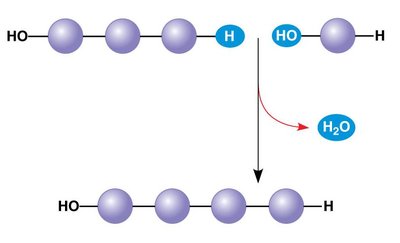
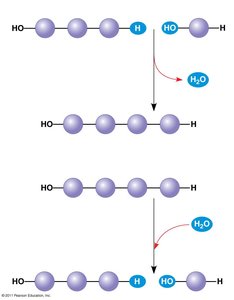
A polymer is a long molecule made up of repeating units called monomers. For example, starch is a polymer of glucose monomers. The process of linking monomers to form polymers is called a dehydration reaction (or dehydration synthesis), where a water molecule is removed to form a new covalent bond between monomers.
Dehydration Reaction: Joins two monomers by removing a water molecule.
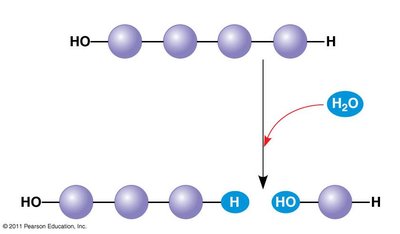
Hydrolysis: Breaks a polymer into monomers by adding a water molecule, reversing the dehydration reaction.
Carbohydrates
Overview and Classification
Carbohydrates serve as fuel and building material in cells. They include simple sugars and their polymers, classified as:
Monosaccharides: Single sugar units (e.g., glucose)
Disaccharides: Two monosaccharides joined by a glycosidic linkage
Polysaccharides: Polymers of many monosaccharides
Monosaccharides
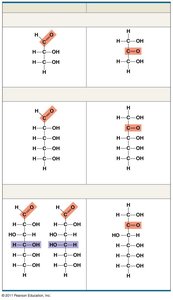
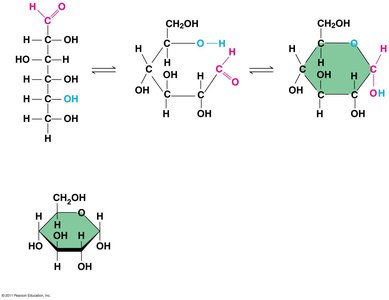
Monosaccharides are the simplest carbohydrates and can be used for energy, converted into other molecules, or serve as building blocks for polymers. Glucose (C6H12O6) is the most common monosaccharide. Monosaccharides are classified by the number of carbons (trioses, pentoses, hexoses) and the position of the carbonyl group (aldoses or ketoses).
Ring Formation of Sugars
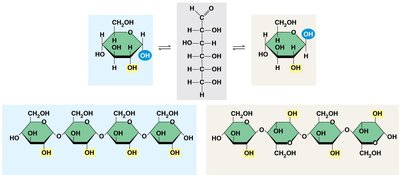
In aqueous solutions, many monosaccharides form ring structures, which are more stable than linear forms. Glucose commonly exists in a ring form in biological systems.
Disaccharides
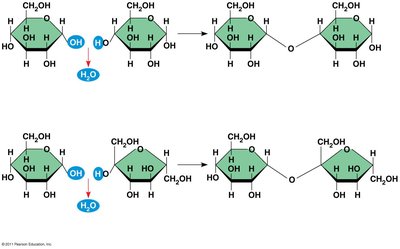
A disaccharide is formed when two monosaccharides are joined by a dehydration reaction, creating a glycosidic linkage. Examples include maltose (glucose + glucose) and sucrose (glucose + fructose).
Polysaccharides
Polysaccharides are large polymers of sugars with storage or structural roles. Their properties depend on the types of monomers and the positions of glycosidic linkages.
Storage Polysaccharides: Starch (plants), Glycogen (animals)
Structural Polysaccharides: Cellulose (plants), Chitin (arthropods)
Storage Polysaccharides
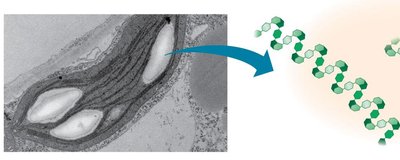
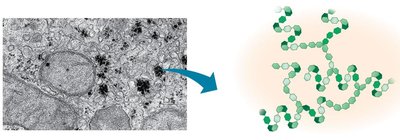
Starch is a plant storage polysaccharide composed entirely of glucose monomers, stored as granules in chloroplasts. Amylose is the simplest form of starch. Glycogen is the animal storage polysaccharide, stored mainly in liver and muscle cells.
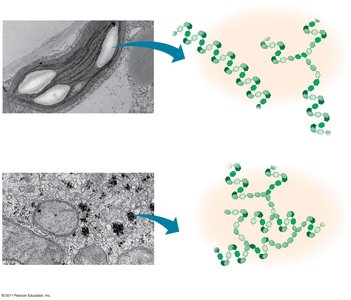
Structural Polysaccharides
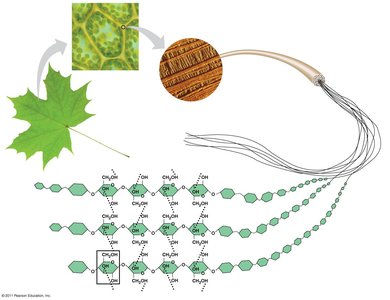
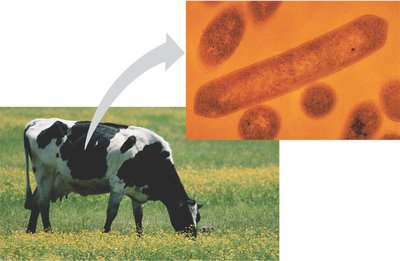
Cellulose is a major component of plant cell walls and is a polymer of glucose with different glycosidic linkages than starch. The difference arises from the alpha (α) and beta (β) ring forms of glucose. Cellulose forms strong fibers and is difficult to digest for most animals.
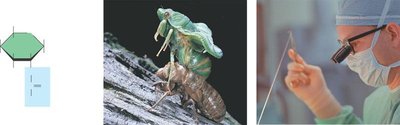
Chitin is another structural polysaccharide found in the exoskeletons of arthropods and as surgical thread due to its strength and flexibility.
Lipids
Overview of Lipids
Lipids are a diverse group of hydrophobic molecules that do not form true polymers. The main types of lipids are fats, phospholipids, and steroids. Their hydrophobic nature is due to their long hydrocarbon chains or rings.
Fats (Triglycerides)
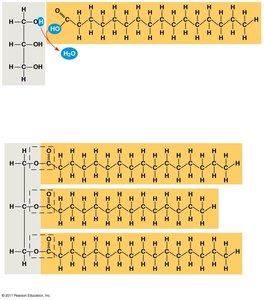
Fats are constructed from glycerol (a three-carbon alcohol) and fatty acids (long hydrocarbon chains with a carboxyl group). The formation of a fat involves three dehydration reactions, resulting in a triacylglycerol (triglyceride).
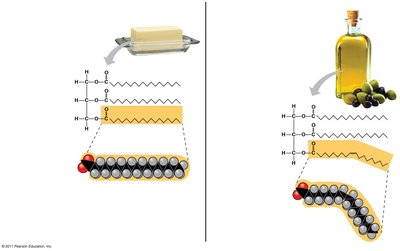
Saturated fatty acids: No double bonds, maximum hydrogen atoms, solid at room temperature (e.g., animal fats).
Unsaturated fatty acids: One or more double bonds, causing kinks, liquid at room temperature (e.g., plant and fish oils).
Fats are important for energy storage, insulation, and cushioning. Some unsaturated fatty acids (e.g., omega-3) are essential in the diet. Diets high in saturated fats may contribute to cardiovascular disease.
Phospholipids
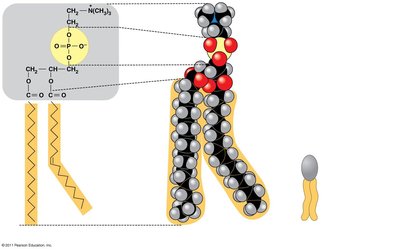
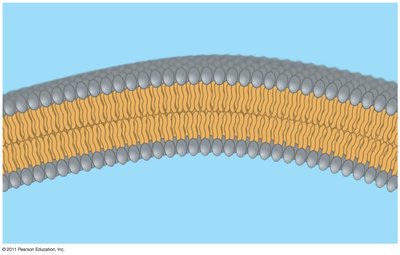
Phospholipids consist of two fatty acids and a phosphate group attached to glycerol. The fatty acid tails are hydrophobic, while the phosphate head is hydrophilic. This amphipathic nature allows phospholipids to form bilayers in aqueous environments, which are the foundation of cell membranes.
Steroids
Steroids are lipids with a structure of four fused hydrocarbon rings. Different functional groups attached to the rings give rise to various steroids, such as cholesterol (a component of animal cell membranes and precursor to steroid hormones), testosterone, and estrogen. Anabolic steroids are synthetic variants of testosterone.
Summary Table: Carbohydrates and Lipids
Class | Monomer/Building Block | Polymer/Structure | Function | Example |
|---|---|---|---|---|
Carbohydrates | Monosaccharide (e.g., glucose) | Polysaccharide (e.g., starch, cellulose) | Energy storage, structure | Starch, cellulose, glycogen, chitin |
Lipids | Glycerol, fatty acids | Triacylglycerol, phospholipid, steroid | Energy storage, membranes, hormones | Fats, phospholipids, cholesterol |
