 Back
BackUnit 3
Study Guide - Smart Notes
 Tailored notes based on your materials, expanded with key definitions, examples, and context.
The Working Cell
Structure and Function of Biological Membranes
Biological membranes are essential for maintaining cellular integrity and regulating the internal environment. They separate the cell from its surroundings, provide structure to organelles, control the movement of substances, and facilitate cell signaling and interactions.
Cell Membrane (Plasma Membrane): Present in all cells, composed primarily of a phospholipid bilayer.
Internal Membranes: Eukaryotic cells contain additional internal membranes that compartmentalize functions.
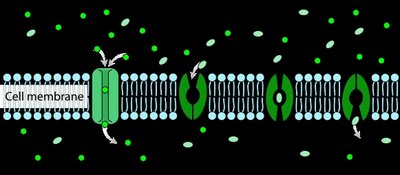
Functions: Include selective permeability, compartmentalization, cell-cell and cell-pathogen interactions, and hormonal signaling.
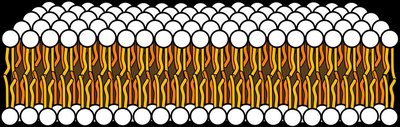
Fluid Mosaic Model: Describes the membrane as a dynamic structure with proteins embedded in a flexible lipid bilayer.
Diffusion: Physical Process and Biological Relevance
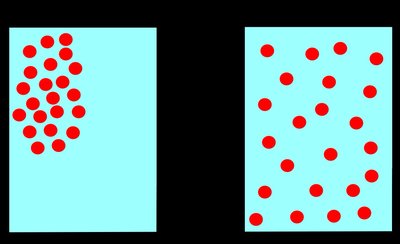
Diffusion is the passive movement of molecules from regions of high concentration to regions of low concentration, driven by kinetic energy and Brownian motion. It is fundamental to many cellular processes.
Concentration Gradient: The difference in concentration across a space.
Equilibrium: Achieved when molecules are evenly distributed.
Temperature Dependence: Higher temperatures increase diffusion rates.
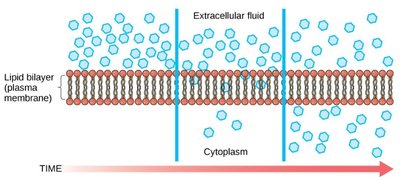
In cells, diffusion allows solutes to move across membranes, often through protein channels or carriers.
Osmosis and Tonicity
Osmosis is the movement of water across a selectively permeable membrane from areas of lower solute concentration (higher free water) to areas of higher solute concentration (lower free water). Tonicity refers to the total solute concentration in a solution.
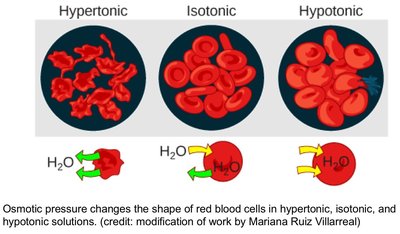
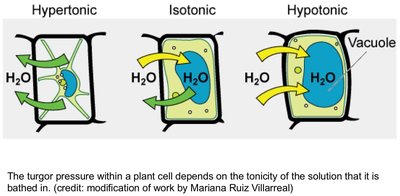
Hypertonic: Higher solute concentration outside the cell; water leaves the cell.
Isotonic: Equal solute concentration; no net water movement.
Hypotonic: Lower solute concentration outside; water enters the cell.
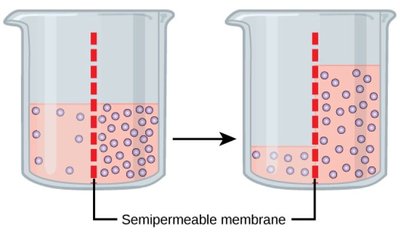
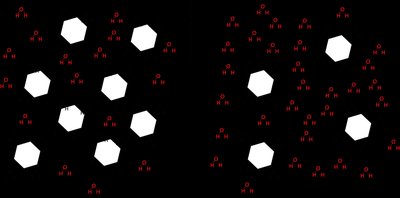
Osmosis affects cell shape and function, especially in red blood cells and plant cells.
Biological Transport Mechanisms
Cells use various mechanisms to transport molecules across membranes:
Simple Diffusion: Passive movement of lipid-soluble molecules through the bilayer, protein-independent.
Facilitated Diffusion: Passive, protein-mediated transport of hydrophilic molecules down their concentration gradient.
Active Transport: Protein-mediated, requires energy (often ATP), moves molecules against their concentration gradient.
Bulk Transport: Exocytosis (secretion) and endocytosis (uptake).
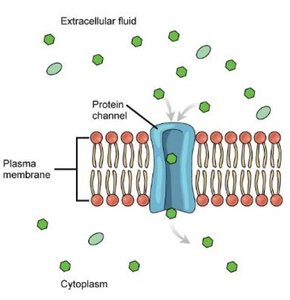
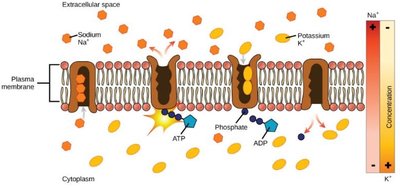
Aquaporins and Water Permeability
Aquaporins are specialized membrane proteins that facilitate rapid water transport across cell membranes, significantly increasing the rate of osmosis.
Regulation: Cells can regulate water permeability by controlling aquaporin expression.
Examples: High permeability in red blood cells, regulated in kidney collecting ducts.

Cellular Energetics: Energy and Thermodynamics
Cells require energy to perform work, which is governed by the laws of thermodynamics:
1st Law (Conservation of Energy): Energy cannot be created or destroyed, only transformed.
2nd Law (Entropy): Every energy transformation increases the disorder (entropy) of the universe; some energy is lost as heat.
Free energy () determines the spontaneity of reactions:
: Spontaneous, energy released (exergonic)
: Non-spontaneous, energy required (endergonic)
: Free energy equation, where is enthalpy, is temperature, and is entropy
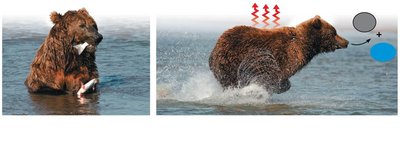

ATP: The Energy Currency of the Cell
ATP (adenosine triphosphate) is the primary energy carrier in cells. Hydrolysis of ATP releases energy for cellular work.
ATP Cycle: ATP is regenerated from ADP and phosphate via cellular respiration.
Uses: Chemical, mechanical, and transport work.
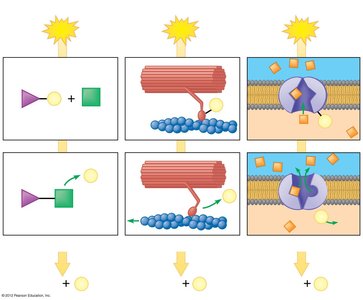
Enzymes and Catalysis
Enzymes are biological catalysts that speed up reactions by lowering activation energy, without being consumed.
Specificity: Enzymes are highly specific for their substrates.
Active Site: The region where substrate binds and reaction occurs.
Induced Fit: Enzyme changes shape to accommodate substrate.
Regulation: Enzymes can be activated or inhibited, allowing metabolic control.
Cellular Respiration: Harvesting Chemical Energy
Cellular respiration is the process by which cells extract energy from glucose, producing ATP. It consists of three main stages:
Glycolysis: Glucose is split into two pyruvate molecules, producing ATP and NADH.
Pyruvate Oxidation and Citric Acid Cycle: Pyruvate is converted to acetyl CoA, which enters the citric acid cycle, generating CO2, ATP, NADH, and FADH2.
Oxidative Phosphorylation: Electron transport chain and chemiosmosis produce the majority of ATP.
Fermentation: Metabolism Without Oxygen
Fermentation allows cells to generate ATP in the absence of oxygen by regenerating NAD+ from NADH. Two main types:
Lactate Fermentation: Pyruvate is reduced to lactate (muscle cells, bacteria).
Alcohol Fermentation: Pyruvate is converted to ethanol and CO2 (yeast).
Photosynthesis: Using Light to Make Food
Photosynthesis is the process by which autotrophs convert light energy into chemical energy, producing glucose and oxygen from CO2 and water.
Two Phases: Light reactions (energy capture) and Calvin cycle (carbon fixation).
Adaptations: C4 and CAM photosynthesis allow plants to thrive in hot, dry climates.
Photosynthesis is globally significant, providing food, oxygen, and organic material for all life.
The Carbon Cycle and Environmental Impact
The carbon cycle describes the movement of carbon between the atmosphere, biosphere, and geosphere. Photosynthetic organisms fix atmospheric CO2, which is then cycled through food webs and released back via respiration and decomposition.
Greenhouse Effect: Atmospheric CO2 and other gases trap heat, contributing to global warming.
Human Impact: Fossil fuel combustion increases atmospheric CO2, accelerating climate change.
Summary Table: Types of Membrane Transport
Transport Type | Energy Requirement | Direction | Protein Involvement |
|---|---|---|---|
Simple Diffusion | No | Down gradient | No |
Facilitated Diffusion | No | Down gradient | Yes |
Active Transport | Yes (ATP) | Against gradient | Yes |
Bulk Transport (Exo/Endocytosis) | Yes | Variable | Yes |
Additional info: Academic context and explanations have been expanded for clarity and completeness. Only images directly relevant to the explanation have been included.
