 Back
BackTransport Across Cell Membranes: Passive and Active Mechanisms
Study Guide - Smart Notes
 Tailored notes based on your materials, expanded with key definitions, examples, and context.
The Membrane
Overview of Membrane Transport
The cell membrane regulates the movement of substances into and out of the cell. Transport mechanisms are classified as either passive or active based on energy requirements and direction relative to concentration gradients.
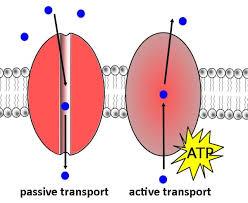
Passive transport: Moves substances down their concentration gradient (from high to low concentration) without using cellular energy (ATP).
Active transport: Moves substances against their concentration gradient (from low to high concentration) and requires energy, usually in the form of ATP.
The Membrane
Passive Transport Mechanisms
Passive transport relies on the natural kinetic energy of particles and does not require cellular energy. It includes simple diffusion, facilitated diffusion, and osmosis.
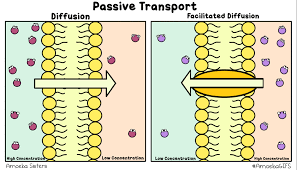
Simple Diffusion: Movement of small, nonpolar molecules (e.g., O2, CO2) directly through the lipid bilayer from high to low concentration until equilibrium is reached.
Facilitated Diffusion: Movement of larger or charged molecules (e.g., glucose, Na+, K+) through membrane proteins (channels or carriers) from high to low concentration.
Osmosis: Diffusion of water molecules across a semi-permeable membrane from a region of high water concentration to low water concentration.
Simple Diffusion
Simple diffusion is the movement of molecules from an area of high concentration to an area of low concentration, driven by the random motion of particles. No energy input is required, and the process continues until equilibrium is achieved.
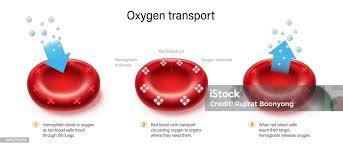
Example: Oxygen entering cells and carbon dioxide leaving cells during respiration.
Facilitated Diffusion
Facilitated diffusion allows specific molecules to cross the membrane with the help of transport proteins. This process is essential for molecules that cannot diffuse directly through the lipid bilayer due to size or charge.
Channel proteins: Provide hydrophilic pathways for ions and small molecules.
Carrier proteins: Bind to specific molecules and change shape to shuttle them across the membrane.
Example: Glucose and ions (Na+, K+) move via facilitated diffusion.
Osmosis
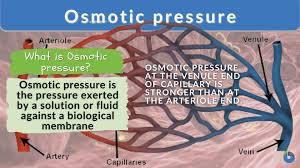
Osmosis is the passive movement of water molecules across a semi-permeable membrane. Water moves from an area of higher water potential (lower solute concentration) to an area of lower water potential (higher solute concentration).
Importance: Maintains cell turgor and fluid balance in cells.
Example: Water uptake by plant root cells.
The Membrane
Active Transport Mechanisms
Active transport moves substances against their concentration gradient, requiring energy input, usually from ATP. This process is essential for maintaining concentration differences of ions and other substances across the membrane.
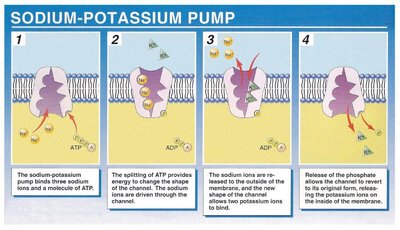
Carrier proteins: Bind specific molecules and use energy from ATP to change shape and transport molecules across the membrane.
Example: Sodium-potassium pump (Na+/K+ ATPase) maintains electrochemical gradients in animal cells.
Bulk Transport (Vesicular Transport)
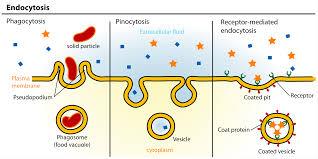
Bulk transport is an active process used for moving large particles or volumes of substances across the membrane via vesicles. It includes endocytosis and exocytosis.
Endocytosis: The cell membrane engulfs material to bring it into the cell. Types include phagocytosis (solid particles), pinocytosis (liquids), and receptor-mediated endocytosis (specific molecules).
Exocytosis: Vesicles fuse with the cell membrane to release materials out of the cell.
Example: Release of neurotransmitters, uptake of large food particles.
The Membrane
Summary Table: Comparison of Transport Mechanisms
Transport Type | Energy Required? | Direction Relative to Gradient | Examples |
|---|---|---|---|
Simple Diffusion | No | High to Low | O2, CO2 |
Facilitated Diffusion | No | High to Low | Glucose, Ions |
Osmosis | No | High to Low (water potential) | Water |
Active Transport | Yes (ATP) | Low to High | Na+/K+ Pump |
Bulk Transport | Yes (ATP) | Varies | Endocytosis, Exocytosis |
