 Back
BackUnit 8: Energy, Enzymes, & Organisms – Study Notes
Study Guide - Smart Notes
 Tailored notes based on your materials, expanded with key definitions, examples, and context.
Energy Forms & Transformations
Types of Energy
Energy exists in various forms within biological systems, each with distinct properties and roles in cellular processes.
Mechanical Energy: Energy associated with motion or position of an object (e.g., muscle contraction).
Chemical Energy: Energy stored in chemical bonds of molecules (e.g., glucose, ATP).
Thermal Energy: Energy related to the random movement of atoms and molecules; often released as heat.
Light Energy: Energy in the form of electromagnetic radiation, essential for processes like photosynthesis.
Kinetic Energy is the energy of motion, while Potential Energy is stored energy due to position or structure. For example, a stretched spring has potential energy, while a moving car has kinetic energy.
Thermodynamics in Biology
Thermodynamics governs energy transformations in biological systems.
First Law of Thermodynamics: Energy cannot be created or destroyed, only transformed from one form to another.
Second Law of Thermodynamics: Every energy transfer increases the entropy (disorder) of the universe; some energy is always lost as heat.
Entropy (S): A measure of disorder or randomness. Systems tend to move toward higher entropy.
Chemical Energy vs. Free Energy: Chemical energy is stored in bonds; free energy (Gibbs free energy) is the portion available to do work. Thermal energy is often released as a byproduct, increasing entropy.
Example: In cellular respiration, glucose is broken down, releasing energy for cellular work and increasing entropy by producing heat and waste products.
Reactions, Enzymes, & ATP
Endergonic and Exergonic Reactions
Chemical reactions in cells can either absorb or release energy.
Endergonic Reactions: Require an input of energy; products have more free energy than reactants (e.g., photosynthesis).
Exergonic Reactions: Release energy; products have less free energy than reactants (e.g., cellular respiration).
Synthesis (Dehydration Synthesis): Building larger molecules from smaller ones by removing water.
Decomposition (Hydrolysis): Breaking down molecules by adding water.
Graphical Models: Endergonic reactions show an upward curve (energy input), while exergonic reactions show a downward curve (energy release).
Enzymes and Activation Energy
Enzymes are biological catalysts that speed up chemical reactions by lowering the activation energy required.
Activation Energy (Ea): The minimum energy needed to start a reaction.
Enzyme-Substrate Interaction: Enzymes have an active site where substrates bind, forming an enzyme-substrate complex. The enzyme facilitates the reaction and releases the product.
Induced Fit: The enzyme changes shape slightly to fit the substrate more closely.
Effect of Environment: Temperature, pH, and other factors can affect enzyme activity. Extreme conditions may denature (unfold) the enzyme, reducing its function.
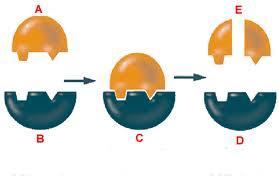
Example: The enzyme lactase breaks down lactose into glucose and galactose.
ATP: The Energy Shuttle
ATP (adenosine triphosphate) is the primary energy carrier in cells, transferring energy for cellular work.
ATP Structure: Composed of adenine, ribose, and three phosphate groups.
ATP Hydrolysis: Breaking the terminal phosphate bond releases energy ().
Cellular Work Driven by ATP:
Mechanical Work: Muscle contraction, movement of cilia/flagella.
Transport Work: Pumping substances across membranes.
Chemical Work: Driving endergonic reactions (e.g., synthesis of macromolecules).
Example: ATP powers the sodium-potassium pump in nerve cells.
Digestion
Chemical Digestion and Enzymes
Chemical digestion involves breaking down biomolecules into monomers using hydrolysis, facilitated by specific enzymes.
Hydrolysis: Addition of water to break bonds in polymers (e.g., proteins to amino acids).
Dehydration Synthesis: Removal of water to form bonds between monomers (e.g., forming proteins from amino acids).
Enzymes in Digestion:
Salivary Amylase: Breaks down starch into sugars.
Protease: Breaks down proteins into amino acids.
Lipase: Breaks down lipids into fatty acids and glycerol.
Lactase: Breaks down lactose into glucose and galactose.
Example: In lactose-intolerant individuals, the enzyme lactase is deficient, leading to difficulty digesting lactose.
Biomolecule Monomers and Polymers
Understanding the building blocks of biomolecules is essential for grasping digestion and metabolism.
Carbohydrates: Monomers are monosaccharides (e.g., glucose); polymers are polysaccharides (e.g., starch).
Proteins: Monomers are amino acids; polymers are polypeptides/proteins.
Lipids: Monomers are fatty acids and glycerol; polymers are triglycerides.
Nucleic Acids: Monomers are nucleotides; polymers are DNA/RNA.
Key Vocabulary and Root Words
Important Terms
Activation Energy
Active Site
ADP
ATP
Cellular Respiration
Chemical Energy
Denature
Energy
Entropy
Enzyme
Endothermic (Endergonic)
Exothermic (Exergonic)
First Law of Thermodynamics
Heat
Induced Fit
Kinetic Energy
Metabolic Pathway
Metabolism
Potential Energy
Second Law of Thermodynamics
Substrate
Thermodynamics
Root Words
endo- = inner, within
-ase = enzyme
exo- = outer
kinet- = movement
therm- = heat
Chapter 21 Vocabulary
Lactose
Lactase
Salivary Amylase
Protease
Lipase
Synthesis
Unit 6 Review
Hydrolysis
Dehydration Synthesis
Biomolecule Monomers and Polymers
