 Back
BackL6 Biodiversity
Study Guide - Smart Notes
 Tailored notes based on your materials, expanded with key definitions, examples, and context.
Viruses, Viroids, and Prions
Introduction
Viruses, viroids, and prions are unique infectious agents that challenge the traditional definitions of life. This section explores their structures, life cycles, and roles in biology and disease.
Types of Viruses and Viral Shapes
Major Viral Shapes
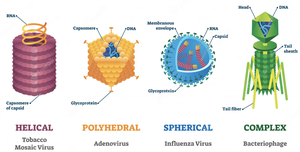
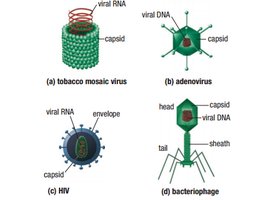
Viruses exhibit a variety of shapes, which are closely related to their mode of infection and replication. The four main types are:
Helical: Rod-shaped, with the genetic material coiled inside a protein cylinder (e.g., Tobacco Mosaic Virus).
Polyhedral: Many-sided, often icosahedral (e.g., Adenovirus).
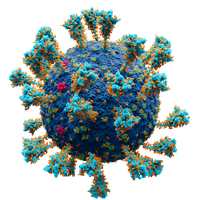
Spherical: Roughly spherical, often with an envelope (e.g., Influenza Virus).
Complex: Complicated structures, such as bacteriophages with a head, tail, and tail fibers (e.g., Bacteriophage).
Structure of Viruses
Basic Components
Viruses are small infectious particles composed of:
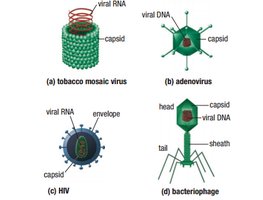
Genome: Either DNA or RNA, but never both. The genome can be single- or double-stranded, and circular or linear.
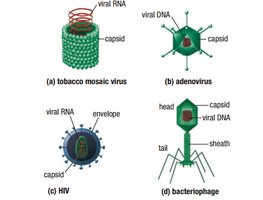
Capsid: A protein shell that protects the genome and facilitates its delivery into host cells.
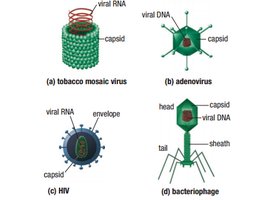
Envelope (in some viruses): A lipid membrane derived from the host cell, containing viral glycoproteins.
Genome
Encodes viral proteins and enzymes necessary for replication.
Can be DNA or RNA, single- or double-stranded, circular or linear.
Capsid
Protein shell surrounding the genome.
Protects genetic material and aids in host cell infection.
Viruses with only a genome and capsid are called naked viruses or nucleocapsids.
Envelope
Present in most animal viruses.
Composed of phospholipids and glycoproteins, usually derived from the host cell membrane during viral exit.
Living and Nonliving Characteristics of Viruses
Living Characteristics
Contain genetic material (DNA or RNA).
Can reproduce rapidly, but only inside living host cells.
Capable of mutation and evolution.
Nonliving Characteristics
Lack cytoplasm and cellular structure.
Cannot grow or reproduce independently.
Do not metabolize or produce waste.
Classified as non-living because they lack key characteristics of living cells.
Importance of Viruses
Harmful Effects
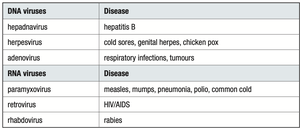
Responsible for many human diseases (e.g., influenza, HIV/AIDS, rabies).
Ecological Roles
Control populations of other organisms by causing disease.
Extremely abundant in ecosystems (e.g., millions per milliliter of ocean water).
Bacteriophages
Definition
Bacteriophages are viruses that infect bacterial cells.
Viral Infectious Cycles
General Overview
Viruses infect host cells, replicate, and often destroy the host cell. They are only active when their genetic material is inside a living cell. Some viruses can remain dormant in the host cell.
Lytic and Lysogenic Cycles
There are two main types of viral replication cycles:
Lytic Cycle: Virus immediately replicates and lyses (destroys) the host cell.
Lysogenic Cycle: Viral DNA integrates into the host genome and can remain dormant before entering the lytic cycle.
Lytic Cycle Steps
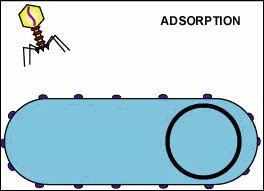
Attachment: Virus attaches to host cell surface via specific receptors.
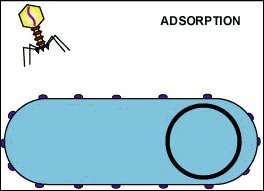
Entry: Viral genome enters the host cell.
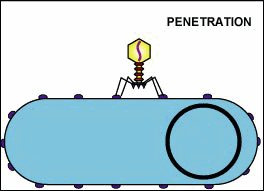
Replication: Viral DNA is transcribed and translated by the host cell; viral components are produced and assembled.
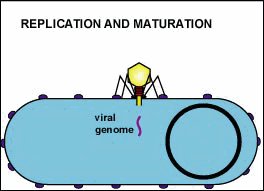
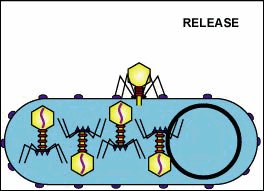
Assembly: New virus particles are assembled inside the host cell.
Lysis and Release: Host cell bursts, releasing new viruses.
Lysogenic Cycle Steps
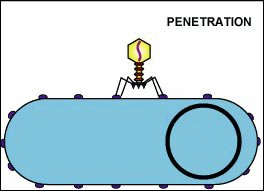
Attachment: Virus attaches to host cell.
Entry: Viral genome enters host cell.
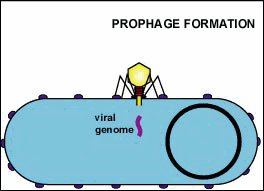
Integration: Viral DNA integrates into host genome, forming a prophage (in bacteria) or provirus (in eukaryotes).
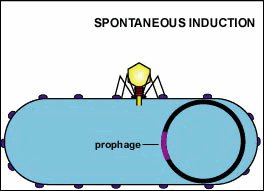
Spontaneous Induction: Prophage may exit the host genome and enter the lytic cycle.
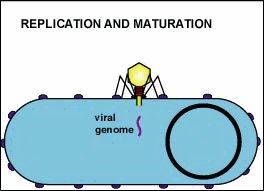
Replication, Assembly, Lysis & Release: Same as lytic cycle.
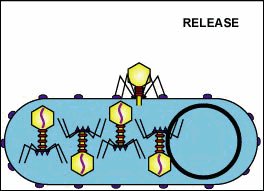
Comparison of Lytic and Lysogenic Cycles
Lytic Cycle: Fast replication, immediate host cell death, 100–200 new viruses per cycle.
Lysogenic Cycle: Slower, viral DNA can remain dormant, viral genome passed to daughter cells, potentially more viruses produced over time.
Viral Transmission
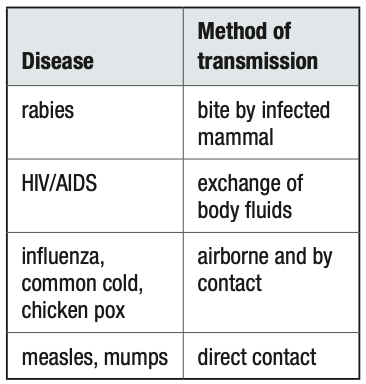
Viruses can be transmitted in various ways:
Airborne (e.g., influenza)
Bodily fluids (e.g., HIV/AIDS)
Direct contact (e.g., measles, mumps)
Bites (e.g., rabies)
Gene Transfer by Viruses
Viral Transduction: A process where viruses transfer DNA from one bacterium to another, contributing to genetic diversity.
Vaccinations and Human Health
How Vaccines Work
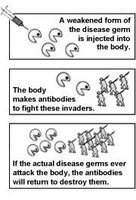
Vaccines contain weakened or inactivated forms of viruses, which stimulate the immune system to produce antibodies without causing disease. This creates immunological memory for future protection. 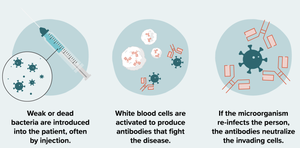
Examples
Smallpox: Eradicated by vaccination.
HPV: Vaccine prevents cervical cancer, >97% effective.
Viruses in Gene Therapy and Biotechnology
Gene Therapy
Viruses can be engineered to deliver therapeutic genes into cells, replacing or repairing defective genes. 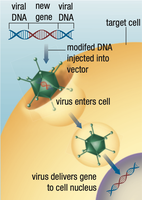
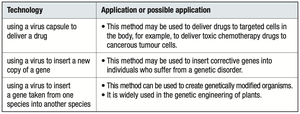
Applications Table
Technology | Application or possible application |
|---|---|
Using a virus capsule to deliver a drug | May deliver drugs to targeted cells, e.g., chemotherapy to tumors |
Using a virus to insert a new copy of a gene | Insert corrective genes into individuals with genetic disorders |
Using a virus to insert a gene from one species into another | Create genetically modified organisms; used in plant genetic engineering |
Viroids
Definition and Characteristics
Very small, circular RNA molecules without a protein capsid.
Do not code for proteins; interfere with host RNA function.
Plant pathogens, causing significant agricultural losses (e.g., in citrus, potatoes, tomatoes, coconut palms).
Prions
Definition and Characteristics
Infectious proteins with abnormal shapes.
Cause neurodegenerative diseases by inducing misfolding of normal proteins in the brain.
Diseases include Bovine Spongiform Encephalopathy (BSE, "mad cow disease") and Creutzfeldt-Jakob disease (CJD) in humans.
Comparison: Viroids vs. Prions
Agent | Composition | Diseases Caused | Hosts |
|---|---|---|---|
Viroid | Small, circular RNA (no protein coat) | Plant diseases (e.g., potato spindle tuber) | Plants |
Prion | Abnormally folded protein (no nucleic acid) | Neurodegenerative diseases (e.g., BSE, CJD) | Mammals |
Summary
Viruses, viroids, and prions are unique infectious agents with distinct structures and replication strategies. Viruses are obligate parasites with DNA or RNA genomes, capable of causing disease and being used in biotechnology. Viroids are infectious RNA molecules affecting plants, while prions are infectious proteins causing brain diseases in mammals.
