Pearson+ LogoPearson+ Logo
Ch. 20 - The Molecular Revolution: Biotechnology, Genomics, and New Frontiers
Freeman - Biological Science 7th Edition
Freeman7th EditionBiological ScienceISBN: 9783584863285Not the one you use?Change textbook
Chapter 20, Problem 15

How could the research group determine whether a homologous gene for blight resistance exists in the human genome?

Verified step by step guidance
1
Identify the gene responsible for blight resistance in the original organism, such as a plant. This involves isolating and characterizing the gene sequence that confers resistance to the blight.
Use bioinformatics tools to search for similar gene sequences in the human genome. This can be done by performing a BLAST (Basic Local Alignment Search Tool) search, which compares the plant gene sequence against the human genome database to find similar sequences.
Analyze the results from the BLAST search to identify any homologous genes in the human genome. Look for high sequence similarity and conserved functional domains that are characteristic of the blight resistance gene.
Validate the function of the identified homologous gene in humans. This could involve experiments such as gene expression analysis under conditions that would activate blight resistance pathways in the original organism, or genetic knockout studies to observe any changes in resistance.
Review scientific literature to see if there has been any previous research or evidence supporting the existence of a homologous blight resistance gene in humans, which could provide additional insights or confirmation.

Verified video answer for a similar problem:

This video solution was recommended by our tutors as helpful for the problem above.
Video duration:
2m
Was this helpful?

Key Concepts

Here are the essential concepts you must grasp in order to answer the question correctly.

Homologous Genes

Homologous genes are genes that share a common ancestry, often due to evolutionary processes. They can be classified into orthologs, which are found in different species and arise from speciation events, and paralogs, which are found within the same species due to gene duplication. Identifying homologous genes is crucial for understanding gene function and evolutionary relationships.
Recommended video:
Guided course
08:09
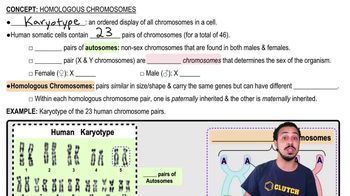
Homologous Chromosomes

Gene Mapping

Gene mapping is the process of determining the location of genes on a chromosome. This involves techniques such as comparative genomics, where researchers analyze the genomes of different organisms to identify conserved sequences. By mapping genes associated with traits like blight resistance, researchers can locate potential homologous genes in the human genome.
Recommended video:
Guided course
04:22
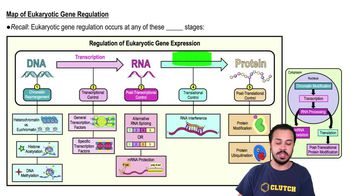
Map of Eukaryotic Gene Regulation

Bioinformatics

Bioinformatics is the application of computational tools to analyze biological data, particularly genomic sequences. It enables researchers to compare genetic information across species, identify homologous genes, and predict their functions. Utilizing bioinformatics tools is essential for efficiently determining the presence of homologous genes related to specific traits in the human genome.