Pearson+ LogoPearson+ Logo
Ch. 21 - Genes, Development, and Evolution
Freeman - Biological Science 7th Edition
Freeman7th EditionBiological ScienceISBN: 9783584863285Not the one you use?Change textbook
Chapter 21, Problem 2

In adult animals, ___________ are a source of undifferentiated cells that can divide to produce cells that can specialize.

Verified step by step guidance
1
Identify the term that describes undifferentiated cells capable of division and specialization in adult animals. These cells are known as 'stem cells'.
Understand that stem cells have the unique ability to divide and differentiate into various specialized cell types, which is crucial for growth, repair, and maintenance of tissues.
Recognize the two main types of stem cells in adult animals: hematopoietic stem cells, which give rise to blood cells, and mesenchymal stem cells, which can differentiate into bone, cartilage, and fat cells.
Explore the concept of 'potency', which refers to the stem cells' ability to differentiate into different cell types. Adult stem cells are typically multipotent, meaning they can give rise to a limited range of cell types.
Consider the role of stem cells in regenerative medicine, where they are used to replace damaged or diseased tissues, highlighting their importance in medical research and treatment.

Verified video answer for a similar problem:

This video solution was recommended by our tutors as helpful for the problem above.
Video duration:
2m
Was this helpful?

Key Concepts

Here are the essential concepts you must grasp in order to answer the question correctly.

Stem Cells

Stem cells are undifferentiated cells capable of dividing and giving rise to various specialized cell types. In adult animals, they serve as a repair system, replenishing tissues and contributing to the body's ability to regenerate and maintain homeostasis.
Recommended video:
Guided course
05:33
Cell Junctions

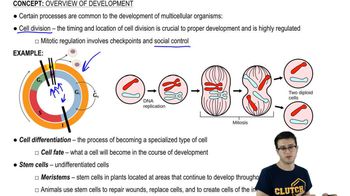
Cell Differentiation

Cell differentiation is the process by which a less specialized cell becomes a more specialized cell type. This involves changes in gene expression, allowing cells to acquire specific functions necessary for the organism's development and maintenance.
Recommended video:
Guided course
05:28
Cell Division and Differentiation

Regenerative Medicine

Regenerative medicine is a field focused on repairing or replacing damaged cells, tissues, and organs using stem cells and other techniques. It leverages the ability of stem cells to differentiate into various cell types, offering potential treatments for diseases and injuries.
Recommended video:
Guided course
03:07
Review & Application of DNA Cloning in Medicine