Pearson+ LogoPearson+ Logo
Ch. 21 - Genes, Development, and Evolution
Freeman - Biological Science 7th Edition
Freeman7th EditionBiological ScienceISBN: 9783584863285Not the one you use?Change textbook
Chapter 21, Problem 1

What is apoptosis?
a. An experimental technique used to kill specific cells
b. Programmed cell death that is required for normal development
c. A pathological condition observed only in damaged or diseased organisms
d. A developmental mechanism unique to the roundworm C. elegans

Verified step by step guidance
1
Understand the term 'apoptosis': Apoptosis is a biological process that refers to programmed cell death, which is a normal and controlled part of an organism's growth or development.
Consider the role of apoptosis in development: Apoptosis is crucial for shaping organs and tissues during development by removing unnecessary or damaged cells.
Differentiate apoptosis from pathological cell death: Unlike necrosis, which is a form of traumatic cell death resulting from acute cellular injury, apoptosis is a regulated and orderly process.
Recognize the universality of apoptosis: Apoptosis is not unique to any single organism, such as C. elegans, but is a common mechanism across many species, including humans.
Evaluate the options: Based on the understanding of apoptosis, identify that it is best described by option b, as it is a programmed cell death required for normal development.

Verified video answer for a similar problem:

This video solution was recommended by our tutors as helpful for the problem above.
Video duration:
2m
Was this helpful?

Key Concepts

Here are the essential concepts you must grasp in order to answer the question correctly.

Apoptosis

Apoptosis is a form of programmed cell death that is essential for maintaining healthy tissue homeostasis and development. It involves a series of biochemical events leading to characteristic cell changes and death, allowing the removal of unnecessary or damaged cells without causing inflammation.
Recommended video:
Guided course
04:05
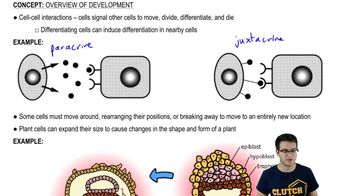
Cellular Interactions and Apoptosis

Normal Development

Normal development refers to the process by which organisms grow and develop in a regulated manner, involving cell differentiation, growth, and death. Apoptosis plays a crucial role in this process by eliminating cells that are no longer needed, thus shaping organs and tissues during embryonic development.
Recommended video:
Guided course
06:02
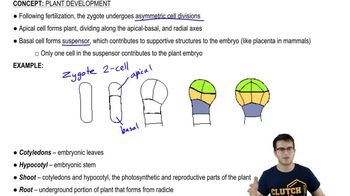
Embryonic Plant Development

Programmed Cell Death

Programmed cell death is a controlled process by which cells self-destruct in response to specific signals. Unlike necrosis, which is a form of traumatic cell death, programmed cell death like apoptosis is a vital mechanism for removing cells in a way that prevents damage to surrounding tissues.
Recommended video:
Guided course
03:31
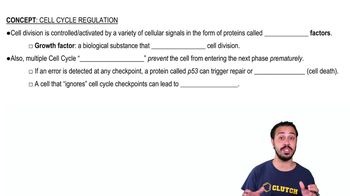
Cell Cycle Regulation