Pearson+ LogoPearson+ Logo
Ch. 44 - Animal Sensory Systems
Freeman - Biological Science 7th Edition
Freeman7th EditionBiological ScienceISBN: 9783584863285Not the one you use?Change textbook
Chapter 44, Problem 16f

Honeybees live in social groups consisting of a queen, up to several hundred male drones, and thousands of infertile female workers. The drones mate with the queen only, and the workers protect the hive, forage, and feed and groom the queen. The health of the hive depends on the female workers performing these duties instead of reproducing.
What roles do pheromones play in maintaining a functional beehive?
Beekeepers carefully manage their beehives by adding mated queens, drones, and workers at appropriate times. However, sometimes the bees abandon a new hive before the queen can mature, and the result is inefficient hive management and honey production. Suggest a potential use of queen pheromone in controlling this problem.

Verified step by step guidance
1
Understand the role of pheromones in honeybee colonies: Pheromones are chemical signals that influence the behavior and physiology of other members of the colony. In honeybees, the queen produces specific pheromones that help maintain social order and cohesion within the hive.
Identify the function of queen pheromones: Queen pheromones are crucial for regulating the activities of worker bees, including inhibiting their reproductive capabilities and encouraging them to perform tasks such as foraging and hive maintenance.
Consider the problem of hive abandonment: When bees abandon a new hive before the queen matures, it disrupts hive management and honey production. This can occur if the queen's pheromones are not effectively signaling her presence and role within the colony.
Propose a solution using queen pheromones: One potential use of queen pheromones is to artificially introduce them into the hive environment to simulate the presence of a mature queen. This could help stabilize the colony and prevent abandonment by ensuring that the workers recognize the queen's role and continue their duties.
Evaluate the implementation of synthetic pheromones: Beekeepers could use synthetic queen pheromones to manage hives more effectively, especially during the critical period before a new queen matures. This approach would require careful monitoring to ensure that the pheromones are correctly mimicking natural signals and maintaining hive stability.

Verified video answer for a similar problem:

This video solution was recommended by our tutors as helpful for the problem above.
Video duration:
1m
Was this helpful?

Key Concepts

Here are the essential concepts you must grasp in order to answer the question correctly.

Pheromones in Honeybee Communication

Pheromones are chemical signals used by honeybees to communicate and coordinate activities within the hive. The queen releases specific pheromones that regulate the behavior of workers and drones, ensuring the hive functions efficiently. These pheromones can suppress worker reproduction and maintain social order, which is crucial for the hive's health and productivity.
Recommended video:
Guided course
04:25
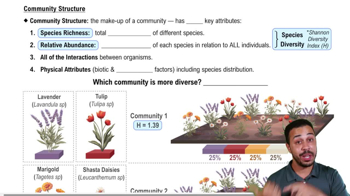
Community Structure

Role of the Queen Bee

The queen bee is the sole reproductive female in the hive, responsible for laying eggs and producing pheromones that influence the behavior of other bees. Her presence and pheromones are vital for maintaining the social structure and harmony of the colony. The queen's health and pheromone production directly impact the hive's stability and efficiency.
Recommended video:
Guided course
01:56
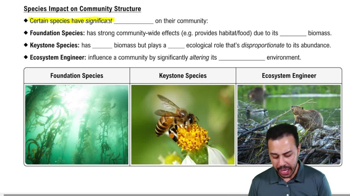
Species Impact on Community Structure

Hive Management by Beekeepers

Beekeepers manage hives by introducing queens, drones, and workers to maintain a balanced and productive colony. Effective hive management involves understanding bee behavior and the role of pheromones in colony dynamics. By manipulating these factors, beekeepers can prevent issues like hive abandonment and ensure optimal honey production and hive health.
Recommended video:
Related Practice
Textbook Question

Honeybees live in social groups consisting of a queen, up to several hundred male drones, and thousands of infertile female workers. The drones mate with the queen only, and the workers protect the hive, forage, and feed and groom the queen. The health of the hive depends on the female workers performing these duties instead of reproducing.

What roles do pheromones play in maintaining a functional beehive? Why might an alarm pheromone be more effective for triggering a protective response in a hive than signals that involve other senses, such as vision or hearing?

508
views
Textbook Question

Honeybees live in social groups consisting of a queen, up to several hundred male drones, and thousands of infertile female workers. The drones mate with the queen only, and the workers protect the hive, forage, and feed and groom the queen. The health of the hive depends on the female workers performing these duties instead of reproducing.

What roles do pheromones play in maintaining a functional beehive?

Researchers observed that the queen produces a pheromone that attracts both drones and workers. They hypothesized that this pheromone inhibits ovarian development in the workers, making the workers infertile. To test this hypothesis, they exposed workers to a synthetic version of the queen pheromone and then recorded their 'ovary development score.' (Higher scores indicate more fully developed ovaries.) The results are shown in the graph here. Do these results support the researchers' hypothesis? Why or why not? (*** signifies P<0.001.)

515
views
Textbook Question

Honeybees live in social groups consisting of a queen, up to several hundred male drones, and thousands of infertile female workers. The drones mate with the queen only, and the workers protect the hive, forage, and feed and groom the queen. The health of the hive depends on the female workers performing these duties instead of reproducing.

What roles do pheromones play in maintaining a functional beehive?

In the experiment described in Question 14, the researchers dissolved the queen pheromone in diethyl ether, a chemical that helps volatilize the pheromone, making it easier for the workers to detect it in the air. The control treatment consisted of plain diethyl ether. Why did they use this as the control instead of simply not exposing the workers to any chemical?

508
views