Pearson+ LogoPearson+ Logo
Ch. 46 - Chemical Signals in Animals
Freeman - Biological Science 7th Edition
Freeman7th EditionBiological ScienceISBN: 9783584863285Not the one you use?Change textbook
Chapter 46, Problem 9

Suppose that during a detailed anatomical study of a marine invertebrate, you found a small, previously undescribed structure. How would you test the hypothesis that the structure is a gland that releases one or more hormones?

Verified step by step guidance
1
Step 1: First, you need to understand what a gland is and how it functions. A gland is an organ in an animal's body that synthesizes a substance for release such as hormones or breast milk. Hormones are chemical messengers that are secreted directly into the blood, which carries them to organs and tissues of the body to exert their functions.
Step 2: To test the hypothesis that the structure is a gland, you could examine the structure under a microscope. Look for the presence of secretory cells, which are a common feature of glands. These cells are specialized to produce and release substances like hormones.
Step 3: You could also perform a histological analysis. This involves staining the tissue and examining it under a microscope. Certain stains can highlight the presence of hormone-producing cells.
Step 4: Another way to test the hypothesis is to check for the presence of hormones. This can be done by extracting a sample from the structure and testing it using techniques such as chromatography or mass spectrometry, which can identify the presence of specific hormones.
Step 5: Finally, you could perform a functional test. If the structure is indeed a hormone-releasing gland, removing or damaging it should affect the organism's physiology in a way that is consistent with the loss of that hormone.

Verified video answer for a similar problem:

This video solution was recommended by our tutors as helpful for the problem above.
Video duration:
3m
Was this helpful?

Key Concepts

Here are the essential concepts you must grasp in order to answer the question correctly.

Hormone Function

Hormones are chemical messengers produced by glands that regulate various physiological processes in organisms. They are secreted into the bloodstream and can affect distant target organs, influencing functions such as growth, metabolism, and reproduction. Understanding the role of hormones is crucial for hypothesizing about the function of a newly discovered structure.
Recommended video:
Guided course
08:18
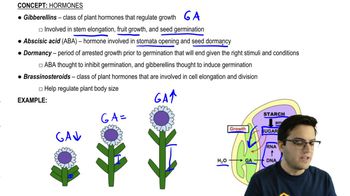
Plant Hormones and Senescence

Anatomical Identification

Anatomical identification involves examining the structure and location of an organism's tissues and organs to determine their function. In the context of the marine invertebrate, identifying the morphology and histology of the small structure can provide insights into whether it resembles known glands, which is essential for testing the hypothesis of its glandular nature.
Recommended video:
Guided course
03:54
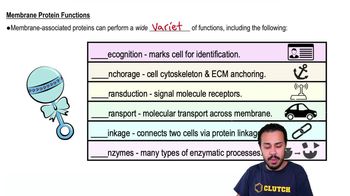
Membrane Protein Functions

Experimental Validation

Experimental validation is the process of testing a hypothesis through controlled experiments. To determine if the structure is a hormone-releasing gland, one could conduct experiments such as hormone assays, immunohistochemistry, or functional studies to observe the effects of the structure on physiological processes, thereby providing evidence to support or refute the hypothesis.
Recommended video:
Guided course
02:50
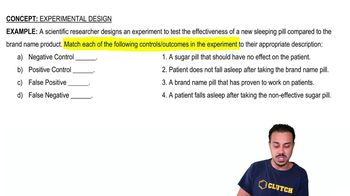
Experimental Design Example 1
Related Practice
Textbook Question

Why is the observation that one hormone may bind to more than one type of receptor important?

894
views
Textbook Question

Compare and contrast the structure and function of the anterior and posterior pituitary glands.

1359
views
Textbook Question

Design a study to test the hypothesis that the symptoms of jet lag are caused by disruption of normal daily cortisol rhythms.

664
views
Textbook Question

Scientists set out to test the hypothesis that the herbicide atrazine is an endocrine disruptor that feminizes male amphibians. They treated male amphibians with atrazine and then compared their circulating testosterone concentration with those of males and females that were not treated with atrazine (controls). The results are shown here (* signifies P<0.05). Was the hypothesis supported? Why or why not?

727
views
Textbook Question

<Image>

Ecotourism helps conserve wildlife by increasing the value of wildlife conservation for local people. In Argentina, the world’s largest breeding colony of Magellanic penguins is visited by thousands of tourists every year, causing the penguins to become habituated to the presence of people. Has ecotourism affected the penguins’ ability to respond to stressors? Has it affected the penguins’ secretion of corticosterone?

Corticosterone is a(n):

a. Neurohormone

b. Steroid hormone

c. Amino-acid-derived hormone

d. Polypeptide hormone

774
views
Textbook Question

<Image>

Ecotourism helps conserve wildlife by increasing the value of wildlife conservation for local people. In Argentina, the world’s largest breeding colony of Magellanic penguins is visited by thousands of tourists every year, causing the penguins to become habituated to the presence of people. Has ecotourism affected the penguins’ ability to respond to stressors? Has it affected the penguins’ secretion of corticosterone?

In what part(s) of a target cell would you expect to find corticosterone receptors?

631
views