
Textbook Question
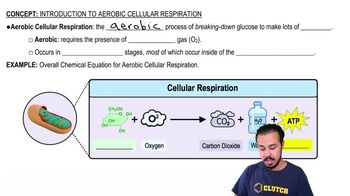
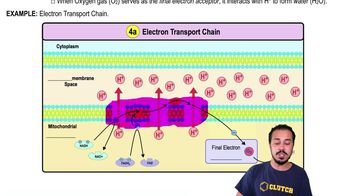
Explain the relationship between electron transport and oxidative phosphorylation. How do uncoupling proteins 'uncouple' this relationship in brown adipose tissue?
1150
views


 Verified step by step guidance
 03:39
03:39
 07:41
07:41 04:36
04:36Explain the relationship between electron transport and oxidative phosphorylation. How do uncoupling proteins 'uncouple' this relationship in brown adipose tissue?
The researchers who observed that magnetite was produced by bacterial cultures from the deep subsurface carried out a follow-up experiment. These biologists treated some of the cultures with a drug that poisons the enzymes involved in electron transport chains. In cultures where the drug was present, no more magnetite was produced. Does this result support or undermine their hypothesis that the bacteria in the cultures perform cellular respiration? Explain your reasoning.
Cyanide (C ≡ N−) blocks complex IV of the electron transport chain. Suggest a hypothesis for what happens to the ETC when complex IV stops working. Your hypothesis should explain why cyanide poisoning in humans is fatal.
Early estimates suggested that the oxidation of glucose via aerobic respiration would produce 38 ATP. Based on what you know of the theoretical yields of ATP from cellular respiration, show how this total was determined. Why do biologists now think this amount of ATP per molecule of glucose is not achieved in cells?