Back

DNA Transfer into Cells definitions

Control buttons has been changed to "navigation" mode.
1/15
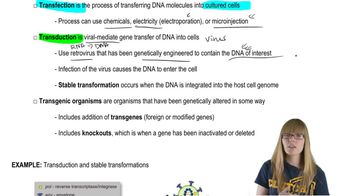
  • Transfection

    Introduction of DNA into cultured cells using chemicals, electroporation, or microinjection, typically resulting in temporary presence of DNA.
  • Electroporation

    A technique using electrical pulses to create temporary pores in cell membranes, allowing DNA to enter cultured cells.
  • Microinjection

    A method where a fine needle directly delivers DNA into a cell, enabling precise genetic manipulation.
  • Transduction

    Viral-mediated DNA delivery into cells, often using engineered retroviruses to introduce specific genetic material.
  • Retrovirus

    A virus containing RNA that is reverse-transcribed into DNA inside host cells, commonly used for stable gene delivery.
  • Stable Transformation

    Integration of introduced DNA into the host genome, ensuring its persistence through cell divisions and inheritance by progeny.
  • Genome

    The complete set of genetic material within a cell, including all chromosomes and integrated foreign DNA after transformation.
  • Transgenic Organism

    An organism whose genome has been altered by adding, mutating, or deleting genes, often to study gene function or traits.
  • Transgene

    A gene introduced from another organism or engineered source, often conferring new traits or functions to the recipient.
  • Knockout

    A genetic alteration where a gene is inactivated or deleted, resulting in loss of its function within the organism.
  • Cultured Cells

    Cells grown under controlled laboratory conditions, serving as recipients for experimental DNA introduction.
  • Chromosome

    A DNA-protein structure within the nucleus where integrated foreign DNA can become a permanent part of the host's genetic material.
  • Progeny

    Descendant cells that inherit genetic material, including any stably integrated foreign DNA, from a parent cell.
  • Mutation

    A change in the DNA sequence, which can be introduced intentionally to study gene function or create knockouts.
  • Integration

    The process by which introduced DNA becomes a permanent part of the host cell's genome, ensuring its inheritance.