Skip to main content
Financial Accounting
My Course
Learn
Exam Prep
AI Tutor
Study Guides
Flashcards
Explore
Try the app
My Course
Learn
Exam Prep
AI Tutor
Study Guides
Flashcards
Explore
Try the app
Back
Face Value Bonds definitions
You can tap to flip the card.
Face Value
You can tap to flip the card.
👆
Face Value
Principal amount of a bond, typically \$1,000, representing the amount repaid at maturity.
Track progress
Control buttons has been changed to "navigation" mode.
1/15
Related flashcards
Related practice
Recommended videos
Face Value Bonds quiz
Face Value Bonds
15 Terms
Face Value Bonds
11. Long Term Liabilities
10 problems
Topic
Discount on Bonds
11. Long Term Liabilities
10 problems
Topic
11. Long Term Liabilities
8 topics
13 problems
Chapter
Guided course
07:36
Issuing Face Value Bonds
1376
views
50
rank
Guided course
03:29
Face Value Bonds:Interest Expense and Cash
1109
views
29
rank
Guided course
02:20
Face Value Bonds:Repaying Principal at Maturity
1061
views
40
rank
Terms in this set (15)
Hide definitions
Face Value
Principal amount of a bond, typically \$1,000, representing the amount repaid at maturity.
Stated Rate
Interest percentage printed on the bond, used to calculate periodic interest payments to bondholders.
Market Rate
Prevailing interest percentage in the market, used to determine a bond's selling price relative to its face value.
Par Value
Condition where a bond is issued at an amount equal to its principal, with stated and market rates matching.
Discount
Situation where a bond sells for less than its principal because the stated rate is below the market rate.
Premium
Situation where a bond sells for more than its principal because the stated rate exceeds the market rate.
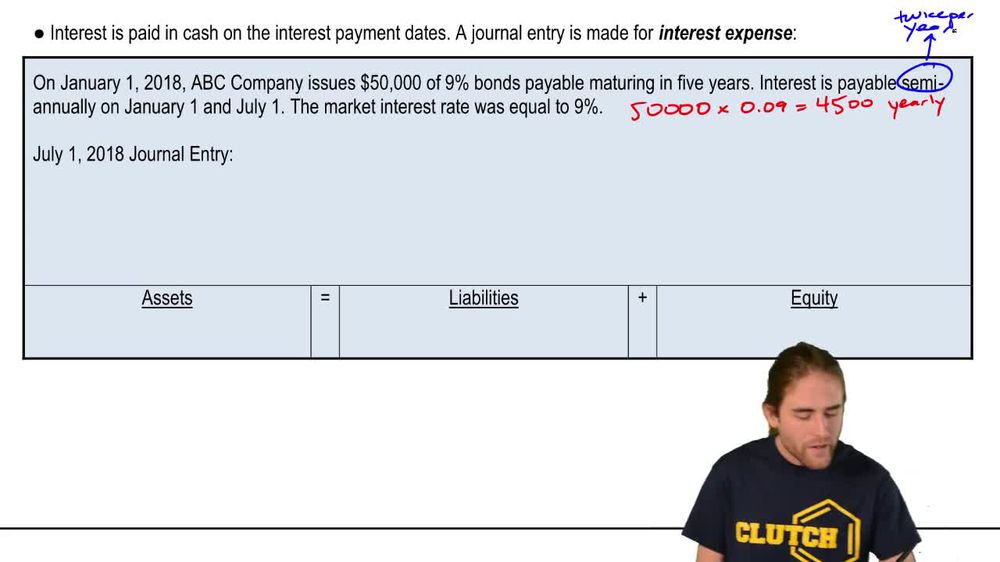
Interest Expense
Cost recognized for using borrowed funds, calculated as principal times stated rate, affecting equity.
Bonds Payable
Liability account representing the total principal owed to bondholders, always recorded at face value.
Interest Payable
Liability for interest that has accrued but not yet been paid by the end of a reporting period.
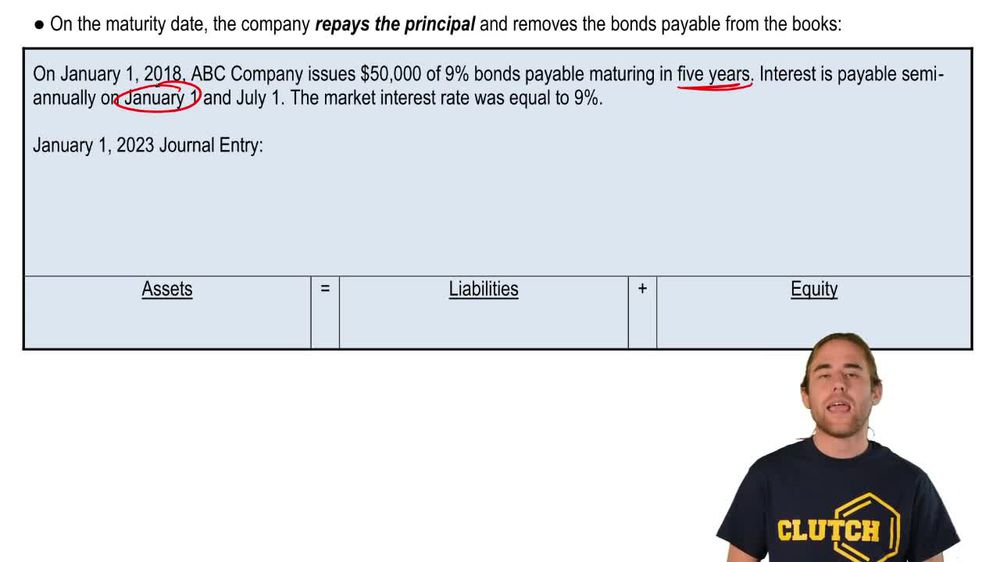
Maturity Date
Specific future date when the principal amount of a bond must be repaid to bondholders.
Principal Amount
Original sum borrowed through a bond, which forms the basis for interest calculations and repayment.
Semiannual Interest
Interest payments made twice per year, requiring calculation and journal entries every six months.
Journal Entry
Accounting record documenting transactions such as bond issuance, interest payments, and principal repayment.
Liability
Obligation to pay cash or provide services in the future, such as amounts owed to bondholders.
Accrued Interest
Interest that has accumulated but not yet been paid, recorded as a liability at period end.
 BackBack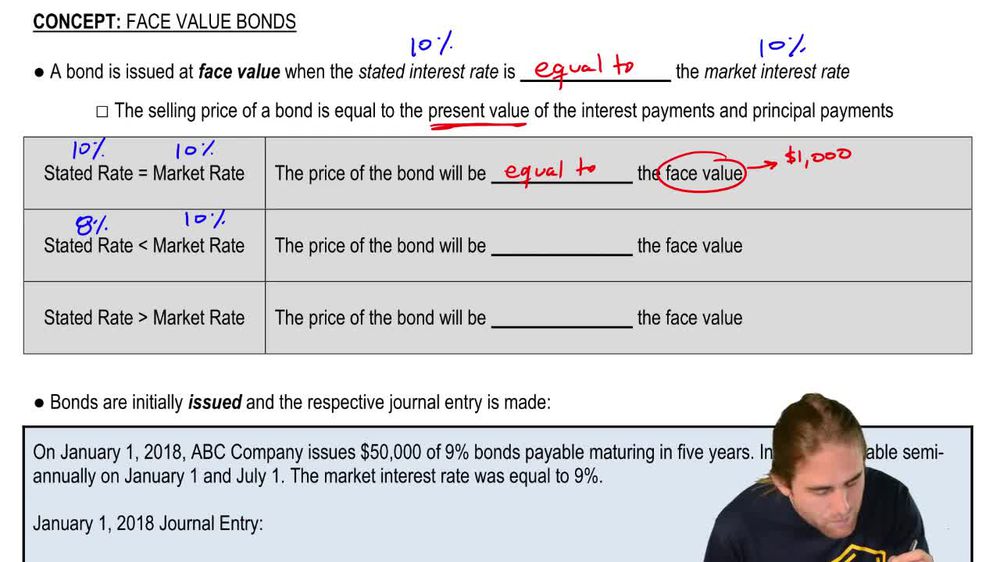
 07:36
07:36