Skip to main content
Financial Accounting
My Course
Learn
Exam Prep
AI Tutor
Study Guides
Flashcards
Explore
Try the app
My Course
Learn
Exam Prep
AI Tutor
Study Guides
Flashcards
Explore
Try the app
Back
Introduction to the Statement of Cash Flows definitions
You can tap to flip the card.
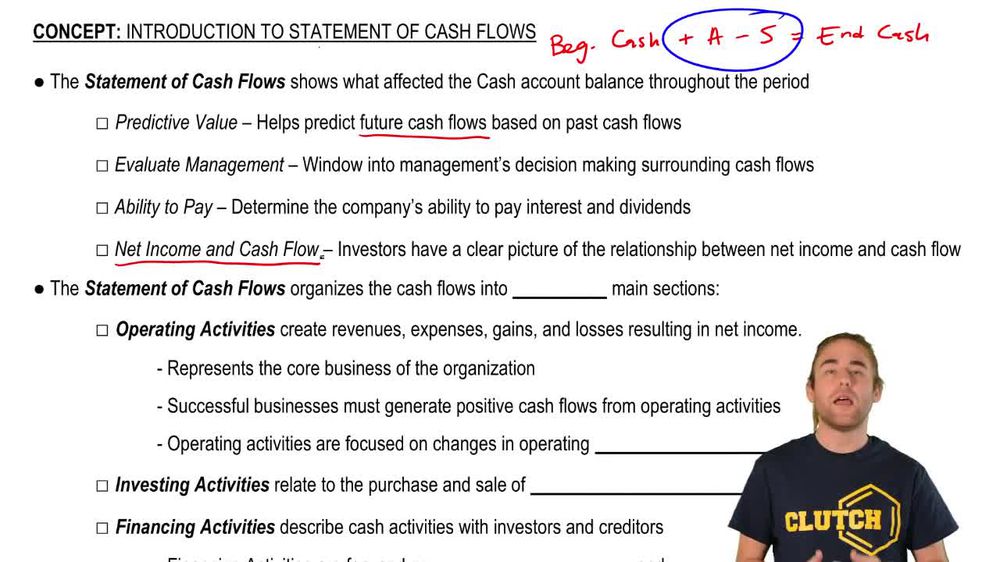
Statement of Cash Flows
You can tap to flip the card.
👆
Statement of Cash Flows
Financial report summarizing cash inflows and outflows over a period, showing how cash balance changes from start to end.
Track progress
Control buttons has been changed to "navigation" mode.
1/15
Related flashcards
Related practice
Recommended videos
Introduction to the Statement of Cash Flows quiz #1
Introduction to the Statement of Cash Flows
40 Terms
Introduction to the Statement of Cash Flows quiz #2
Introduction to the Statement of Cash Flows
26 Terms
Introduction to the Statement of Cash Flows
13. Statement of Cash Flows
10 problems
Topic
Operating Activities: Indirect Method
13. Statement of Cash Flows
10 problems
Topic
13. Statement of Cash Flows
6 topics
15 problems
Chapter
Guided course
05:39
Statement of Cash Flows
2467
views
83
rank
1
comments
Guided course
07:11
Introduction to the Statement of Cash Flows
3117
views
73
rank
4
comments
Terms in this set (15)
Hide definitions
Statement of Cash Flows
Financial report summarizing cash inflows and outflows over a period, showing how cash balance changes from start to end.
Operating Activities
Section focusing on cash flows from core business operations, involving current assets and current liabilities.
Investing Activities
Section detailing cash flows from transactions involving long-term assets, such as equipment purchases or sales.
Financing Activities
Section covering cash flows from interactions with investors and creditors, involving long-term liabilities and equity.
Current Assets
Resources expected to be converted to cash or used within one year, such as accounts receivable and inventory.
Current Liabilities
Obligations due within one year, including accounts payable and accrued expenses, impacting operating cash flows.
Long-term Assets
Resources with useful lives extending beyond one year, such as equipment, often involved in investing activities.
Long-term Liabilities
Debts or obligations not due within the next year, typically addressed in the financing section of the cash flow statement.
Stockholders' Equity
Owners' residual interest in company assets after liabilities, affected by financing activities like issuing stock or paying dividends.
Net Income
Total earnings calculated as revenues minus expenses, not always equal to cash generated during the period.
Dividends
Distributions of earnings to shareholders, requiring available cash and reflected in financing activities.
Accrued Expenses
Obligations for expenses incurred but not yet paid, classified as current liabilities in operating activities.
Accounts Receivable
Amounts owed by customers for sales made on credit, considered a current asset in operating activities.
Accounts Payable
Amounts owed to suppliers for goods or services received, classified as a current liability in operating activities.
Predictive Value
Ability of financial information to help forecast future cash flows and assess company performance.
 BackBack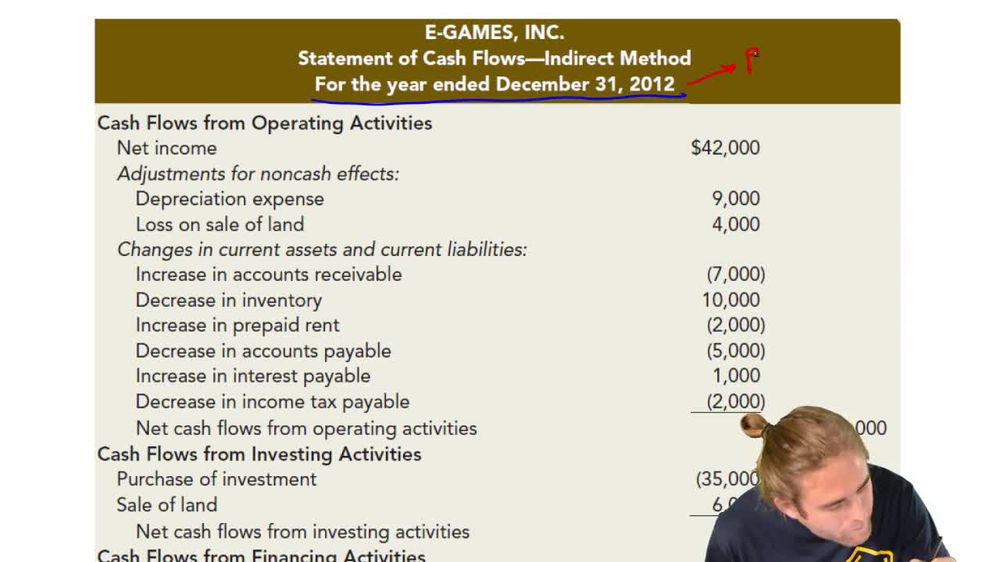
 05:39
05:39