Combustion Apparatus definitions Flashcards

Combustion Apparatus definitions
Control buttons has been changed to "navigation" mode.
1/14
  • Combustion Analysis
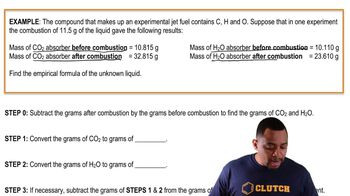
    An analytical method to determine a compound's empirical formula by analyzing combustion products.
  • Combustion Apparatus
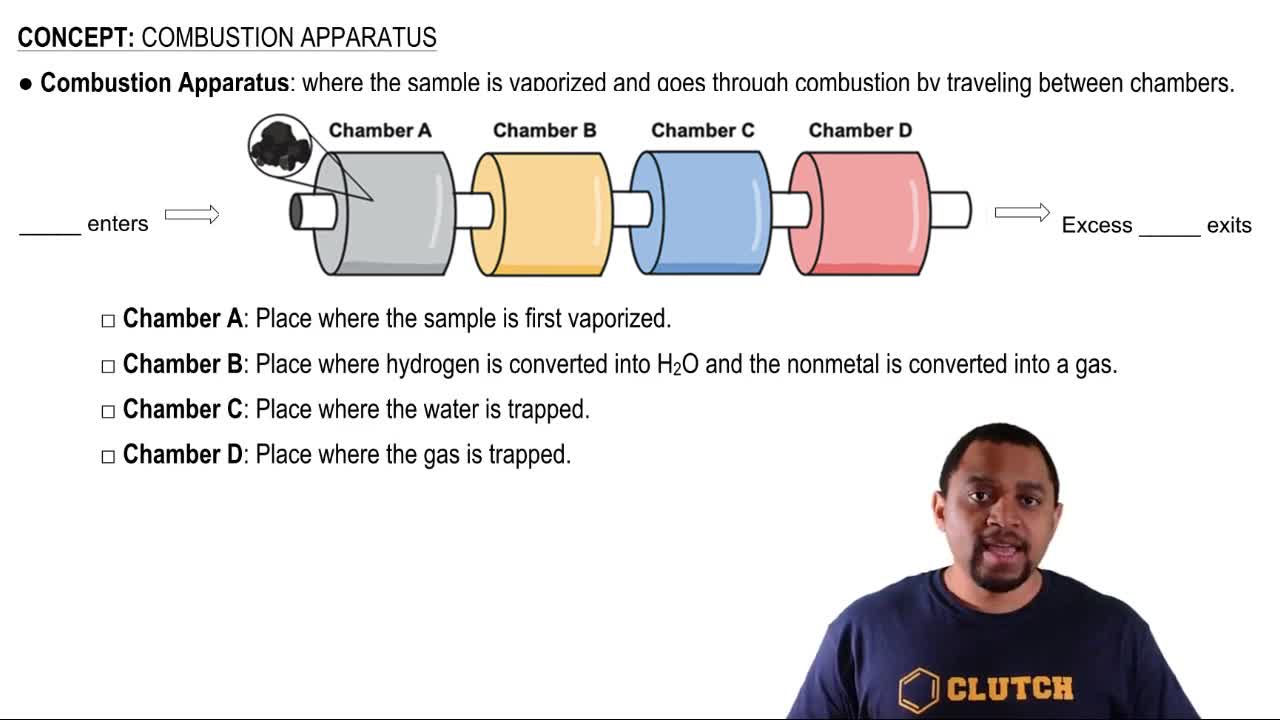
    A device with multiple chambers used to vaporize samples and facilitate combustion analysis.
  • Chamber A
    The initial chamber where the sample is vaporized and oxygen gas is introduced.
  • Chamber B
    The chamber where hydrogen in the sample is converted into water.
  • Chamber C
    The chamber where water is trapped and nonmetals form gases.
  • Oxygen Gas
    A reactant essential for combustion, introduced in the combustion apparatus.
  • Empirical Formula
    A formula representing the simplest whole-number ratio of elements in a compound.
  • Vaporization
    The process of converting a sample into a gaseous state within the apparatus.
  • Nonmetals
    Elements in the sample that form gases like CO2, NO2, or SO2 during combustion.
  • Excess Oxygen
    Remaining oxygen post-reaction, common in oxygen-rich environments.
  • CO2
    A gas formed when carbon in the sample undergoes combustion.
  • NO2
    A gas formed when nitrogen in the sample undergoes combustion.
  • SO2
    A gas formed when sulfur in the sample undergoes combustion.
  • Diatomic Molecule
    A molecule consisting of two atoms, formed by halogens during combustion.