Entropy Calculations definitions Flashcards

Entropy Calculations definitions
Control buttons has been changed to "navigation" mode.
1/15
  • Entropy
    A measure of disorder or randomness, typically in units of joules per Kelvin.
  • Second Law of Thermodynamics
    States that the entropy of the universe tends to increase, indicating spontaneous processes.
  • Spontaneous Process
    A process with a positive total entropy change in the universe, aligning with natural tendencies.
  • Non-Spontaneous Process
    A process with a negative total entropy change in the universe, opposing natural tendencies.
  • Equilibrium
    A state where the total entropy change in the universe is zero, indicating no net change.
  • Standard Molar Entropy
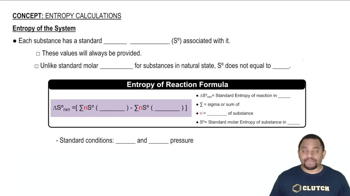
    The entropy of a substance in its standard state, always greater than zero.
  • ΔSuniverse
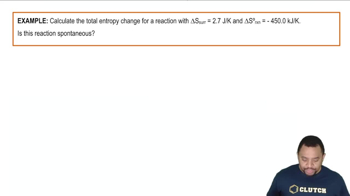
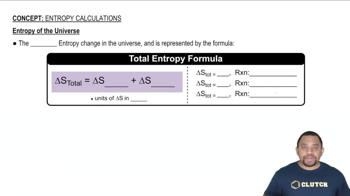
    The sum of the entropy change of the system and surroundings, indicating spontaneity.
  • ΔSsystem
    The entropy change of the system, often calculated using standard molar entropies.
  • ΔSsurroundings
    Calculated as the negative change in enthalpy of the reaction divided by temperature.
  • ΔHreaction
    The change in enthalpy of a reaction, typically in kilojoules, used in entropy calculations.
  • Standard Conditions
    Conditions of 25 degrees Celsius and 1 atmosphere pressure for measuring standard entropies.
  • Joules per Kelvin
    The unit of measurement for entropy, indicating energy per temperature increment.
  • Sigma
    Represents the summation of terms, used in calculating standard entropy changes.
  • Moles
    A unit representing the amount of substance, used in calculating entropy changes.
  • Products minus Reactants
    The method for calculating the standard entropy change of a reaction.