Rutherford Gold Foil Experiment definitions Flashcards
Rutherford Gold Foil Experiment definitions
You can tap to flip the card.
Control buttons has been changed to "navigation" mode.
1/15
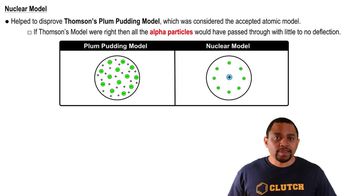
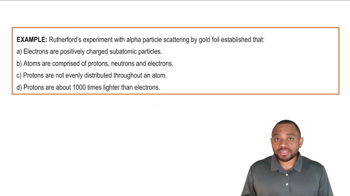
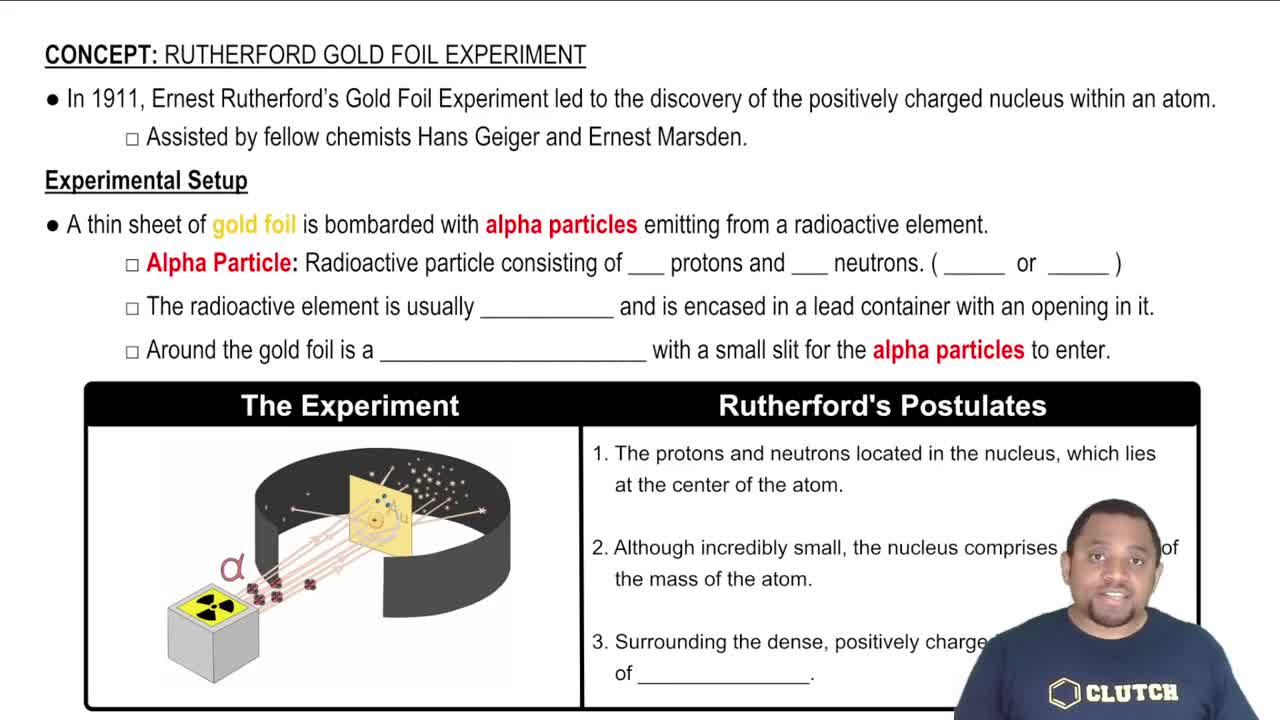
Rutherford Gold Foil ExperimentA study that revealed the existence of a dense, positively charged nucleus in atoms, leading to the nuclear model.Geiger-Marsden ExperimentAnother name for the Rutherford Gold Foil Experiment, highlighting the contributions of Hans Geiger and Ernest Marsden.Alpha ParticlesRadioactive particles consisting of two protons and two neutrons, used to probe atomic structure in the experiment.NucleusThe dense, positively charged center of an atom, containing most of its mass, discovered through the experiment.ProtonsPositively charged particles located in the nucleus, contributing to the atom's overall positive charge.NeutronsNeutral particles found in the nucleus, contributing to the atomic mass but not to the charge.ElectronsNegatively charged particles orbiting the nucleus, forming a cloud around it in the nuclear model.Plum Pudding ModelAn outdated atomic model proposing electrons embedded in a positive charge 'soup,' disproven by the experiment.Nuclear ModelThe atomic model established by Rutherford, featuring a central nucleus surrounded by orbiting electrons.Detecting ScreenA device used in the experiment to observe the deflection and passage of alpha particles through gold foil.Lead BoxA container used to encase the radioactive element, allowing controlled emission of alpha particles.IridiumThe radioactive element typically used in the experiment to emit alpha particles towards the gold foil.Atomic NumberThe number of protons in an atom, determining its element, such as helium for alpha particles.Mass NumberThe total number of protons and neutrons in an atom, used to describe alpha particles as 4.ThomsonThe scientist who proposed the plum pudding model, later disproven by Rutherford's findings.