Periodic Trend: Electron Affinity definitions Flashcards

Periodic Trend: Electron Affinity definitions
Control buttons has been changed to "navigation" mode.
1/15
  • Electron Affinity
    Energy released when an electron is added to a gaseous atom, indicating exothermicity.
  • Exothermic Reaction
    A process that releases energy, often resulting in a negative electron affinity.
  • Periodic Table
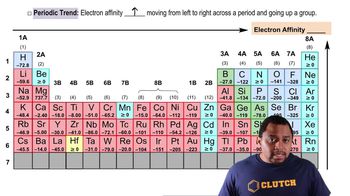
    A chart where electron affinity generally increases towards the top right corner.
  • Gaseous Atom
    An atom in the gas phase, often involved in electron affinity measurements.
  • Negative Value
    Indicates a stronger tendency to gain an electron in electron affinity.
  • Stability
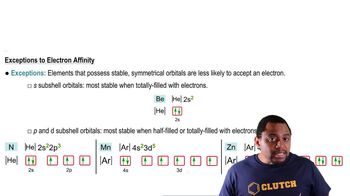
    A condition where filled or half-filled orbitals resist accepting additional electrons.
  • Beryllium
    An element with a filled s orbital, showing reluctance to gain electrons.
  • Nitrogen
    An element with half-filled p orbitals, contributing to its electron affinity exception.
  • Noble Gases
    Elements with complete outer shells, typically having zero or positive electron affinity.
  • Zinc
    An element with filled d orbitals, showing resistance to electron gain.
  • Half-filled Orbitals
    A stable electron configuration that resists additional electron acceptance.
  • Filled Orbitals
    A stable electron configuration that resists additional electron acceptance.
  • Fluorine
    An element with a high negative electron affinity, indicating a strong desire for electrons.
  • Cesium
    An element with a less negative electron affinity, indicating a weaker desire for electrons.
  • Kilojoules
    The unit of measurement for energy changes in electron affinity processes.