Periodic Trend: Ionization Energy definitions Flashcards
Periodic Trend: Ionization Energy definitions
You can tap to flip the card.
Control buttons has been changed to "navigation" mode.
1/15
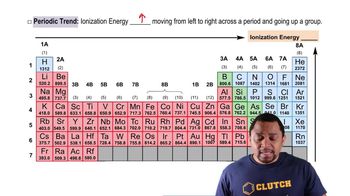
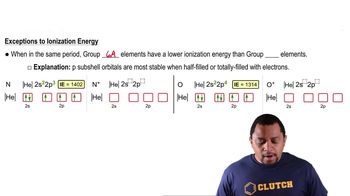
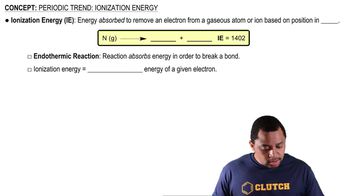
Ionization EnergyEnergy required to remove an electron from a gaseous atom or ion, resulting in a positive charge.EndothermicA process where energy is absorbed, such as removing an electron from an atom.Potential EnergyEnergy associated with the position of an electron in an atom, related to ionization energy.Periodic TrendA pattern observed in the periodic table, such as the increase of ionization energy across a period.HeliumElement with the highest ionization energy, located at the top right of the periodic table.FranciumElement with the lowest ionization energy, located at the bottom left of the periodic table.p OrbitalsSubshells that are most stable when half-filled or fully filled, affecting ionization energy.s OrbitalsSubshells that are most stable when fully filled, influencing ionization energy trends.NitrogenElement with higher ionization energy than oxygen due to stable half-filled p orbitals.OxygenElement with lower ionization energy than nitrogen, willing to lose an electron for stability.BerylliumElement with higher ionization energy than boron due to fully filled s orbitals.BoronElement with lower ionization energy than beryllium, benefits from losing an electron.Group 6AElements with lower ionization energy than Group 5A due to electron configuration stability.Group 3AElements with lower ionization energy than Group 2A, influenced by s orbital stability.Electron ConfigurationArrangement of electrons in an atom, crucial for understanding ionization energy trends.