Periodic Trend: Ionization Energy quiz #1 Flashcards

Periodic Trend: Ionization Energy quiz #1
Control buttons has been changed to "navigation" mode.
1/40
  • Why is it so easy for a magnesium atom to lose two electrons?
    Magnesium easily loses two electrons because removing them achieves a stable, fully filled s orbital, similar to the noble gas configuration.
  • Which best describes ionization energy?
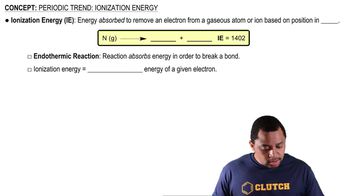
    Ionization energy is the energy required to remove an electron from a gaseous atom or ion.
  • Which best explains why ionization energy tends to decrease from the top to the bottom of a group?
    Ionization energy decreases down a group because atomic size increases and outer electrons are farther from the nucleus, making them easier to remove.
  • Which element has the lowest ionization energy?
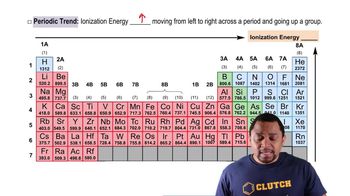
    Francium has the lowest ionization energy.
  • Which group has high ionization energies but very weak electron affinities?
    Noble gases have high ionization energies but very weak electron affinities.
  • Which of the following elements has the smallest first ionization energy?
    Francium has the smallest first ionization energy.
  • Why does fluorine have a higher ionization energy than iodine?
    Fluorine has a higher ionization energy than iodine because its electrons are closer to the nucleus and more tightly held.
  • Where on the periodic table would a group's ionization energy be the greatest?
    Ionization energy is greatest at the top of a group on the periodic table.
  • Which of the following elements has the highest ionization energy?
    Helium has the highest ionization energy.
  • Which element has the highest ionization energy?
    Helium has the highest ionization energy.
  • Which explains the decrease in ionization energy moving down a group?
    Ionization energy decreases down a group because electrons are farther from the nucleus and experience more shielding.
  • Which of these elements has the highest ionization energy?
    Helium has the highest ionization energy.
  • Why do smaller atoms have a higher ionization energy?
    Smaller atoms have higher ionization energy because their electrons are closer to the nucleus and more strongly attracted.
  • What is the trend in ionization energy as you move across period 2?
    Ionization energy increases as you move across period 2 from left to right.
  • What trend in ionization energy do you see as you move across a period?
    Ionization energy increases as you move across a period from left to right.
  • Consider the elements bromine and chlorine; which element has a higher ionization energy?
    Chlorine has a higher ionization energy than bromine.
  • Which element has the smallest ionization energy?
    Francium has the smallest ionization energy.
  • Which pair lists the element with the lower first ionization energy first?
    Potassium, then bromine (potassium has lower first ionization energy).
  • Which element has a higher 1st ionization energy: potassium or bromine?
    Bromine has a higher first ionization energy than potassium.
  • What is the ionization energy value for the atom of rubidium?
    Rubidium has a low ionization energy, lower than most elements except cesium and francium.
  • What trend in ionization energy do you see as you move down a group?
    Ionization energy decreases as you move down a group.
  • What is the ionization energy value for the atom of xenon?
    Xenon has a relatively high ionization energy, but lower than helium and neon.
  • Which of the following has the highest ionization energy?
    Helium has the highest ionization energy.
  • Which of the following elements has the lowest ionization energy?
    Francium has the lowest ionization energy.
  • What periodic trends exist for ionization energy?
    Ionization energy increases across a period and up a group.
  • Why is it easier to remove an electron from a sodium atom than from a magnesium atom?
    Sodium has a lower ionization energy than magnesium because its outer electron is less tightly held.
  • Which element has the largest ionization energy?
    Helium has the largest ionization energy.
  • What is the trend in ionization energy going down a group?
    Ionization energy decreases as you go down a group.
  • Which describes the trend in ionization energy moving left to right across a period?
    Ionization energy increases moving left to right across a period.
  • Which element requires the most energy to lose one electron?
    Helium requires the most energy to lose one electron.
  • What is first ionization energy?
    First ionization energy is the energy required to remove the first electron from a gaseous atom.
  • Which of the following elements has the greatest ionization energy?
    Helium has the greatest ionization energy.
  • What is the trend in ionization energy going across a period?
    Ionization energy increases going across a period.
  • What trend in ionization energy occurs across a period on the periodic table?
    Ionization energy increases across a period on the periodic table.
  • Which of the following has the largest ionization energy?
    Helium has the largest ionization energy.
  • Why does ionization energy increase across a period?
    Ionization energy increases across a period because nuclear charge increases, pulling electrons closer and making them harder to remove.
  • What happens to the ionization energy as you move across a period?
    Ionization energy increases as you move across a period.
  • Which atom in the ground state requires the least amount of energy to remove its valence electron?
    Francium requires the least amount of energy to remove its valence electron.
  • What is the general trend in first ionization energy as we move down a column in the periodic table?
    First ionization energy decreases as we move down a column.
  • Which of the following atoms has the largest first ionization energy?
    Helium has the largest first ionization energy.