Solution Stoichiometry definitions Flashcards
Solution Stoichiometry definitions
You can tap to flip the card.
Control buttons has been changed to "navigation" mode.
1/15
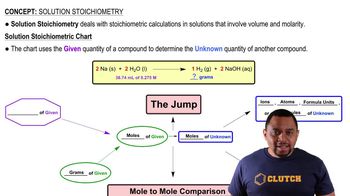
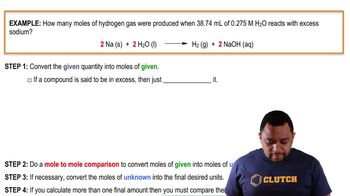
StoichiometryA method in chemistry to calculate the quantities of reactants and products in a chemical reaction using a balanced equation.Solution StoichiometryInvolves stoichiometric calculations in solutions, incorporating volume and molarity to determine reactant and product quantities.VolumeThe amount of space that a substance or object occupies, often measured in liters or milliliters in solution stoichiometry.MolarityA concentration unit defined as moles of solute per liter of solution, crucial for stoichiometric calculations in solutions.Balanced Chemical EquationAn equation with equal numbers of each type of atom on both sides, used to determine mole ratios in stoichiometry.Mole RatioThe ratio of moles of one substance to moles of another in a balanced chemical equation, used in stoichiometric calculations.MolesA unit of measurement for amount of substance, used to express quantities in stoichiometry and solution stoichiometry.Molar MassThe mass of one mole of a substance, used to convert moles to grams in stoichiometric calculations.Hydrogen GasA diatomic molecule produced in some chemical reactions, often calculated in grams using stoichiometry.Sodium HydroxideAn aqueous product formed in reactions involving sodium and water, calculated using stoichiometry.SodiumA reactive metal that participates in reactions to form products like hydrogen gas and sodium hydroxide.WaterA liquid reactant in many chemical reactions, often given in volume and molarity for stoichiometric calculations.MillilitersA unit of volume measurement, often converted to liters in solution stoichiometry calculations.GramsA unit of mass used to express the amount of a substance, often calculated from moles in stoichiometry.CoefficientsNumbers in a balanced equation indicating the proportion of moles of each substance involved in the reaction.