Skip to main content
General Chemistry
My Course
Learn
Exam Prep
AI Tutor
Study Guides
Textbook Solutions
Flashcards
Explore
Try the app
My Course
Learn
Exam Prep
AI Tutor
Study Guides
Textbook Solutions
Flashcards
Explore
Try the app
Back
Water Chemistry and Properties - General Chemistry
You can tap to flip the card.
Who identified the chemical composition of water and when?
You can tap to flip the card.
👆
Who identified the chemical composition of water and when?
Henry Cavendish identified water's composition as two hydrogen atoms and one oxygen atom in 1784.
Track progress
Control buttons has been changed to "navigation" mode.
1/20
Recommended videos
Guided course
01:04
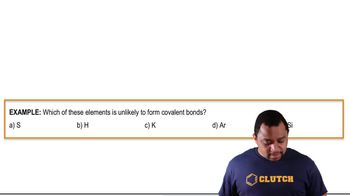
Chemical Bonds Example 3
6433
views
58
rank
Guided course
02:03
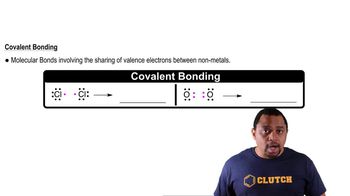
Chemical Bonds
7301
views
91
rank
2
comments
Guided course
01:18
Chemical Bonds Example 2
11980
views
110
rank
1
comments
Terms in this set (20)
Hide definitions
Who identified the chemical composition of water and when?
Henry Cavendish identified water's composition as two hydrogen atoms and one oxygen atom in 1784.
What is the chemical formula of water?
The chemical formula of water is \(H_2O\), consisting of two hydrogen atoms bonded to one oxygen atom.
What type of bond holds the hydrogen and oxygen atoms together in water?
Hydrogen and oxygen atoms in water are held together by
covalent bonds
.
What is the balanced chemical equation for the formation of water from hydrogen and oxygen gases?
The reaction is \(2H_2 + O_2 \rightarrow 2H_2O\).
What is the bond energy of the H-H bond in hydrogen gas and how is it used in the reaction?
The H-H bond energy is 436 kJ/mol; for two H2 molecules, total bond energy broken is 872 kJ/mol.
What is the bond energy of the O=O double bond in oxygen gas?
The O=O double bond energy is 498 kJ/mol.
How is the enthalpy change (ΔH) calculated for the water formation reaction?
ΔH = total bond energy broken - total bond energy formed; here, ΔH = 1,370 kJ/mol - 1,856 kJ/mol = -436 kJ/mol.
What unique intermolecular force does water form and why is it important?
Water forms
hydrogen bonds
when hydrogen is bonded to oxygen, nitrogen, or fluorine, explaining many unique properties.
Why does a water molecule have a bent shape?
Water's bent shape is due to oxygen's higher electronegativity pulling electron density and two lone pairs repelling hydrogen atoms.
What theory explains the bent shape of water molecules?
The
Valence Shell Electron Pair Repulsion (VSEPR) theory
explains the bent shape due to electron pair repulsion.
What would happen if water had a linear shape instead of bent?
If linear, water would be non-polar because bond dipoles would cancel, affecting its solvent properties and life-supporting abilities.
What are the boiling and melting points of water?
Water boils at 100°C (212°F) and melts at 0°C (32°F).
Why is water called the universal solvent?
Water dissolves many substances more easily than other liquids due to its polarity and hydrogen bonding.
How is water used in energy production?
Water generates electricity by driving turbine generators with steam in power plants.
What impact did the 2012 drought have on power plants in the US?
Limited water access slowed power plant operations due to water's role in energy production.
Why is water quality important in the medical field?
Poor water quality can damage medical equipment and cause infections or fevers in patients.
What percentage of Earth's surface is covered by water?
About 71% of Earth's surface is covered by water.
What percentage of Earth's water is found in lakes and oceans?
Approximately 97.5% of Earth's water is in lakes and oceans.
What is the water cycle?
The water cycle involves evaporation from oceans, precipitation, glacier formation, and groundwater replenishment.
Why is it important that ice floats on water?
Floating ice insulates water below, protecting aquatic life by preventing entire bodies of water from freezing solid.
 BackBack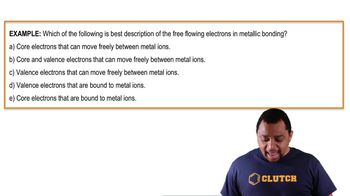
 01:04
01:04