 Back
Acid-Base Chemistry: Concepts, Examples, and Applications
Study Guide - Smart Notes
 Tailored notes based on your materials, expanded with key definitions, examples, and context.
Acid-Base Chemistry
Introduction to Acids and Bases
Acids and bases are fundamental chemical species that play crucial roles in many chemical reactions, including those in biological, industrial, and environmental contexts. Their properties are defined by their ability to donate or accept protons (H+), and their strength is determined by the extent of ionization in water.
Common Acids and Bases in Household Products
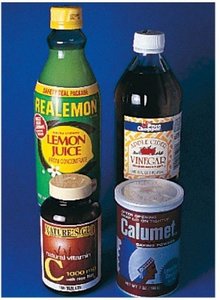
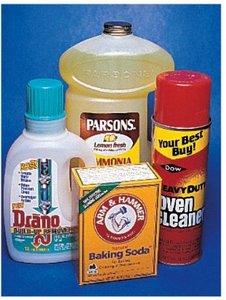
Many acids and bases are found in everyday household items, serving various purposes such as cleaning, flavoring, and nutritional supplementation.
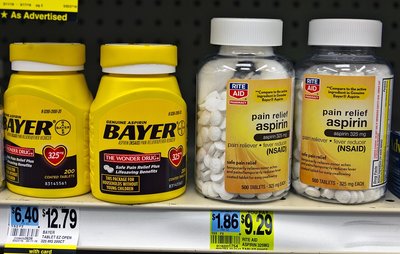
Acids: Acetic acid (vinegar), citric acid (lemon juice), ascorbic acid (vitamin C), aluminum salts (baking powder).
Bases: Sodium hydroxide (lye), ammonia (cleaner), sodium carbonate (water softener), sodium hydrogen carbonate (baking soda), sodium phosphate (surface cleaner).
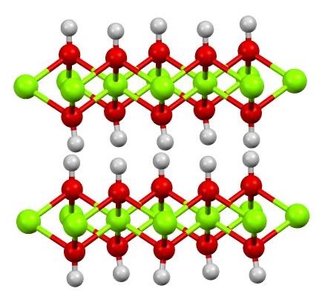
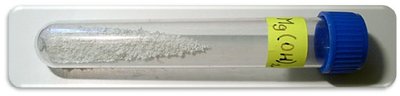
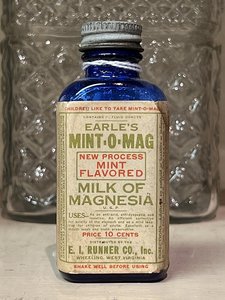
Example: Milk of Magnesia contains magnesium hydroxide, a common antacid.
pH Scale and Familiar Solutions
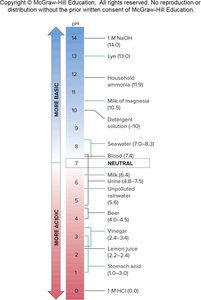
The pH scale measures the acidity or basicity of aqueous solutions, ranging from 0 (most acidic) to 14 (most basic). Common solutions have characteristic pH values.
Acidic: Lemon juice, vinegar, stomach acid.
Neutral: Pure water, blood.
Basic: Milk of magnesia, household ammonia, lye.
Brønsted-Lowry Acid-Base Reactions
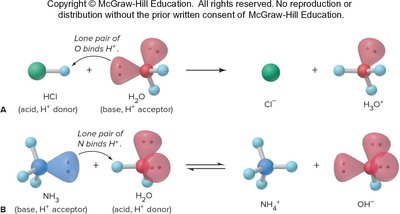
The Brønsted-Lowry theory defines acids as proton donors and bases as proton acceptors. When acids or bases dissolve in water, they undergo characteristic reactions.
Acid Example: HCl donates a proton to H2O, forming Cl- and H3O+.
Base Example: NH3 accepts a proton from H2O, forming NH4+ and OH-.
Strong vs. Weak Acids and Bases
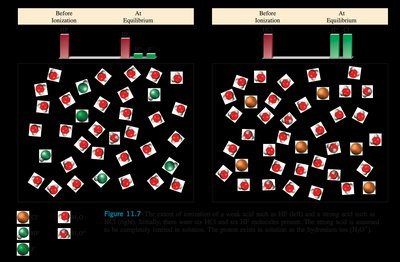
Acids and bases are classified as strong or weak based on their degree of ionization in water. Strong acids and bases dissociate completely, while weak acids and bases only partially ionize.
Strong acids: HCl, HBr, HI.
Weak acids: HF, CH3COOH, HNO2.
Strong bases: NaOH, KOH.
Weak bases: NH3, C5H5N (pyridine).
Acid and Base Ionization Constants (Ka and Kb)
The strength of an acid or base is quantified by its ionization constant: Ka for acids and Kb for bases. Higher values indicate stronger acids or bases.
Ka (acid dissociation constant):
Kb (base dissociation constant):
pKa and pKb
pKa and pKb are logarithmic measures of acid and base strength, respectively. Lower pKa or pKb values indicate stronger acids or bases.
pKa:
pKb:
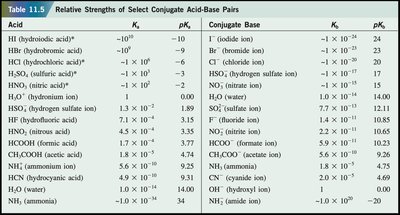
Conjugate Acid-Base Pairs
Every acid has a conjugate base, and every base has a conjugate acid. The strength of an acid is inversely related to the strength of its conjugate base.
Example: The conjugate acid of NH2- is NH3; the conjugate base of H3PO4 is H2PO4-.
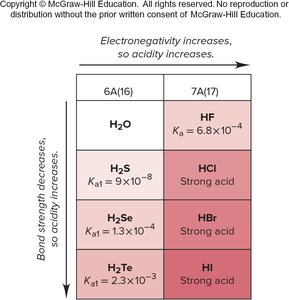
Relative Strengths of Acids and Bases
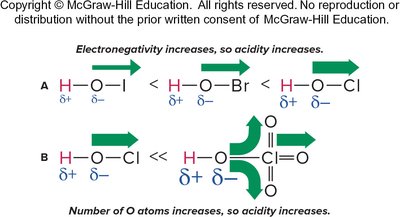
The strength of acids and bases can be ranked based on their ionization constants and their position in the periodic table. Electronegativity and bond strength play key roles.
Trend: Acidity increases with electronegativity and decreases with bond strength.
Example: Among halogen acids, HI > HBr > HCl > HF in acid strength.
Acidic and Basic Salts
Salts can produce acidic, basic, or neutral solutions when dissolved in water, depending on the properties of their constituent ions.
Acidic salt: NH4NO3 (produces acidic solution).
Basic salt: Ca(NO2)2 (produces basic solution).
Neutral salt: NaBr (produces neutral solution).
Highly Charged Metal Cations and Acidic Solutions
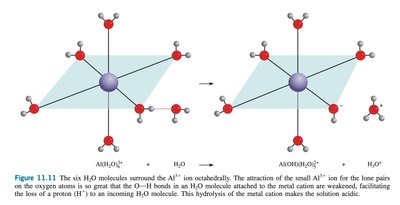
Highly charged metal cations such as Al3+, Cr3+, Fe3+, Bi3+, and Be3+ can hydrolyze water, producing acidic solutions.
Example: Al3+ surrounded by water molecules facilitates proton loss, making the solution acidic.
Lewis Acids and Bases
The Lewis definition expands acid-base concepts: Lewis acids accept electron pairs, while Lewis bases donate electron pairs.
Example: SO3 is a Lewis acid; H2O is a Lewis base.
Summary Tables
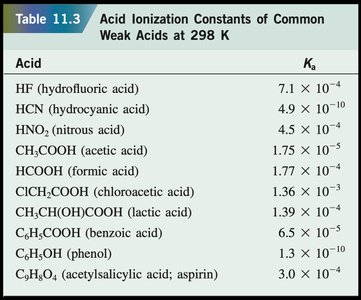
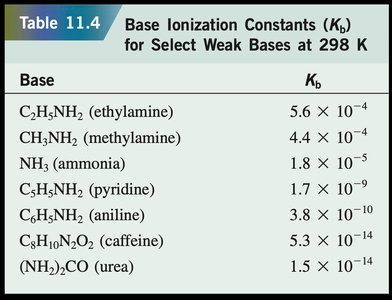
Acid and base ionization constants, as well as relative strengths of conjugate pairs, are summarized in the following tables:
Acid | Ka |
|---|---|
HF (hydrofluoric acid) | 7.1 × 10⁻⁴ |
HCN (hydrocyanic acid) | 4.9 × 10⁻¹⁰ |
HNO2 (nitrous acid) | 4.5 × 10⁻⁴ |
CH3COOH (acetic acid) | 1.75 × 10⁻⁵ |
HCOOH (formic acid) | 1.77 × 10⁻⁴ |
ClCH2COOH (chloroacetic acid) | 1.39 × 10⁻³ |
CH3CH(OH)COOH (lactic acid) | 1.36 × 10⁻⁴ |
C6H5COOH (benzoic acid) | 6.5 × 10⁻⁵ |
C6H5OH (phenol) | 1.3 × 10⁻¹⁰ |
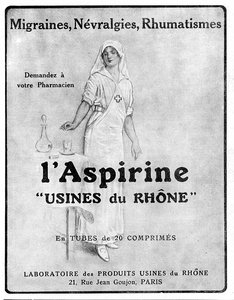
C9H8O4 (aspirin) | 3.0 × 10⁻⁴ |
Base | Kb |
|---|---|
C2H5NH2 (ethylamine) | 5.6 × 10⁻⁴ |
CH3NH2 (methylamine) | 4.4 × 10⁻⁴ |
NH3 (ammonia) | 1.8 × 10⁻⁵ |
C5H5N (pyridine) | 1.7 × 10⁻⁹ |
C6H5NH2 (aniline) | 3.8 × 10⁻¹⁰ |
C8H10N4O2 (caffeine) | 5.3 × 10⁻¹⁴ |
(NH2)2CO (urea) | 1.5 × 10⁻¹⁴ |
Acid | Ka | pKa | Conjugate Base | Kb | pKb |
|---|---|---|---|---|---|
HI | ~1010 | -10 | I- | ~1 × 10-24 | 24 |
HBr | ~109 | -9 | Br- | ~1 × 10-23 | 23 |
HCl | ~106 | -6 | Cl- | ~1 × 10-20 | 20 |
HNO3 | ~1 × 101 | -1 | NO3- | ~1 × 10-15 | 15 |
CH3COOH | 1.75 × 10⁻⁵ | 4.76 | CH3COO- | 5.6 × 10⁻¹⁰ | 9.24 |
NH4+ | 5.6 × 10⁻¹⁰ | 9.25 | NH3 | 1.8 × 10⁻⁵ | 4.75 |
Summary
Acid-base chemistry is essential for understanding chemical reactions, solution properties, and the behavior of substances in everyday life. The concepts of pH, acid and base strength, ionization constants, and conjugate pairs provide a foundation for predicting and explaining the outcomes of acid-base reactions.
