Back

Acid-Base Equilibria and Buffers: Study Guide

Study Guide - Learn with Videos

Curated lessons matched to your uploaded material – learn every topic step by step.

Acids Introduction

  • Acid Structure and Types
    02:29
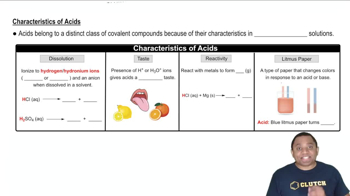
  • Acid Characteristics
    02:59
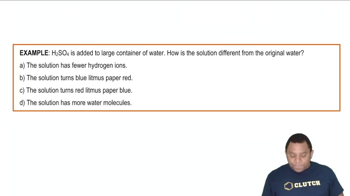
  • Acid Characteristics Example
    01:23

Bases Introduction

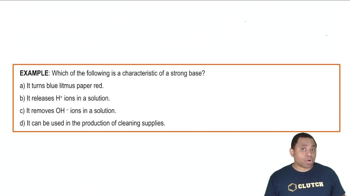
  • Strong Bases Example
    01:12
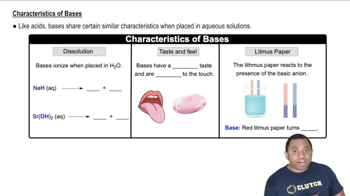
  • Base Properties
    01:57
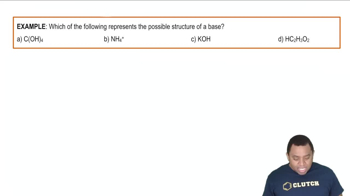
  • Base Structure Example
    01:16

pH of Strong Acids and Bases

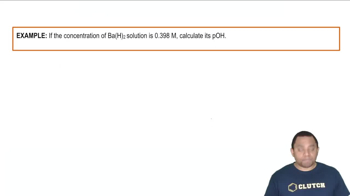
  • pOH Calculation Example
    01:18
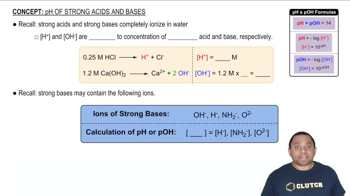
  • pH of Strong Acids and Bases
    02:39

pH of Weak Acids

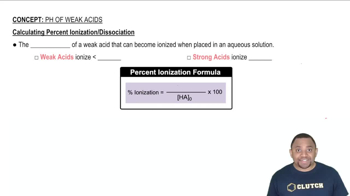
  • Calculating Percent Ionization of Weak Acids
    01:15
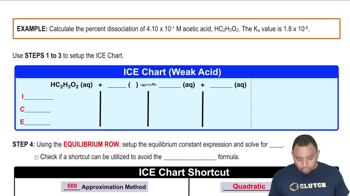
  • Percent Dissociation Example
    04:52
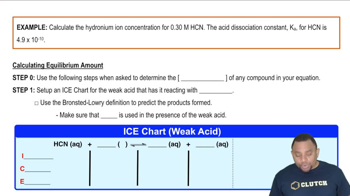
  • Hydronium Ion Concentration Example
    06:25

pH of Weak Bases

  • Calculating Percent Ionization of Weak Bases
    01:00
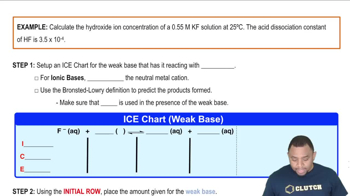
  • Hydroxide Ion Concentration Example
    06:12
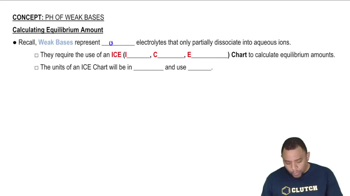
  • ICE Charts of Weak Bases
    00:51

Diprotic Acids and Bases

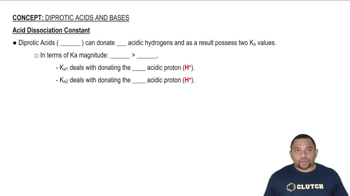
  • Ka values of Diprotic Acids
    00:59
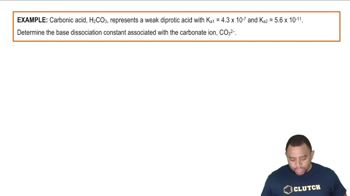
  • Diprotic Acids and Bases Example
    01:38
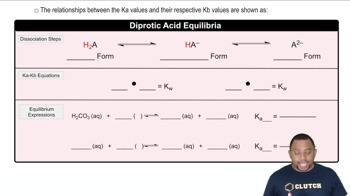
  • 3 forms of Diprotic Acids
    04:40

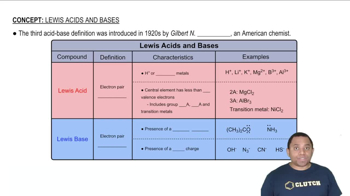
Lewis Acids and Bases

  • Lewis Acids and Bases
    05:04
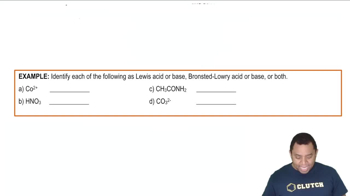
  • Lewis Acid-Base Identification Example
    02:30
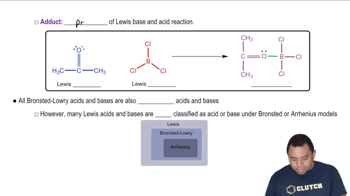
  • The Adduct
    03:50

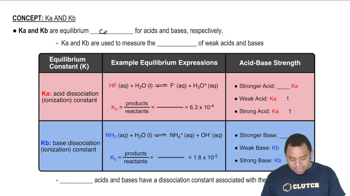
Ka and Kb

  • Ka and Kb Example
    01:31
  • Characteristics of Ka and Kb
    03:50
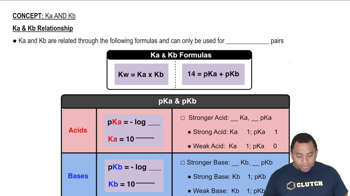
  • Ka and Kb Relationship
    03:01

Intro to Buffers

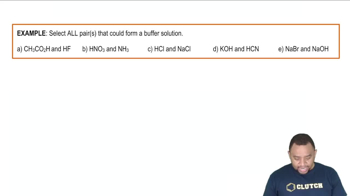
  • Buffer Solution Example
    02:41
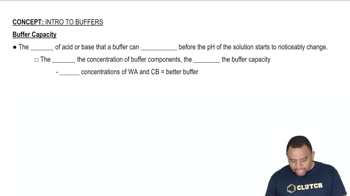
  • Buffer Capacity
    00:45
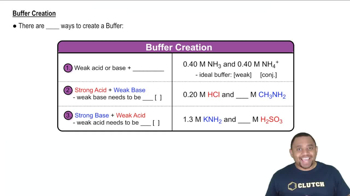
  • Buffer Creation Methods
    03:04

Henderson-Hasselbalch Equation

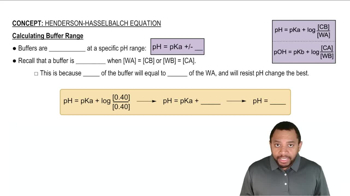
  • Buffer Range Calculation
    02:47
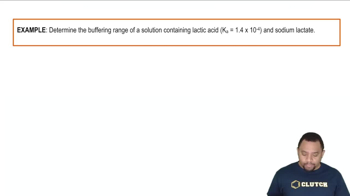
  • Buffering Range Example
    01:22
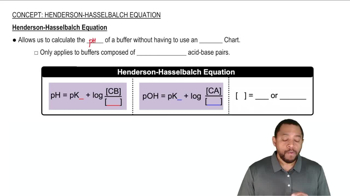
  • Henderson-Hasselbalch Equation
    02:40

Ksp: Common Ion Effect

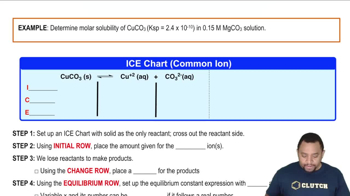
  • Common Ion Effect Example
    03:39
  • Common Ion Effect in Acids and Bases
    00:33
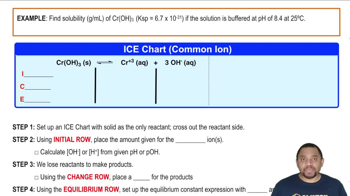
  • Solubility at Buffered pH Example
    05:30