 Back
BackAcid-Base Equilibria: Definitions, Properties, and Calculations
Study Guide - Smart Notes
 Tailored notes based on your materials, expanded with key definitions, examples, and context.
Acid-Base Equilibria
Introduction to Acids and Bases
Acids and bases are fundamental chemical species that play crucial roles in both laboratory and everyday contexts. Understanding their definitions, properties, and behaviors is essential for mastering general chemistry.
Acids are substances that increase the concentration of H+ ions when dissolved in water.
Bases are substances that increase the concentration of OH– ions when dissolved in water.
Common examples of acids include citric acid (found in citrus fruits), ascorbic acid (vitamin C), and acetic acid (vinegar). Common bases include sodium bicarbonate (baking soda) and sodium stearate (soap).
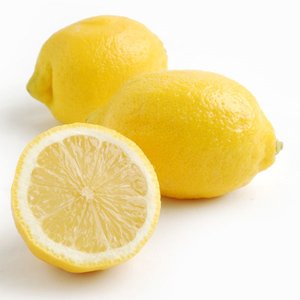
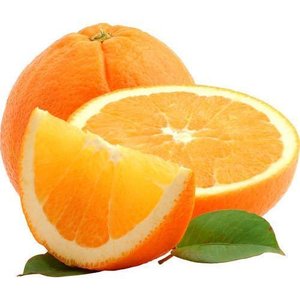

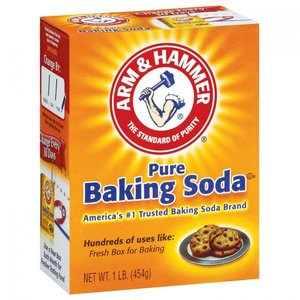
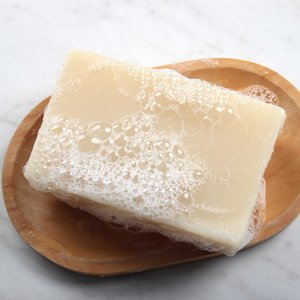
Example: Lemon juice contains citric acid, which gives it a sour taste and acidic properties. Baking soda, a base, is often used to neutralize acids in cooking and cleaning.
Types of Acids and Bases
Acids and bases can be classified according to three main definitions, each broadening the scope of what constitutes an acid or a base.
Arrhenius Acids and Bases
An Arrhenius acid produces H+ ions in aqueous solution.
An Arrhenius base produces OH– ions in aqueous solution.
Limitation: This definition is restricted to aqueous solutions.
Brønsted-Lowry Acids and Bases
A Brønsted-Lowry acid is a proton (H+) donor.
A Brønsted-Lowry base is a proton (H+) acceptor.
This definition is broader and includes reactions outside aqueous solutions.
Lewis Acids and Bases
A Lewis acid is an electron pair acceptor.
A Lewis base is an electron pair donor.
This is the most general definition and includes many reactions not covered by the other two.
Brønsted-Lowry Acids and Bases: Proton-Transfer Reactions
Brønsted-Lowry acid-base reactions involve the transfer of a proton from an acid to a base. The H+ ion does not exist freely in water but is associated with water molecules as the hydronium ion (H3O+).
Example:
Example:
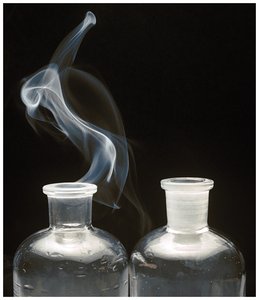
A substance that can act as both an acid and a base is called amphiprotic. For example, water (H2O) can both donate and accept a proton.
Conjugate Acid-Base Pairs
In every Brønsted-Lowry acid-base reaction, two pairs of substances differ by a single proton. These are called conjugate acid-base pairs.
General equation:
The acid (HA) donates a proton to the base (B), forming the conjugate base (A–) and the conjugate acid (HB+).
Example: The hydrogen sulfite ion (HSO3–) is amphiprotic and can act as either an acid or a base in water.
Relative Strengths of Acids and Bases
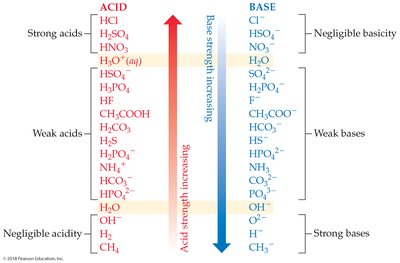
The strength of an acid or base is determined by its tendency to donate or accept protons. Strong acids and bases dissociate completely in water, while weak acids and bases only partially dissociate.
Strong acids: HCl, HBr, HI, HNO3, H2SO4, HClO4
Strong bases: Group 1 and 2 metal hydroxides (e.g., NaOH, KOH, Ca(OH)2)
The equilibrium of an acid-base reaction favors the formation of the weaker acid and base.
Acid Strength | Base Strength |
|---|---|
Strong acids (e.g., HCl, HNO3) | Negligible basicity (e.g., Cl–, NO3–) |
Weak acids (e.g., CH3COOH) | Weak bases (e.g., CH3COO–) |
Negligible acidity (e.g., CH4) | Strong bases (e.g., H–, CH3–) |
The Autoionization of Water
Water can act as both an acid and a base, and can undergo autoionization, where one water molecule donates a proton to another.
Equation:
The equilibrium constant for this reaction is called the ion-product constant for water ():
at 25°C
Neutral solution:
Acidic solution:
Basic solution:
Key Calculations in Acid-Base Equilibria
Several important calculations are used to quantify acid-base equilibria:
pH:
pOH:
Relationship: (at 25°C)
Acid dissociation constant (): Measures the strength of a weak acid.
Base dissociation constant (): Measures the strength of a weak base.
Relationship for conjugate pairs:
Example: Calculate the pH of a solution with M.
Polyprotic Acids
Polyprotic acids are acids that can donate more than one proton per molecule. Each dissociation step has its own value, with the first dissociation being the strongest.
Example: Sulfuric acid (H2SO4) is a diprotic acid.
Summary Table: Acid and Base Definitions
Definition | Acid | Base |
|---|---|---|
Arrhenius | Produces H+ in water | Produces OH– in water |
Brønsted-Lowry | Proton donor | Proton acceptor |
Lewis | Electron pair acceptor | Electron pair donor |
Additional info: The color changes of indicators and the calculation of pH from indicator color are also important in laboratory settings, but were not detailed in the provided material.
