 Back
BackLesson 8.4: Acid–Base Equilibrium: Calculations Involving Acidic Solutions
Study Guide - Smart Notes
 Tailored notes based on your materials, expanded with key definitions, examples, and context.
Calculations Involving Acidic Solutions
Overview of Acid–Base Equilibria
Acid–base equilibria involve the quantitative analysis of the species present in acidic solutions and their interactions. Understanding the major entities in solution and their reactions is essential for solving acid–base problems, especially when calculating pH, ion concentrations, and equilibrium constants.
Calculations Involving Solutions of Strong Acids
Strong Acid Ionization and pH Calculation
Strong acids, such as hydrochloric acid (HCl) and nitric acid (HNO3), ionize completely in water. This means the concentration of hydrogen ions, [H+], is equal to the initial concentration of the acid. The autoionization of water is negligible in these cases.
Key Point 1: For a strong acid, [H+] = initial acid concentration.
Key Point 2: The pH is calculated using the formula:
Key Point 3: The concentration of hydroxide ions, [OH–], can be found using the water dissociation constant: at 25°C
Example: For a 1.0 mol/L HCl solution, [H+] = 1.0 mol/L, so pH = 0.
Sample Calculation: Nitric Acid Solution
Given: 0.25 mol/L HNO3 (strong acid)
[H+] = 0.25 mol/L
pH =
[OH–] = mol/L
pOH =
Calculations Involving Solutions of Weak Acids
Weak Acid Ionization and Percentage Ionization
Weak acids do not ionize completely in water. The percentage ionization describes the fraction of acid molecules that ionize:
Key Point 1: Percentage ionization is calculated as:
Key Point 2: The acid dissociation constant, , quantifies the extent of ionization:
Example: For a 0.10 mol/L ethanoic acid solution with 1.3% ionization: mol/L
Sample Calculation: Percentage Ionization from pH
Given: pH = 2.38 for 0.10 mol/L methanoic acid
mol/L
Percentage ionization =
Sample Calculation: Determining from Percentage Ionization
Given: 0.1000 mol/L ethanoic acid, 1.3% ionized
Change in [HC2H3O2] = mol/L
At equilibrium: [H+] = [C2H3O2–] = 0.0013 mol/L, [HC2H3O2] = 0.0987 mol/L
Calculating the pH of Weak Acid Solutions
Using the ICE Table and
To calculate the pH of a weak acid solution, set up an ICE (Initial, Change, Equilibrium) table and use the expression. For most weak acids, the autoionization of water is negligible compared to the acid's ionization.
Key Point 1: Set up the equilibrium expression using the ICE table.
Key Point 2: Use the "hundred rule" to simplify calculations: if , then .
Key Point 3: Solve for and calculate pH.
Sample Calculation: pH of Hydrofluoric Acid Solution
Given: [HF] = 1.00 mol/L,
ICE table: Let be the amount ionized.
, mol/L
pH =
Sample Calculation: pH of Hypochlorous Acid Solution
Given: [HClO] = 0.100 mol/L,
ICE table:
, mol/L
pH =
Polyprotic Acids
Definition and Ionization Steps
Polyprotic acids have more than one ionizable hydrogen atom. Each ionization step has its own acid dissociation constant (, , etc.), and typically, .
Key Point 1: Monoprotic acids have one ionizable hydrogen; diprotic have two; triprotic have three.
Key Point 2: The first ionization usually contributes most to the [H+] and thus to the pH.
Key Point 3: For most calculations, only the first ionization is considered unless high accuracy is needed.
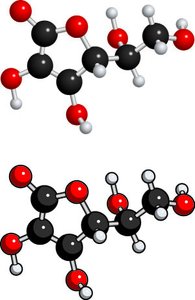
Sample Calculation: pH of a Polyprotic Acid (Ascorbic Acid)
Given: [H2C6H6O6] = 0.10 mol/L, ,
ICE table for first ionization:
, mol/L
pH =
Equilibrium concentrations: [H2C6H6O6] = 0.097 mol/L [HC6H6O6–] = 2.8 \times 10–3 mol/L [C6H6O62–] = = 1.6 \times 10–12 mol/L
Summary Table: Acid Ionization Constants for Polyprotic Acids
Acid | Formula | Ka1 | Ka2 | Ka3 |
|---|---|---|---|---|
Oxalic acid | H2C2O4 | 5.4 × 10⁻² | 5.4 × 10⁻⁵ | – |
Ascorbic acid | H2C6H6O6 | 7.9 × 10⁻⁵ | 1.6 × 10⁻¹² | – |
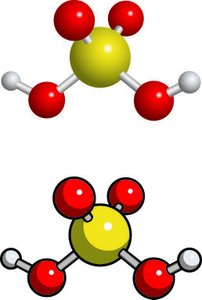
Sulfuric acid | H2SO4 | very large | 1.0 × 10⁻² | – |
Phosphoric acid | H3PO4 | 7.1 × 10⁻³ | 6.3 × 10⁻⁸ | 4.2 × 10⁻¹³ |
Summary
Percentage ionization describes the degree of ionization of a weak acid.
Polyprotic acids ionize one hydrogen at a time, each with its own value.
For most polyprotic acids, only the first ionization significantly affects pH.
