 Back
BackAcids and Bases: Properties, Definitions, and Calculations
Study Guide - Smart Notes
 Tailored notes based on your materials, expanded with key definitions, examples, and context.
Acids and Bases
Nature and Definitions of Acids and Bases
Acids and bases are fundamental classes of compounds in chemistry, each with distinct properties and definitions. Understanding their behavior is essential for predicting chemical reactivity and solution properties.
Acids are substances that can donate protons (H+) or accept electron pairs.
Bases are substances that can accept protons or donate electron pairs.
There are three main definitions:
Arrhenius: Acids produce H+ in water; bases produce OH-.
Brønsted–Lowry: Acids are proton donors; bases are proton acceptors.
Lewis: Acids accept electron pairs; bases donate electron pairs.
Properties of Acids
Acids exhibit several characteristic properties that distinguish them from other substances.
Sour taste (e.g., citric acid in lemons).
Ability to dissolve many metals (e.g., HCl reacts with Zn).
Change blue litmus paper to red.
Neutralize bases to form water and salts.
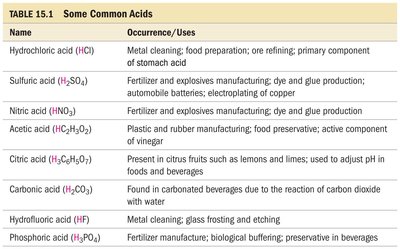
Structures and Types of Acids
Acids can be classified based on their structure and the atom to which the acidic hydrogen is attached.
Binary acids: Acidic hydrogen attached to a nonmetal (e.g., HCl, HF).
Oxyacids: Acidic hydrogen attached to an oxygen atom (e.g., H2SO4, HNO3).
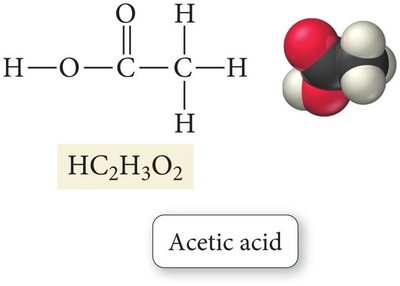
Carboxylic acids: Contain the COOH group; only the hydrogen in the COOH is acidic (e.g., acetic acid, citric acid).
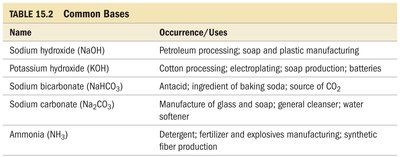
Properties of Bases
Bases are substances with distinct physical and chemical properties.
Bitter taste (e.g., alkaloids in plants).
Slippery feel (e.g., soap).
Change red litmus paper to blue.
Neutralize acids to form water and salts.
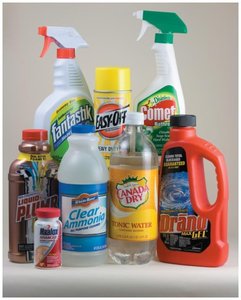
Common Household Acids and Bases
Many acids and bases are found in everyday products, including cleaning agents, food, and beverages.
Brønsted–Lowry Theory and Conjugate Pairs
Brønsted–Lowry Acids and Bases
The Brønsted–Lowry theory expands the definition of acids and bases to include proton transfer reactions.
Acid: Proton (H+) donor.
Base: Proton (H+) acceptor.
Example reactions:
HCl(aq) + H2O(l) → Cl–(aq) + H3O+(aq)
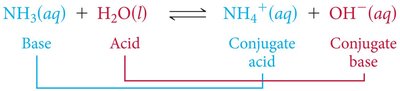
NH3(aq) + H2O(l) ⇌ NH4+(aq) + OH–(aq)
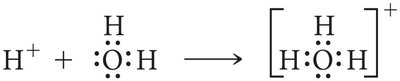
Amphoteric Substances
Some substances, such as water, can act as either an acid or a base depending on the reaction. These are called amphoteric substances.
Conjugate Acid–Base Pairs
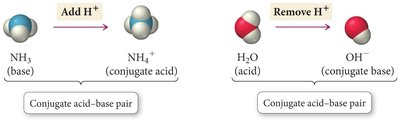
In every Brønsted–Lowry acid–base reaction, two conjugate acid–base pairs are formed. The acid becomes its conjugate base after donating a proton, and the base becomes its conjugate acid after accepting a proton.
Strong and Weak Acids and Bases
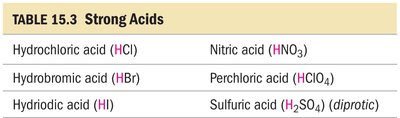
Strong Acids
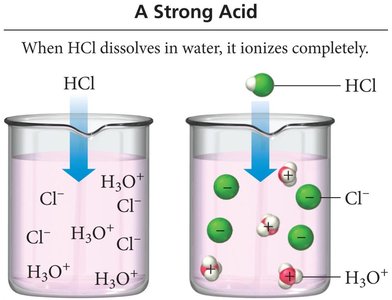
Strong acids ionize completely in water, meaning all acid molecules donate their protons to water, forming hydronium ions.
Strong acids are strong electrolytes.
[H3O+] = [strong acid] (for monoprotic acids).
Weak Acids
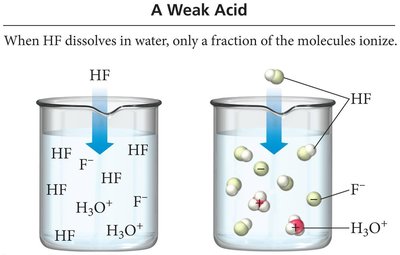
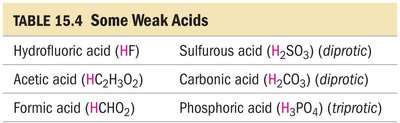
Weak acids only partially ionize in water; most molecules remain un-ionized.
Weak acids are weak electrolytes.
[H3O+] << [weak acid].
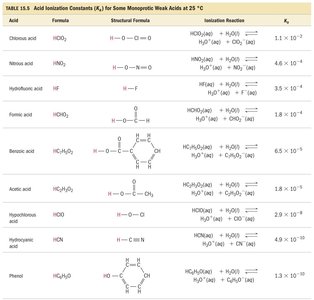
Acid Ionization Constant (Ka)
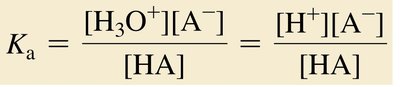
The strength of an acid is measured by its acid ionization constant, Ka. The larger the Ka, the stronger the acid.
General reaction: HA(aq) + H2O(l) ⇌ H3O+(aq) + A–(aq)
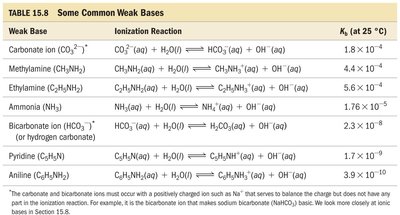
Strong and Weak Bases
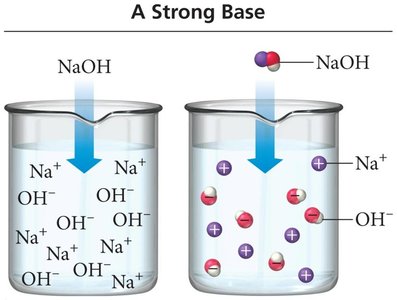
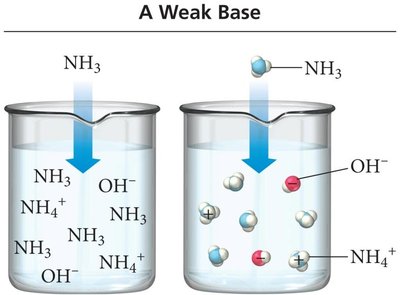
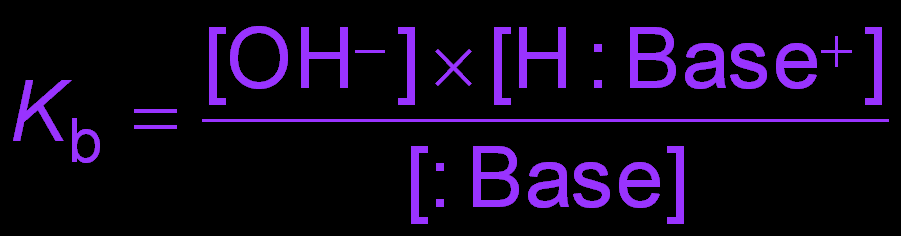
Bases can also be classified as strong or weak based on their degree of ionization in water.
Strong bases: Completely dissociate in water (e.g., NaOH, KOH).
Weak bases: Only partially accept protons (e.g., NH3).
pH, pOH, and Solution Acidity
pH Scale
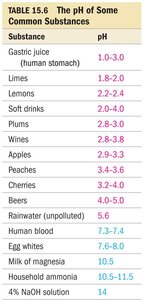
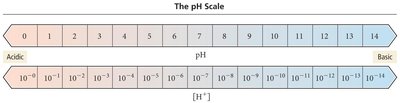
The pH scale is a logarithmic measure of the hydronium ion concentration in a solution. It is widely used to express the acidity or basicity of solutions.
pH = −log[H3O+]
pH < 7: acidic; pH = 7: neutral; pH > 7: basic
[H3O+] = 10−pH
pOH Scale
The pOH scale is a logarithmic measure of the hydroxide ion concentration in a solution.
pOH = −log[OH–]
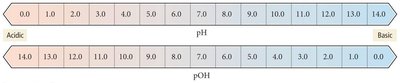
pOH < 7: basic; pOH = 7: neutral; pOH > 7: acidic
[OH–] = 10−pOH
Relationship Between pH and pOH
At 25°C, the sum of pH and pOH is always 14.
This relationship is derived from the ion product constant for water: at 25°C.
Percent Ionization
The percent ionization of an acid is the fraction of acid molecules that ionize in solution, expressed as a percentage.

pK Values
pK values provide a logarithmic measure of acid and base strength.
pKa = −log(Ka); smaller pKa = stronger acid.
pKb = −log(Kb); smaller pKb = stronger base.
Acid–Base Properties of Ions and Salts
Acid–Base Properties of Ions
Ions in solution can affect the pH depending on their origin.
Anions from weak acids are basic (e.g., F–, HCO3–).
Anions from strong acids are neutral (e.g., Cl–, NO3–).
Cations from weak bases are acidic (e.g., NH4+).
Cations from strong bases are neutral (e.g., Na+, Ca2+).
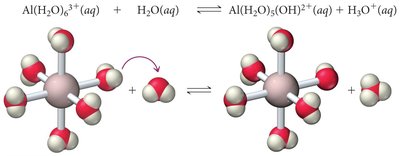
Small, highly charged metal cations are weakly acidic (e.g., Al3+).
Acid–Base Properties of Salts
The pH of a salt solution depends on the acid–base properties of its constituent ions.
Salts from strong acid and strong base: neutral.
Salts from strong base and weak acid: basic.
Salts from weak base and strong acid: acidic.
Salts from weak acid and weak base: compare Ka and Kb.
Polyprotic Acids
Ionization of Polyprotic Acids
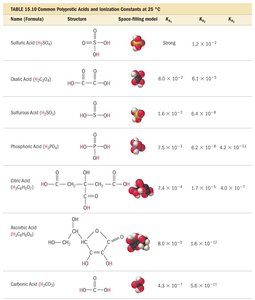
Polyprotic acids can donate more than one proton, and each ionization step has its own Ka value. The first ionization is always the strongest (Ka1 > Ka2 > Ka3).
For most polyprotic acids, only the first ionization significantly affects pH.
Exception: H2SO4 (sulfuric acid), where both ionizations are important.
Lewis Acid–Base Theory
Lewis Acids and Bases
The Lewis definition broadens the concept of acids and bases to include electron pair transfer.
Lewis acid: Electron pair acceptor (often electron-deficient species).
Lewis base: Electron pair donor (often species with lone pairs).
Lewis acid–base reactions result in the formation of a covalent bond (adduct).
Example: NH3 (Lewis base) donates a pair of electrons to BF3 (Lewis acid) to form H3N–BF3.
Arrhenius and Brønsted–Lowry acid–base reactions are also Lewis acid–base reactions.
