 Back
BackAcids and Bases: Properties, Definitions, and Strength (General Chemistry Study Notes)
Study Guide - Smart Notes
 Tailored notes based on your materials, expanded with key definitions, examples, and context.
Acids and Bases: Properties, Definitions, and Strength
General Properties of Acids
Acids are a fundamental class of compounds in chemistry, characterized by their ability to donate protons (H+) and exhibit distinctive physical and chemical properties.
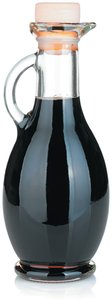
Sour taste: Many acids, such as citric acid in citrus fruits and acetic acid in vinegar, have a sour flavor.
Reaction with metals: Acids can dissolve many metals and metal oxides, often producing hydrogen gas.
Litmus test: Acids turn blue litmus paper red.
Examples of organic acids:
Acetic acid (CH3COOH): Found in vinegar.
Citric acid (C6H8O7): Present in citrus fruits.
Malic acid (C4H6O5): Found in apples and grapes.
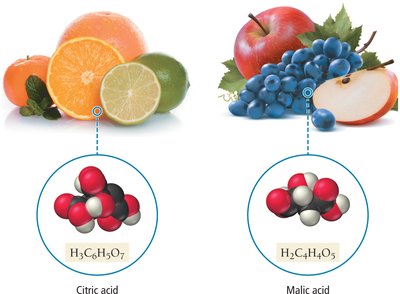
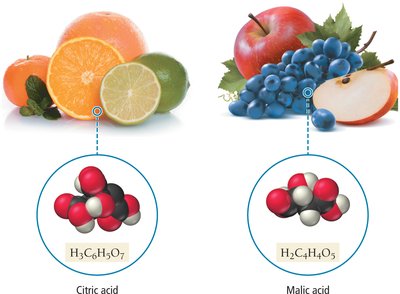
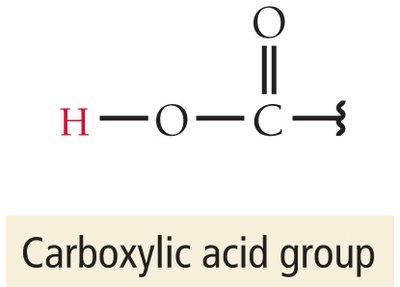
Carboxylic acids: A common functional group in organic acids is the carboxylic acid group (-COOH).
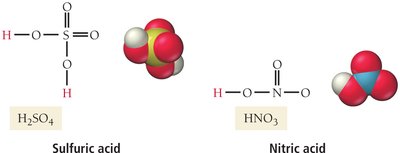
Inorganic acids: Examples include hydrochloric acid (HCl), sulfuric acid (H2SO4), and nitric acid (HNO3).
General Properties of Bases
Bases are substances that accept protons or donate electron pairs, and they have their own set of characteristic properties.
Bitter taste: Many bases taste bitter, which may be an evolutionary adaptation to avoid toxic alkaloids.
Slippery feel: Bases react with oils on the skin to form soap-like substances, giving a slippery sensation.
Litmus test: Bases turn red litmus paper blue.
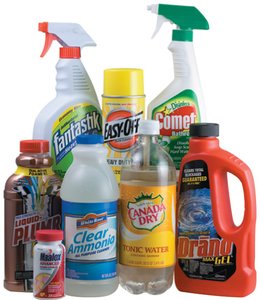
Examples of inorganic bases:
Sodium hydroxide (NaOH)
Sodium bicarbonate (NaHCO3)
Ammonia (NH3)
Sodium carbonate (Na2CO3)
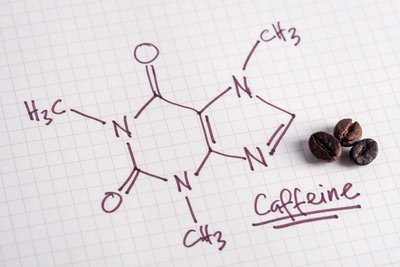
Alkaloids: Organic bases found in plants, some of which are toxic, while others like caffeine are not.
Definitions of Acids and Bases
Arrhenius Definition
The Arrhenius definition is the simplest and most restrictive, focusing on aqueous solutions:
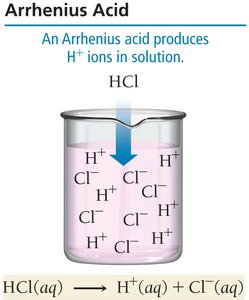
Acid: Produces H+ ions in aqueous solution.
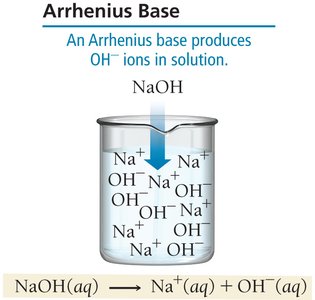
Base: Produces OH− ions in aqueous solution.
Limitations: Only applies to aqueous solutions and cannot explain all acid-base behavior, such as that of ammonia (NH3).
Brønsted–Lowry Definition
The Brønsted–Lowry theory broadens the concept to include proton transfer reactions:
Acid: Proton (H+) donor.
Base: Proton (H+) acceptor.
This definition applies to a wider range of reactions, including those in non-aqueous solutions.
Lewis Definition
The Lewis definition is the most general:
Acid: Electron pair acceptor.
Base: Electron pair donor.
This definition encompasses many reactions not covered by the other two definitions.
Strong and Weak Acids and Bases
Strong Acids
Strong acids completely ionize in water, meaning all acid molecules donate their protons to water.
Examples: HCl, HBr, HI, HNO3, H2SO4
Weak Acids
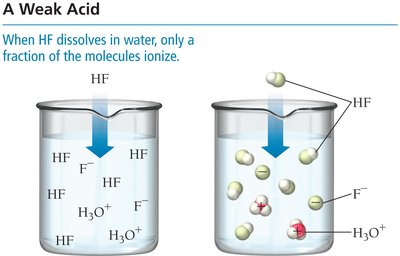
Weak acids only partially ionize in water, so a significant amount of the acid remains un-ionized.
Examples: HF, acetic acid (HAc), many organic acids
Strong and Weak Bases
Strong bases, such as NaOH and KOH, completely dissociate in water to produce OH− ions. Weak bases, like ammonia (NH3), only partially react with water to produce OH−.
Brønsted–Lowry Acid–Base Reactions and Conjugate Pairs
Proton Transfer and Amphoterism
Brønsted–Lowry acid–base reactions involve the transfer of a proton from the acid to the base. Substances like water that can act as both an acid and a base are called amphoteric.
Conjugate Acid–Base Pairs
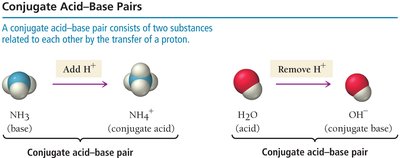
Each acid–base reaction involves two conjugate acid–base pairs. The acid becomes its conjugate base after donating a proton, and the base becomes its conjugate acid after accepting a proton.
Acid Strength and Molecular Structure
Binary Acids (H–Y)
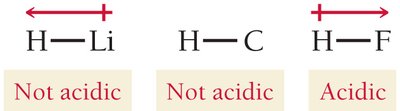
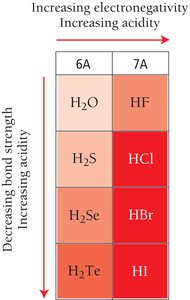
The strength of binary acids depends on bond polarity and bond strength:
Bond polarity: More polar H–Y bonds (with Y more electronegative) lead to stronger acids.
Bond strength: Weaker H–Y bonds are easier to break, resulting in stronger acids.
Oxyacids (H–O–Y)
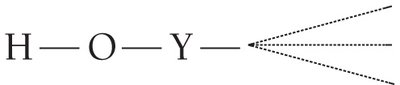
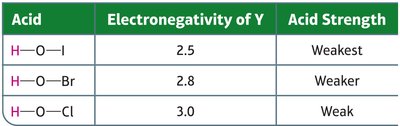
The strength of oxyacids depends on:
Electronegativity of Y: Higher electronegativity increases acid strength.
Number of oxygen atoms: More oxygen atoms bonded to Y increase acid strength.
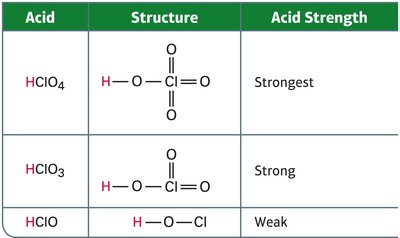
Acid Ionization Constant (Ka)
The acid ionization constant, Ka, quantifies the extent to which a weak acid ionizes in water:
Large Ka: Indicates a stronger acid (more complete ionization).
Small Ka: Indicates a weaker acid (less ionization).
The general expression for a weak acid HA is:
For strong acids, the reaction goes to completion and Ka is not typically used.
Autoionization of Water and the pH Scale
Autoionization of Water
Water can react with itself to form hydronium and hydroxide ions:
The ion product constant for water at 25°C is:
The pH Scale
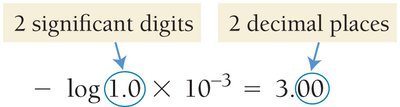
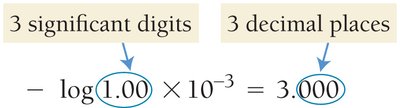
The pH scale is a logarithmic measure of the hydrogen ion concentration:
Acidic solution: pH < 7 ([H+] > 1.0 × 10⁻⁷ M)
Neutral solution: pH = 7 ([H+] = 1.0 × 10⁻⁷ M)
Basic solution: pH > 7 ([H+] < 1.0 × 10⁻⁷ M)
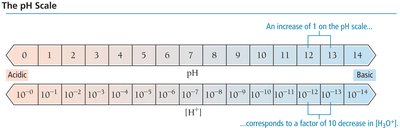
An increase of 1 unit on the pH scale corresponds to a tenfold decrease in [H+].
Summary Table: Strong and Weak Acids
Name | Formula | Strong/Weak |
|---|---|---|
Hydrochloric acid | HCl | Strong |
Hydrobromic acid | HBr | Strong |
Nitric acid | HNO3 | Strong |
Perchloric acid | HClO4 | Strong |
Sulfuric acid | H2SO4 | Strong (diprotic) |
Hydrofluoric acid | HF | Weak |
Acetic acid | HC2H3O2 | Weak |
Formic acid | HCHO2 | Weak |
Sulfurous acid | H2SO3 | Weak (diprotic) |
Carbonic acid | H2CO3 | Weak (diprotic) |
Key Equations
(at 25°C)
TL;DR (Summary)
Brønsted–Lowry definition: Acids are proton donors, bases are proton acceptors.
Molecular structure: Determines acid strength (electronegativity, bond strength, number of oxygens).
Acid ionization constant (Ka): Larger Ka means a stronger acid.
Water autoionization: at 25°C.
pH scale: ; each unit change is a tenfold change in [H+].
