 Back
BackCH 16 Acids and Bases: Properties, Strength, and Equilibria
Study Guide - Smart Notes
 Tailored notes based on your materials, expanded with key definitions, examples, and context.
Acids and Bases
General Properties of Acids
Acids are a fundamental class of compounds in chemistry, characterized by their ability to donate protons (H+) and exhibit distinctive physical and chemical properties.
Sour taste (e.g., vinegar contains acetic acid).
Ability to dissolve many metals, such as zinc and magnesium.
Ability to neutralize bases in chemical reactions.
Change blue litmus paper to red, a classic indicator of acidity.

Common Acids and Their Uses
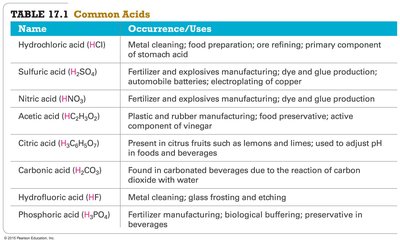
Acids are widely used in industry and everyday life. The table below summarizes several common acids and their applications:
Name | Occurrence/Uses |
|---|---|
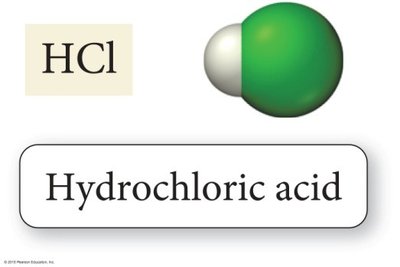
Hydrochloric acid (HCl) | Metal cleaning, food preparation, ore refining, stomach acid |
Sulfuric acid (H2SO4) | Fertilizer, explosives, dye, batteries, copper electroplating |
Nitric acid (HNO3) | Fertilizer, explosives, dye, glue production |
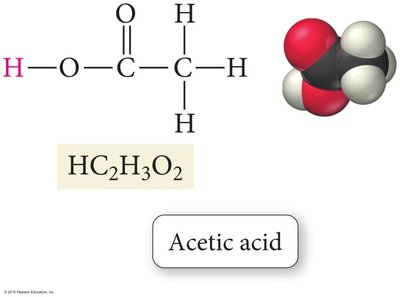
Acetic acid (HC2H3O2) | Plastic, rubber, food preservative, vinegar |
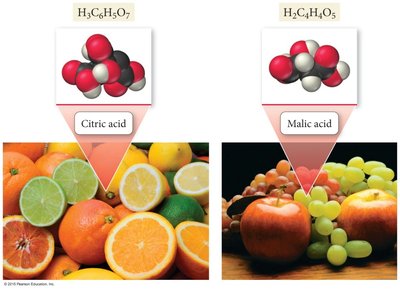
Citric acid (H3C6H5O7) | Citrus fruits, food/beverage pH adjustment |
Carbonic acid (H2CO3) | Carbonated beverages |
Hydrofluoric acid (HF) | Glass cleaning, etching |
Phosphoric acid (H3PO4) | Fertilizer, biological buffering, beverage preservative |
Organic Acids: Carboxylic Acids
Carboxylic acids are organic acids containing the carboxyl group (COOH). Only the hydrogen in the COOH group is acidic.
Acetic acid: HC2H3O2
Citric acid: H3C6H5O7
General Properties of Bases
Bases are compounds that accept protons or donate electron pairs. They are commonly found in cleaning products and industrial processes.
Bitter taste (e.g., alkaloids in plants).
Often poisonous.
Slippery feel (e.g., soap).
Ability to neutralize acids.
Change red litmus paper to blue.
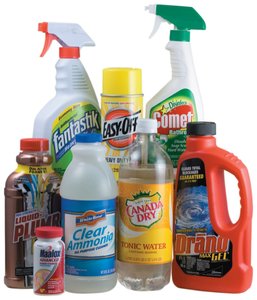
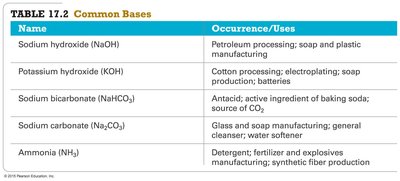
Common Bases and Their Uses
Name | Occurrence/Uses |
|---|---|
Sodium hydroxide (NaOH) | Petroleum processing, soap/plastic manufacturing |
Potassium hydroxide (KOH) | Cotton processing, batteries |
Sodium bicarbonate (NaHCO3) | Antacid, baking soda |
Sodium carbonate (Na2CO3) | Glass, soap, water softener |
Ammonia (NH3) | Detergent, fertilizer, synthetic fiber |
Acid–Base Definitions
Arrhenius Definition
The Arrhenius definition is the simplest and most restrictive:
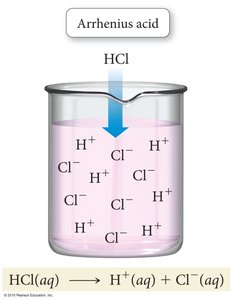
Acids: Produce H+ (or H3O+) ions in water.
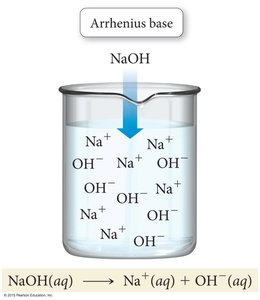
Bases: Produce OH− ions in water.

Brønsted–Lowry Definition
The Brønsted–Lowry theory expands the concept:
Acids: Proton (H+) donors.
Bases: Proton (H+) acceptors (must have a lone pair).
Conjugate Acid–Base Pairs
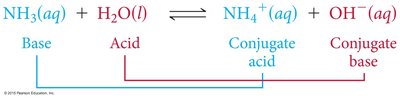
When an acid donates a proton, it forms its conjugate base; when a base accepts a proton, it forms its conjugate acid. 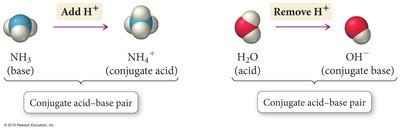
Lewis Definition
The Lewis theory is the most general:
Acids: Electron pair acceptors.
Bases: Electron pair donors.
Acid and Base Strength
Strong Acids and Bases
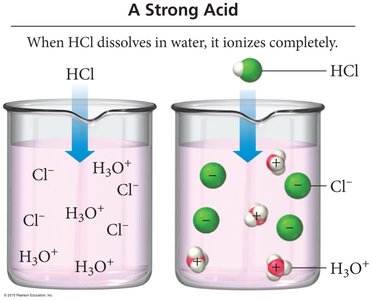
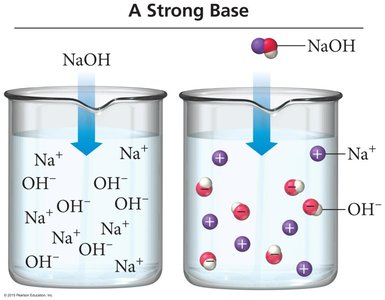
Strong acids ionize completely in water (e.g., HCl, HNO3, H2SO4).
Strong bases dissociate completely to produce OH− ions (e.g., NaOH, KOH).
Weak Acids and Bases
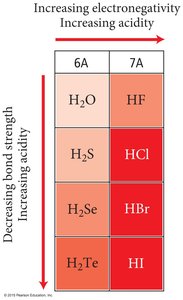
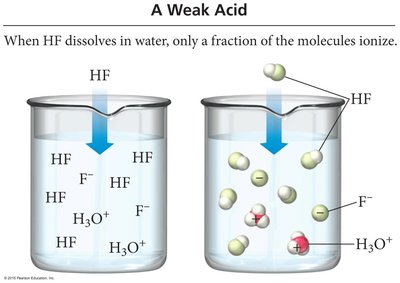
Weak acids only partially ionize in water (e.g., HF, acetic acid).
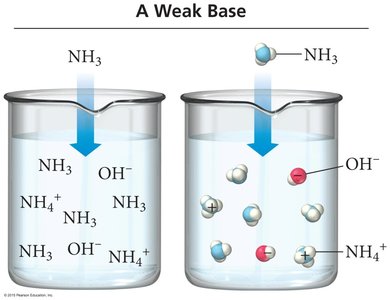
Weak bases only partially accept protons (e.g., NH3).
Acid Ionization Constant (Ka)
The strength of an acid is measured by its ionization constant, Ka:
The larger the Ka, the stronger the acid.


Base Ionization Constant (Kb)
The strength of a base is measured by its ionization constant, Kb:
The larger the Kb, the stronger the base.

Acid–Base Equilibria and pH
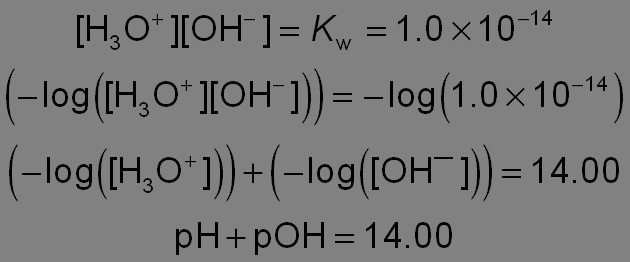
Autoionization of Water and Ion Product (Kw)
Water can act as both an acid and a base, leading to autoionization:
at 25°C
pH and pOH
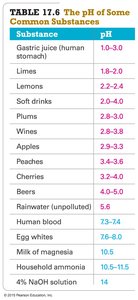
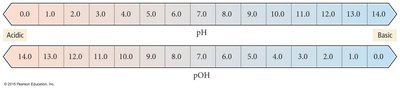
The acidity or basicity of a solution is measured by pH and pOH:
at 25°C
pKa and pKb
Acid and base strength can also be expressed as pKa and pKb:
The smaller the pKa or pKb, the stronger the acid or base.
Calculating pH of Acid and Base Solutions
Strong Acids and Bases
For strong acids and bases, the concentration of the acid or base equals the concentration of H3O+ or OH− ions.
Example: 0.10 M HCl yields [H3O+] = 0.10 M, pH = 1.00
Example: 0.10 M NaOH yields [OH−] = 0.10 M, pOH = 1.00, pH = 13.00
Weak Acids and Bases: ICE Tables and Equilibrium
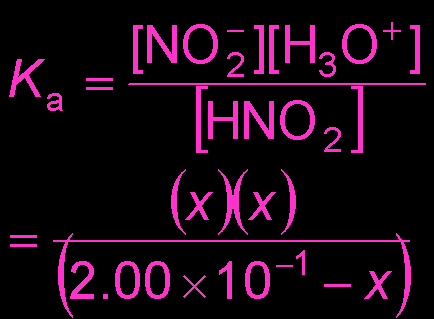
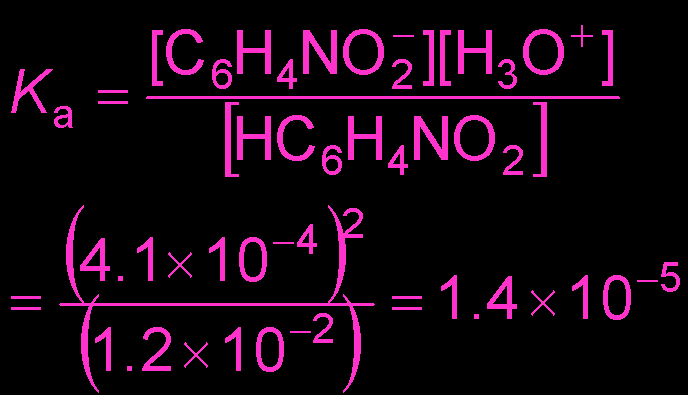
For weak acids and bases, use an ICE (Initial, Change, Equilibrium) table to solve for equilibrium concentrations and calculate pH.
Set up the equilibrium expression for the acid or base.
Use the Ka or Kb value to solve for x (the change in concentration).
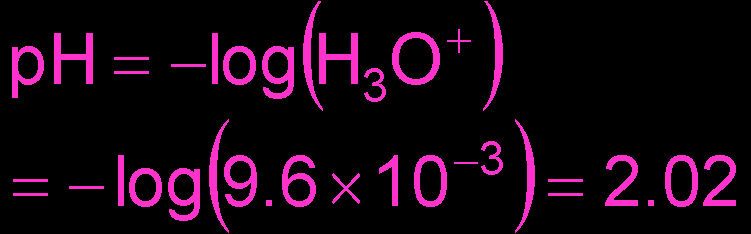
Calculate [H3O+] or [OH−] and then pH or pOH.
Acid–Base Properties of Salts
Classification of Salt Solutions
Salts can produce acidic, basic, or neutral solutions depending on the nature of their cations and anions:
Cation of strong base + anion of strong acid: neutral (e.g., NaCl)
Cation of strong base + anion of weak acid: basic (e.g., NaF)
Cation of weak base + anion of strong acid: acidic (e.g., NH4Cl)
Highly charged metal cation + anion of strong acid: acidic (e.g., Al(NO3)3)
Polyprotic Acids
Ionization in Polyprotic Acids
Polyprotic acids ionize in steps, each with its own Ka value. Usually, only the first ionization significantly affects pH.
Example: H2SO4 has two ionization steps; the first is strong, the second is weak.
Lewis Acid–Base Theory
Lewis Acids and Bases
The Lewis theory focuses on electron pair transfer:
Lewis acids: Electron pair acceptors (often electron-deficient).
Lewis bases: Electron pair donors (must have a lone pair).
Lewis acid–base reactions often result in the formation of a covalent bond (adduct).
