 Back
Acids, Bases, and Buffer Systems: General Chemistry Study Notes
Study Guide - Smart Notes
 Tailored notes based on your materials, expanded with key definitions, examples, and context.
Acids and Bases: Fundamental Concepts
Definitions and Properties
Acids and bases are two fundamental classes of compounds in chemistry, distinguished by their characteristic properties and reactions. Acids typically taste sour, react with metals, and change the color of indicators, while bases taste bitter, feel slippery, and also change indicator colors.
Acid: A substance that donates protons (H+) or increases H+ concentration in solution.
Base: A substance that accepts protons or increases OH- concentration in solution.
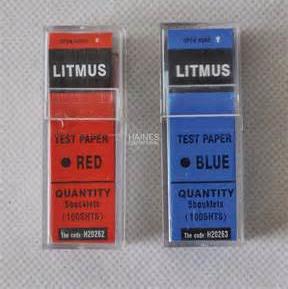
Indicators: Chemicals that change color depending on the pH of the solution.
Arrhenius and Brønsted-Lowry Definitions
The Arrhenius and Brønsted-Lowry definitions are two major ways to classify acids and bases:
Arrhenius Acid: Increases H+ concentration in water. Example:
Arrhenius Base: Increases OH- concentration in water. Example:
Brønsted-Lowry Acid: Proton donor.
Brønsted-Lowry Base: Proton acceptor.
Amphiprotic: A substance that can act as both an acid and a base (e.g., water).
Conjugate Acid-Base Pairs
Acids and bases form conjugate pairs during reactions. A conjugate base is formed when an acid loses a proton, and a conjugate acid is formed when a base gains a proton. These pairs differ by one proton.
Example:
Strong vs. Weak Acids and Bases
Dissociation in Solution
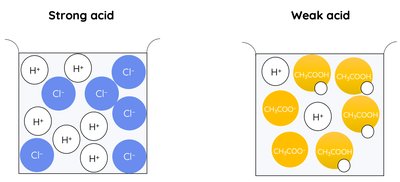
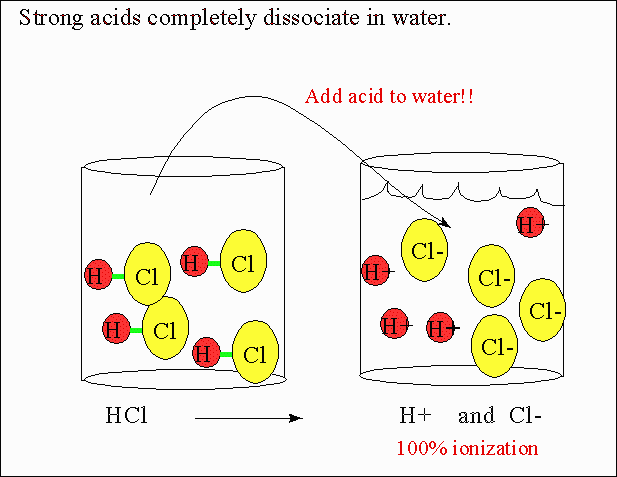
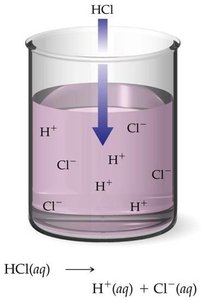
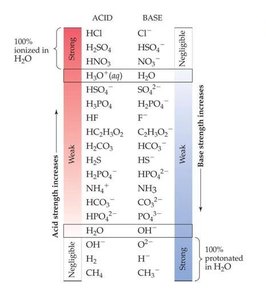
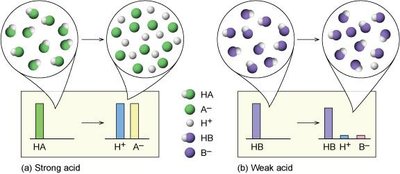
Acids and bases are classified as strong or weak based on their degree of ionization in water.
Strong acids/bases: Fully dissociate into ions in solution.
Weak acids/bases: Partially dissociate.
List of Common Strong Acids
Hydrochloric acid (HCl)
Hydrobromic acid (HBr)
Hydroiodic acid (HI)
Nitric acid (HNO3)
Chloric acid (HClO3)
Perchloric acid (HClO4)
Sulfuric acid (H2SO4)
Acid and Base Strength Comparison
Equilibrium in acid-base reactions favors the formation of the weaker acid and base. The strength of acids and bases can be compared using tables of ionization and conjugate pairs.
Autoionization of Water and the pH Scale
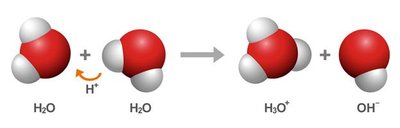
Autoionization of Water
Water can self-ionize, producing hydronium and hydroxide ions:
Ion product constant:
At 25°C,
The pH and pOH Scales
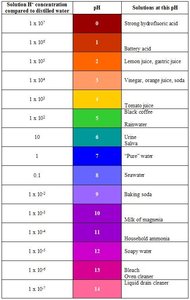
The pH scale measures the acidity of a solution, while the pOH scale measures its basicity. Both are logarithmic scales.

Acid Dissociation Constant (Ka) and Weak Acids
Acid Dissociation Constant (Ka)
The strength of a weak acid is quantified by its acid dissociation constant, Ka:
The larger the Ka, the stronger the acid.
Polyprotic Acids
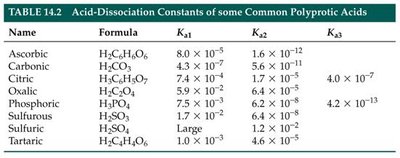
Polyprotic acids can donate more than one proton. Their dissociation constants (Ka1, Ka2, Ka3) differ significantly, and only the first dissociation is usually considered in calculations if the values differ by a factor of 103 or more.
Name | Formula | Ka1 | Ka2 | Ka3 |
|---|---|---|---|---|
Ascorbic | H2C6H6O6 | 8.0 × 10⁻⁵ | 1.6 × 10⁻¹² | |
Carbonic | H2CO3 | 4.3 × 10⁻⁷ | 5.6 × 10⁻¹¹ | |
Citric | H3C6H5O7 | 7.4 × 10⁻⁴ | 1.7 × 10⁻⁵ | 4.0 × 10⁻⁷ |
Oxalic | H2C2O4 | 5.9 × 10⁻² | 6.4 × 10⁻⁵ | |
Phosphoric | H3PO4 | 7.5 × 10⁻³ | 6.2 × 10⁻⁸ | 4.2 × 10⁻¹³ |
Sulfurous | H2SO3 | 1.7 × 10⁻² | 1.2 × 10⁻⁷ | |
Sulfuric | H2SO4 | Large | ||
Tartaric | H2C4H4O6 | 1.0 × 10⁻³ | 4.6 × 10⁻⁵ |
Buffer Solutions
Buffer Definition and Function
A buffer is a solution that resists changes in pH upon addition of small amounts of acid or base. Buffers consist of a weak acid and its conjugate base.
Examples: Acetic acid/acetate, carbonic acid/bicarbonate, sodium dihydrogen phosphate/disodium hydrogen phosphate.
Buffer Calculations: Henderson–Hasselbalch Equation
The pH of a buffer solution can be calculated using the Henderson–Hasselbalch equation:
Buffer Range and Capacity
A buffer is most effective within ±1 pH unit of the pKa of the weak acid. Buffer capacity increases with the concentration of the acid and its conjugate base.
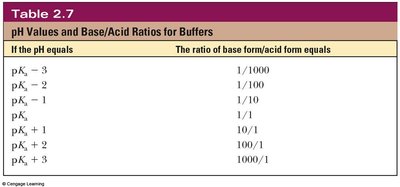
If the pH equals | The ratio of base form/acid form equals |
|---|---|
pKa - 3 | 1/1000 |
pKa - 2 | 1/100 |
pKa - 1 | 1/10 |
pKa | 1/1 |
pKa + 1 | 10/1 |
pKa + 2 | 100/1 |
pKa + 3 | 1000/1 |
Buffer Selection and Biological Importance
Criteria for selecting a buffer include suitable pKa, solubility, ionic strength, and non-interference with reactions. Buffers are crucial in biological systems, such as the phosphate buffer in cells and the carbonic acid/bicarbonate buffer in blood, which maintains pH near 7.4.
Blood buffer: Carbonic acid neutralizes excess bases, bicarbonate neutralizes excess acids.
Indicators and Laboratory Safety
Indicators
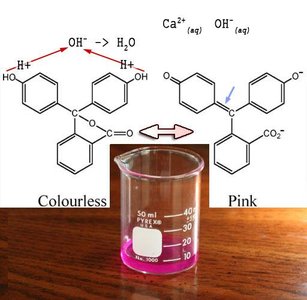
Indicators are used to detect pH changes by color shifts. Each indicator has a specific pH range.
Laboratory Safety
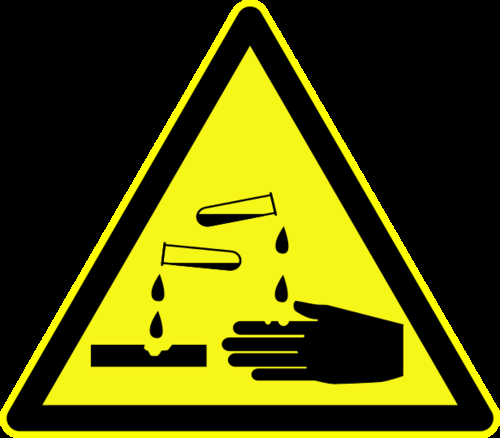
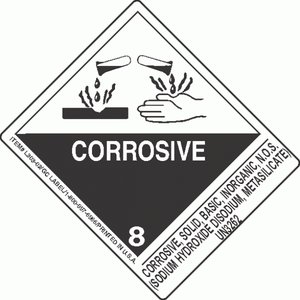
Acids and bases can be corrosive and require careful handling in the laboratory.
Practice Problems and Applications
Sample Calculations
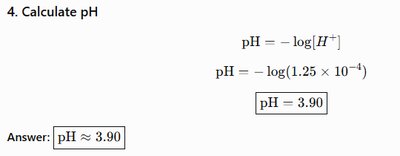
pH Calculation:
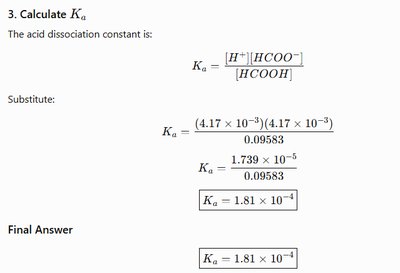
Ka Calculation:
Summary Table: Acid-Base Equilibrium
Acid | Base | Strength |
|---|---|---|
HCl | Cl- | Strong |
CH3COOH | CH3COO- | Weak |
H2O | OH- | Amphiprotic |
Additional info: Tables and equations have been expanded for clarity and completeness. All images included are directly relevant to the adjacent explanations.
