 Back
BackAcids, Bases, Buffers, and Thermodynamics: Advanced Equilibrium and Solution Chemistry
Study Guide - Smart Notes
 Tailored notes based on your materials, expanded with key definitions, examples, and context.
Acids and Bases: Equilibrium and pH Calculations
Introduction to Acids and Bases
Acids and bases are fundamental chemical species that participate in a wide range of chemical reactions. Their behavior in aqueous solution is described by equilibrium constants, which allow us to calculate important properties such as pH and pOH.
Acid: A substance that donates a proton (H+) to another substance.
Base: A substance that accepts a proton (H+).
pH: A measure of the hydrogen ion concentration, defined as .
pOH: A measure of the hydroxide ion concentration, defined as .
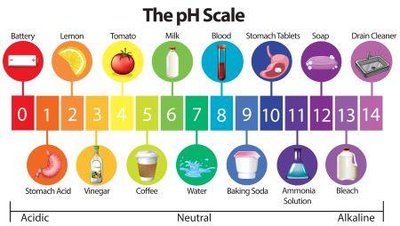
Acid and Base Strength
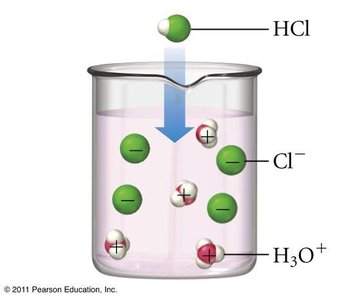
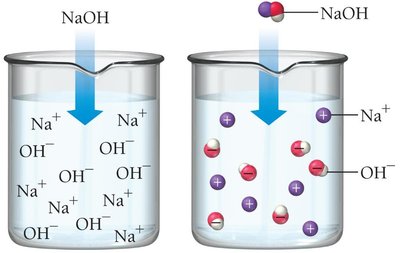
The strength of an acid or base is determined by its degree of ionization in water. Strong acids and bases dissociate completely, while weak acids and bases only partially ionize.
Strong Acid Example:
Strong Base Example:
Weak Acid/Base: Partial dissociation, equilibrium established between reactants and products.
Equilibrium Constants: Ka and Kb
The equilibrium constant for acid dissociation is , and for base dissociation is . These constants quantify the extent of ionization.
Relationship: at 25°C
Calculating pH and pOH
For strong acids and bases, the concentration of the acid or base equals the concentration of or , respectively. For weak acids and bases, use an ICE table and the equilibrium constant to solve for pH.
Example: What is the pH of a 0.02 M NaOH solution?
Calculate M, ,
Acid/Base Properties of Salt Solutions
Salt Hydrolysis and pH Prediction
When salts dissolve in water, their constituent ions may react with water to produce acidic or basic solutions, depending on the nature of the ions.
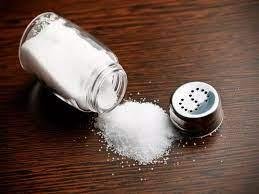
Neutral Salts: Derived from strong acid and strong base (e.g., NaCl) – solution is neutral.
Acidic Salts: Derived from strong acid and weak base (e.g., NH4NO3) – solution is acidic.
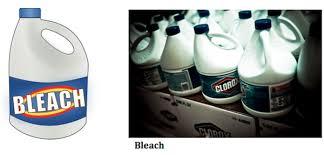
Basic Salts: Derived from weak acid and strong base (e.g., NaOCl) – solution is basic.
Example Salt | Cation | Anion | pH of Solution |
|---|---|---|---|
NaCl | Na+ (spectator) | Cl- (spectator) | ~7 (neutral) |
NH4NO3 | NH4+ (acidic) | NO3- (spectator) | <7 (acidic) |
NaOCl | Na+ (spectator) | OCl- (basic) | >7 (basic) |

Application: Pool Chemistry
Maintaining proper pH in swimming pools is essential for safety and equipment longevity. Salts such as sodium bicarbonate and sodium carbonate are used to raise pH, while sodium bisulfate is used to lower pH.
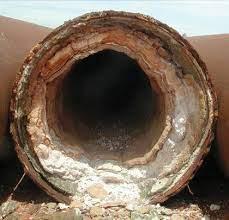
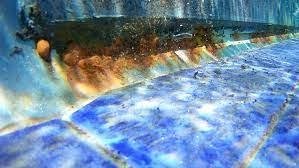
Low pH: Causes corrosion and irritation.
High pH: Causes scaling and cloudy water.


Buffers: Definition, Preparation, and Function
What is a Buffer?
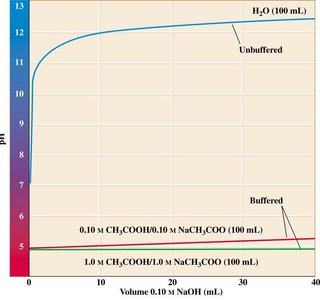
A buffer is a solution that resists changes in pH upon addition of small amounts of acid or base. Buffers are typically made from a weak acid and its conjugate base, or a weak base and its conjugate acid.
Buffer Example: Acetic acid (CH3COOH) and sodium acetate (CH3COONa)
Buffer Capacity: The amount of acid or base a buffer can neutralize before the pH changes significantly.


Henderson-Hasselbalch Equation
The pH of a buffer solution can be calculated using the Henderson-Hasselbalch equation:
Effective buffer range:
Biological Buffers: Blood Buffer System
Blood is buffered at pH 7.4, primarily by the carbonic acid/bicarbonate system:
pKa of carbonic acid ≈ 6.4
Buffering is crucial for physiological pH stability.
Titrations and Buffer Regions
Acid-Base Titrations
Titration is a laboratory technique used to determine the concentration of an unknown acid or base by reacting it with a standard solution. The titration curve reveals four main regions:
Initial: Only weak acid/base present.
Buffer region: Both acid and conjugate base present; use Henderson-Hasselbalch equation.
Equivalence point: All acid/base converted to conjugate; pH determined by conjugate species.
Past equivalence: Excess titrant determines pH.
Polyprotic Acids and Sequential Dissociation
Polyprotic Acids
Polyprotic acids can donate more than one proton, with each dissociation step having its own equilibrium constant (Ka1, Ka2, ...). Each subsequent proton is less acidic than the previous one.
Example: Carbonic acid (H2CO3):
(Ka1)
(Ka2)
Solubility Equilibria and Ksp
Solubility Product Constant (Ksp)
The solubility product constant, Ksp, describes the equilibrium between a solid and its ions in solution. It is used to predict precipitation and calculate molar solubility.
Example:
Common Ion Effect and Selective Precipitation
The presence of a common ion decreases the solubility of a salt. Selective precipitation is used to separate ions in solution based on their differing Ksp values.
Thermodynamics: Entropy, Enthalpy, and Gibbs Free Energy
Spontaneity and the Second Law of Thermodynamics
Spontaneous processes occur naturally and are favored thermodynamically. The second law states that the entropy (S) of the universe increases for spontaneous processes.
Entropy (S): A measure of disorder or the number of ways energy can be distributed in a system.
Gibbs Free Energy (G)
Gibbs free energy combines enthalpy and entropy to predict spontaneity at constant temperature and pressure:
If , the process is spontaneous.
If , the process is non-spontaneous.
If , the system is at equilibrium.
Standard Free Energy Change and Equilibrium
The standard free energy change () is related to the equilibrium constant (K):
Where R is the gas constant and T is temperature in Kelvin.
At equilibrium, and .
Temperature Dependence of Equilibrium
The equilibrium constant changes with temperature, as described by the van't Hoff equation:
Summary Table: Key Equations and Relationships
Concept | Equation |
|---|---|
pH | |
pOH | |
Ka/Kb | |
Henderson-Hasselbalch | |
Gibbs Free Energy | |
Standard Free Energy and K |
Additional info: This guide integrates advanced equilibrium, solution chemistry, and thermodynamics, providing a comprehensive overview for college-level general chemistry students.
